EN



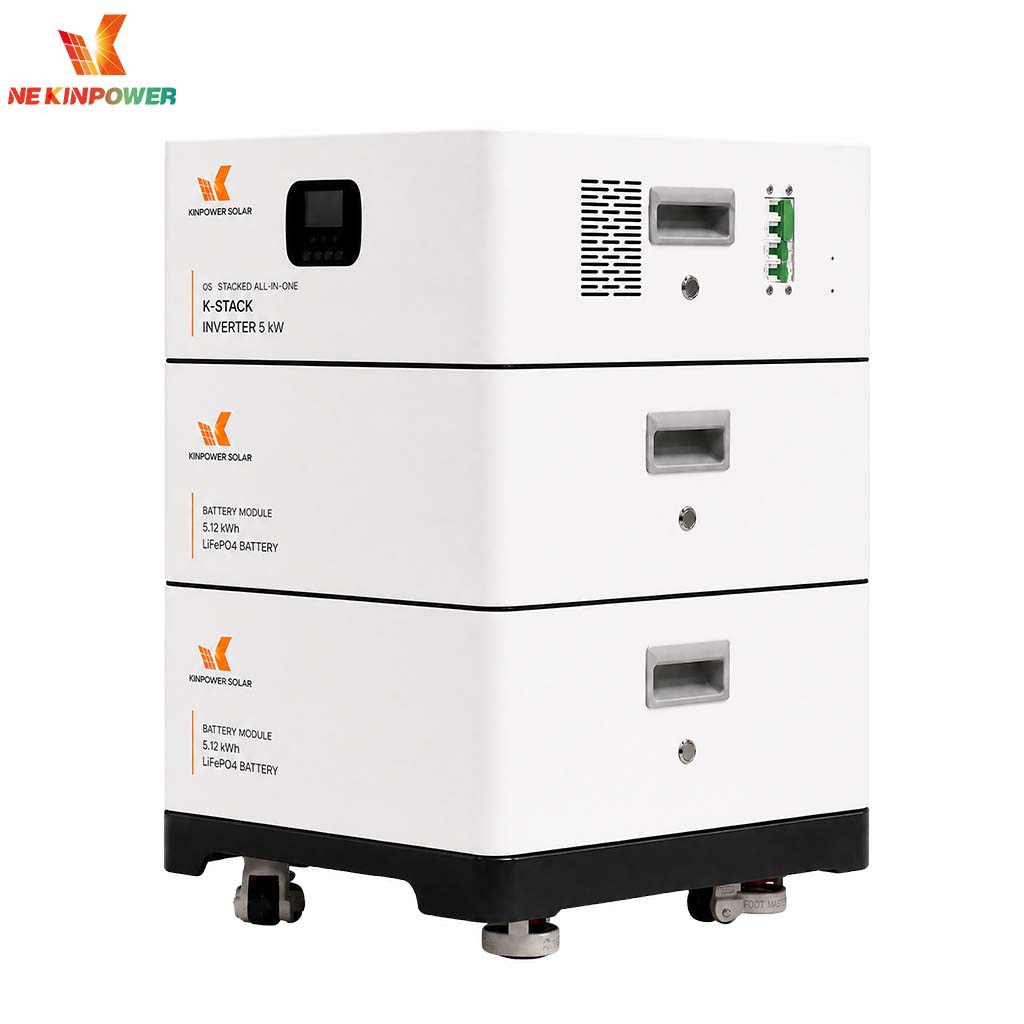
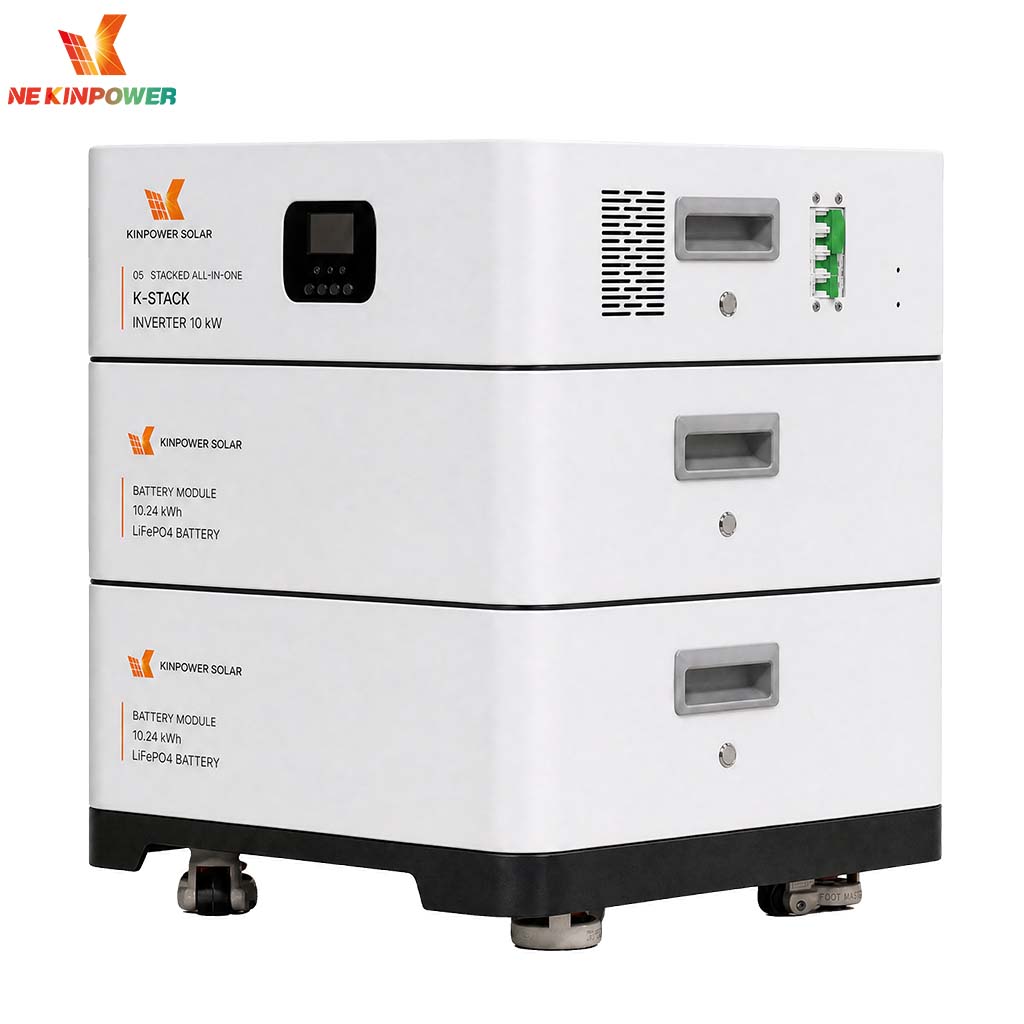
K-STACK / K-STACK HV-Stackable energy storage system
✓ All-in-one: hybrid inverter + stacked LiFePO4 modules, no rack cabinet, no module wiring
✓ K-STACK: 5 kW inverter with 5.12 kWh modules · K-STACK HV: 10 kW with 10.24 kWh modules
✓ Up to 15 modules — 76.8 / 153.6 kWh per stack, one more module in under ten minutes
✓ PV input up to 500 VDC: 5,500 W single MPPT or 11,000 W dual MPPT
✓ UPS backup plus 90-275 VAC wide grid input for weak-grid markets
✓ ≥6,000 cycles at 90% depth of discharge
- Overview
- Recommended Products
- Position the base unit on a level floor indoors, and fix it to the wall with the anti-tip bracket.
- Stack the battery modules on the base — each module seats on the one below and connects automatically. Modules weigh 46 kg, so two hands are recommended.
- Dock the hybrid inverter on top, connect the PV strings (max 500 VDC), grid and load wiring, then set the operating mode and confirm closed-loop communication in the menu or app.
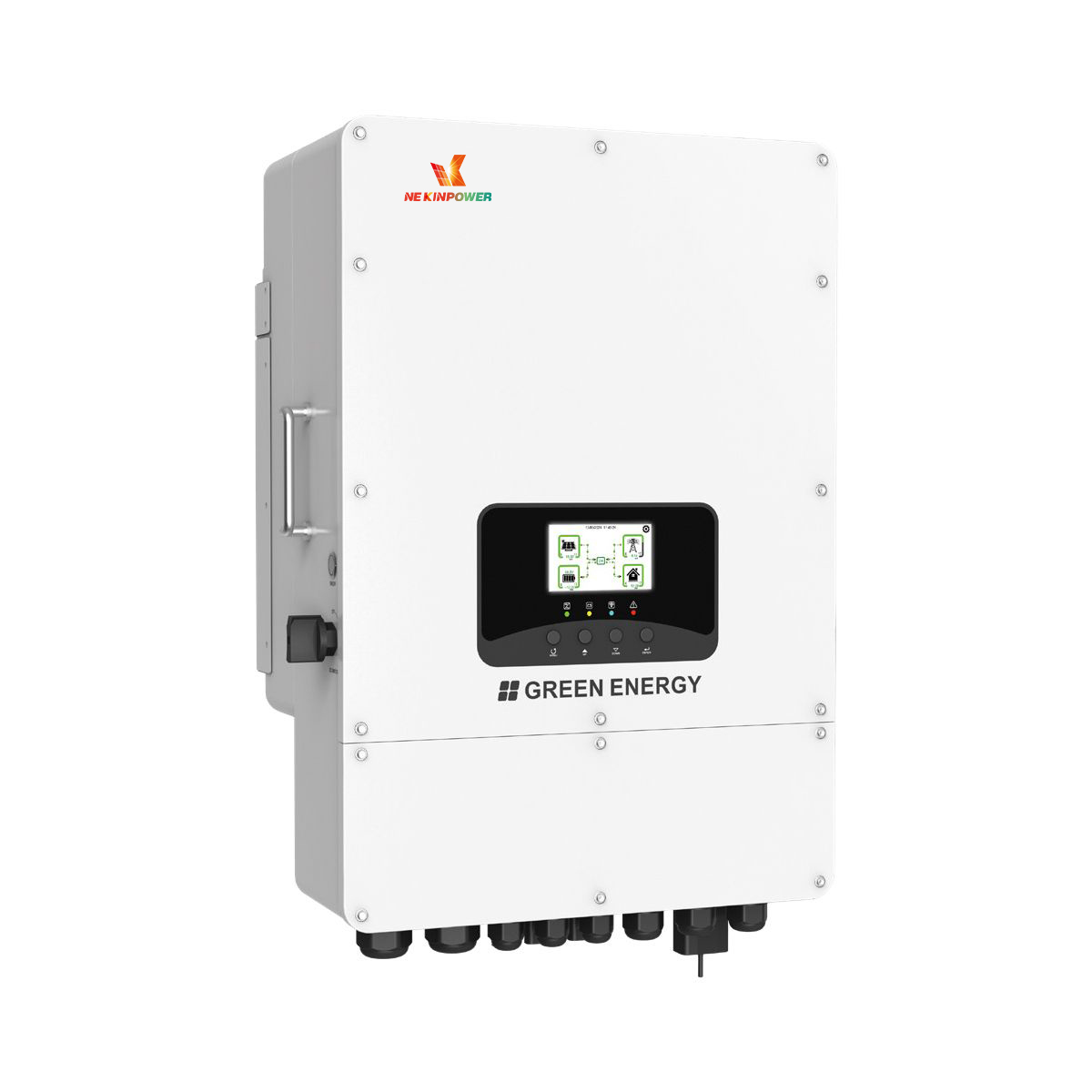
KINPOWER K-STACK is a stackable energy storage system: a hybrid solar inverter on top and LiFePO4 battery modules stacked underneath it, in one plug-together tower. The series comes in two sizes — the K-STACK with a 5 kW inverter and 5.12 kWh modules, and the K-STACK HV with a 10 kW inverter and 10.24 kWh modules. Up to fifteen modules can be stacked under one inverter, so a single tower grows from 5.12 kWh today to 153.6 kWh tomorrow without changing the inverter, the protocol or the monitoring app.
What is a stackable energy storage system?
A stackable energy storage system is an all-in-one unit that combines the hybrid inverter and the battery in a single vertical stack: the inverter sits at the top, and each battery module below connects to the next simply by being seated on it. There is no rack cabinet to assemble, no battery cabling between modules, and no separate BMS configuration.
It is the fastest format to install and the easiest to expand: a homeowner starts with the capacity they can afford, and each additional module is a one-person job that adds 5.12 kWh or 10.24 kWh in under ten minutes.
K-STACK or K-STACK HV: which one?
Both models share the same 51.2 V battery platform, module dimensions and stacking logic. They differ in inverter power, module capacity and solar input — the K-STACK HV doubles everything.
| K-STACK | K-STACK HV | |
|---|---|---|
| Rated output power (battery mode) | 5,000 W | 10,000 W |
| Battery module capacity | 5.12 kWh | 10.24 kWh |
| Usable per module (90% DoD) | 4.61 kWh | 9.22 kWh |
| Max modules per stack | 15 | 15 |
| Max stack energy (nominal) | 76.8 kWh | 153.6 kWh |
| PV input power | 5,500 W (1 MPPT) | 11,000 W (2 MPPT, 5,500 W each) |
| MPPT working range | 120-450 VDC | 125-425 VDC |
| Max PV voltage | 500 VDC | 500 VDC |
| Max AC charging current | 30 A | 50 A |
| Module net weight | 46 kg | 46 kg |
As a rule: choose the K-STACK for evening self-consumption and basic backup in homes up to about 25 kWh of daily use, and the K-STACK HV for whole-home backup, larger PV arrays, or properties with heavy evening loads such as heat pumps and cookers.
How much can it store?
Capacity scales in module steps, and each step is a tool-free addition. Depth of discharge is 90%, so almost all of the nominal figure below is usable every cycle.
| Modules stacked | K-STACK (5 kW) | K-STACK HV (10 kW) |
|---|---|---|
| 1 | 5.12 kWh | 10.24 kWh |
| 2 | 10.24 kWh | 20.48 kWh |
| 3 | 15.36 kWh | 30.72 kWh |
| 5 | 25.6 kWh | 51.2 kWh |
| 10 | 51.2 kWh | 102.4 kWh |
| 15 | 76.8 kWh | 153.6 kWh |
Solar input designed for real roofs
The PV input accepts up to 500 VDC, which allows two full-size strings in series on most rooftop arrays. The 5 kW K-STACK carries one MPPT with 5,500 W of input; the K-STACK HV carries two independent MPPTs at 5,500 W each, so east-west roof faces or two separate arrays can be connected without an external combiner. Grid input spans 90-275 VAC in APL mode, which keeps the system charging from weak or unstable grids and generators in markets where supply quality is a daily problem.
Backup when the grid fails
In UPS mode the system holds its output within a tight 170-280 VAC window and switches to battery when the grid drops, so lighting, refrigeration, networking and pumps keep running. In battery mode the inverter delivers its full rated output — 5,000 W or 10,000 W — with no grid connected at all, which makes the same tower an off-grid power centre for cabins, farms and small commercial sites.
Specifications
| Parameter | K-STACK | K-STACK HV |
|---|---|---|
| Battery | ||
| Single module capacity | 5.12 kWh | 10.24 kWh |
| Number of battery stacks | ≤15 | |
| Standard voltage | 51.2 V | |
| Working voltage range | 43.2-57.6 V | |
| Standard discharge current | 100 A | |
| Standard charge current | 50 A | |
| Depth of discharge | 90% | |
| Cycle life | ≥6,000 cycles | |
| PV input | ||
| PV working voltage range | 120-500 VDC | 100-500 VDC |
| MPPT working voltage range | 120-450 VDC | 125-425 VDC |
| PV input power | 5,500 W | 5,500 W × 2 MPPT |
| Max PV input current | 22 A | 22 A per MPPT |
| AC output / input | ||
| Rated output power (battery mode) | 5,000 W | 10,000 W |
| Rated output voltage | 220/230/240 VAC | |
| Frequency | 50/60 Hz | |
| Max AC charging current | 30 A | 50 A |
| Rated input voltage | 220/230/240 VAC | |
| Rated input voltage range | UPS: 170-280 VAC ±2% · APL: 90-275 VAC | 90-275 VAC |
| Max bypass overload current | 30 A | 50 A |
| General | ||
| Installation | Stacked | |
| Module dimensions | 550 × 500 × 170 mm | |
| Module package dimensions | 650 × 600 × 270 mm | |
| Module net weight | 46 kg | |
| Total product dimension | 550 × 500 × 446 mm | |
| IP rating | IP20 | |
| Communication | CAN / RS485 / RS232 / Wi-Fi (optional) | |
| Working temperature | 0 to 55 °C | |
| Storage temperature | -20 to 55 °C | |
| Humidity | ≤80% | |
| Container loading | 20GP: 57 sets · 40HQ: 115 sets (BAT×3 + INV + Base per set) | |
Installation in three steps
Safety and certification
Each K-STACK module uses LiFePO4 prismatic cells with a cell-level BMS providing over-charge, over-discharge, over-current and short-circuit protection, and the inverter adds anti-islanding, grid-monitoring and overload protection on the AC side. The system carries CE, RoHS, UN38.3, IEC 62619 and IEC 62109 certification, with grid-code approvals for EU connection available on request. UN38.3 transport documents ship with every order.
Frequently asked questions
Does the K-STACK include an inverter?
Yes. K-STACK is an all-in-one system: the hybrid inverter is the top unit of the stack and the LiFePO4 modules sit underneath. PV, battery, grid and backup loads all connect to one device. If you already have inverters on site, the KINPOWER K-PACK LV battery-only series is the better fit.
How many battery modules can I stack?
Up to fifteen under one inverter: 76.8 kWh on the 5 kW K-STACK, or 153.6 kWh on the 10 kW K-STACK HV. At 90% depth of discharge, nearly all of that is usable. Most homes start with two or three modules and add more as consumption grows.
Can I mix K-STACK and K-STACK HV modules in one system?
No. The two models use different modules and different inverters, and their BMS platforms are not designed to share one bus. Pick one platform per installation; if you need to mix capacities within a bank, use the K-PACK LV battery series instead.
Is the K-STACK HV a high-voltage battery?
No. Both models use the same 51.2 V low-voltage battery bus. In the K-STACK HV the "high voltage" is on the solar side: its PV input accepts up to 500 VDC, and the inverter is twice as powerful. The battery itself remains a standard, widely supported low-voltage architecture.
Can it run off-grid?
Yes. In battery mode the inverter delivers its full rated output — 5,000 W or 10,000 W — with no grid connected. The 90-275 VAC AC input range also allows charging from a generator or an unstable grid, so the same unit serves backup-heavy and off-grid markets alike.
What can the 5 kW K-STACK power during an outage?
Lighting, a fridge-freezer, a TV, a washing machine, a microwave and networking equipment run comfortably together. It will not run a 3 kW water heater and a 2 kW oven at the same time; for whole-home backup that includes heating loads, choose the 10 kW K-STACK HV.
What maintenance does it need?
None beyond keeping the installation indoors, dry and within 0-55 °C. There are no fans to service and no consumables; the BMS balances the modules automatically and the app reports state of charge, health and cycle count for every module.
What is the cycle life and warranty?
The cells are rated for at least 6,000 cycles and the system carries a 2-year warranty. With a 90% depth of discharge, nearly the full nominal capacity is available on every cycle, which is what those cycle figures are measured against.
How is it shipped?
Each set ships as three battery modules plus the inverter and base (BAT×3 + INV + Base). A 20-foot container carries 57 sets and a 40-foot high-cube carries 115 sets. Modules and inverter are packed in separate cartons to protect the electronics in transit.
Request a quote
Sample sets, OEM/ODM and container pricing available for both K-STACK and K-STACK HV. Tell us your target market and daily consumption, and KINPOWER will size the stack and send the matching certification pack with the quotation.