
 EN
EN



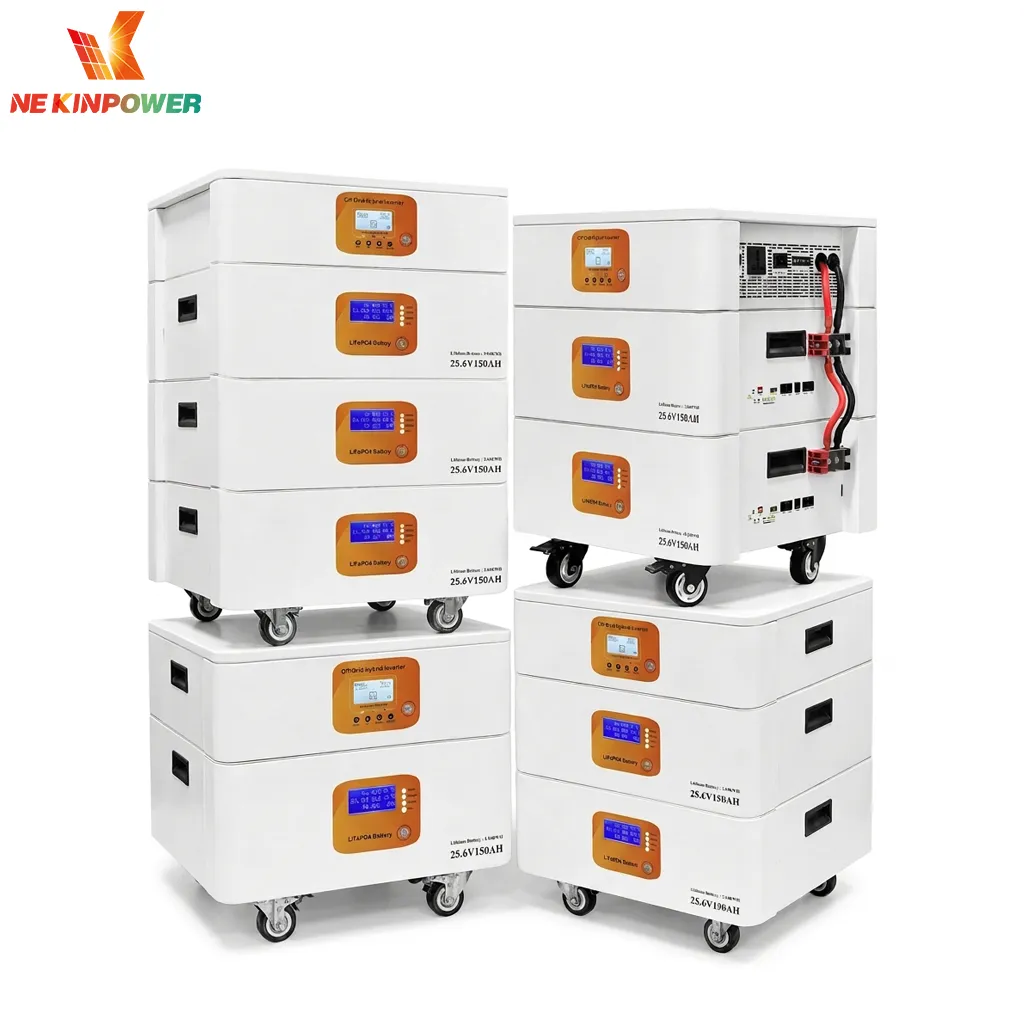
For commercial and industrial buyers sourcing energy storage systems, understanding where lithium battery technology is headed is not just a strategic interest — it shapes procurement decisions made today. Lithium-based energy storage systems have moved from grid-scale pilot installations to distributed commercial deployments within the last decade. This article outlines the technological and market trajectories that are likely to define the next phase of lithium battery energy storage, drawing on verified product data from current deployments.
Where the Energy Storage System Market Stands Today
The energy storage system (ESS) market has expanded in response to three converging pressures: the proliferation of intermittent renewable energy sources such as solar and wind, the rising cost of grid electricity during peak demand periods, and the need for reliable backup power in industrial and commercial facilities. Lithium iron phosphate (LiFePO₄) cells have become the dominant chemistry for stationary storage due to their thermal stability, long cycle life, and safety profile. Current wall-mounted residential units already achieve 6,000+ charge/discharge cycles and calendar lives exceeding 10 years, while larger commercial systems in the 3.84 kWh to 15.36 kWh range (and beyond) have reached deployment maturity in markets such as Germany, Australia, and Japan. The combination of declining cell costs and improved battery management system (BMS) intelligence has lowered the barrier to entry for mid-size commercial operators.
Chemistry Evolution: LiFePO4 as the Safety Benchmark
The thermal runway temperature of LiFePO₄ exceeds 500°C, significantly higher than that of NMC (nickel-manganese-cobalt) chemistries, which is the primary reason LiFePO₄ has become the preferred choice for stationary applications where safety and longevity outweigh raw energy density. Unlike NMC cells, LiFePO₄ does not produce flammable oxygen when overheated, which eliminates one of the primary ignition pathways in battery fire scenarios. As the cost gap between LiFePO₄ and NMC continues to narrow, buyers sourcing commercial energy storage systems will find LiFePO₄ increasingly difficult to justify switching away from, especially given the 6,000-cycle and 10-year operational horizon available in current products. The future is likely to see incremental improvements in cell-level energy density, with manufacturers improving volumetric efficiency rather than switching chemistry.
BMS Intelligence and Digital Integration
The next frontier for energy storage systems is not simply adding more battery capacity but making existing capacity smarter. Advanced battery management systems now monitor voltage, current, and temperature at the individual cell level in real time, allowing predictive fault detection before a thermal event can develop. Communication protocols including CAN bus, RS485, and dry-contact relay interfaces enable BMS data to be integrated with building energy management systems (BEMS) and industrial SCADA platforms, supporting automated charge/discharge scheduling based on time-of-use electricity pricing. Mobile app integration (iOS/Android) is already standard in residential wall-mounted units, delivering real-time data on charge status, home consumption, grid import/export volumes, and historical savings. As commercial energy storage scales up, buyers should evaluate whether the ESS supplier supports open communication protocols rather than proprietary lock-in, as this determines integration flexibility across inverter brands and monitoring platforms.
Application Case: Commercial and Industrial Scale Deployments
A representative application scenario involves production and processing facilities with high daytime electricity consumption, such as hardware factories, electronic manufacturing plants, and garment facilities. In these environments, an energy storage system absorbs solar-generated power during peak production hours, dispatching it to cover load demands without drawing from the grid at peak tariff rates. This charge-and-dispatch cycle reduces operational electricity costs and stabilizes daytime power consumption. In warehousing and logistics contexts, integrated solar-and-storage systems support both grid-tied operation and emergency off-grid capability — a particularly relevant feature for facilities in regions with grid reliability concerns. For these buyers, the critical specification parameters are: system capacity (kWh), maximum discharge power (kW), round-trip efficiency, communication protocol compatibility, and warranty structure on both the complete system and individual battery cells.
Grid-Scale and Microgrid Directions
Beyond the commercial and residential segments, lithium battery energy storage is increasingly applied in microgrid configurations that combine solar generation, storage, intelligent control, and flexible deployment. These integrated systems support a wide range of applications including off-grid power supply for remote facilities, emergency power for command centers, and mobile energy for field operations. The modular nature of lithium battery stacks allows capacity to be scaled from single-phase residential requirements up to multi-megawatt grid-support configurations. For buyers evaluating large-scale procurement, the ability of a supplier to provide full-chain in-house capabilities — from cell modules and BMS design to complete system integration — reduces the number of interfaces between components and simplifies after-sales accountability.
Supplier Quality and Manufacturing Standards
As the energy storage system market grows, the variance in product quality between manufacturers has also widened. Buyers should look for suppliers that have implemented ISO 9001 quality management system certification and, for products targeting automotive-grade cell specifications, IATF 16949 certification. Reliable production lines include automated cell sorting, laser welding, and aging test stations. Pre-shipment testing should cover full charge/discharge functional cycles, insulation and withstand voltage testing, communication handshake verification, and a minimum 48-hour high-temperature aging test. Outbound defect rates below 0.2% are achievable with fully automated quality control, and buyers should request evidence of defect rate performance as part of their supplier qualification process. Extended warranty coverage of 5 to 10 years on core battery components, combined with 24/7 technical support and global spare parts availability, defines a service standard appropriate for commercial and industrial ESS installations.
Frequently Asked Questions
Q: What is the expected lifespan of a lithium battery energy storage system?
A: Current LiFePO₄-based energy storage systems offer a cycle life of 6,000+ cycles and a calendar life exceeding 10 years under normal operating conditions. This translates to over 15 years of practical service life in residential and light commercial applications, assuming typical daily cycling.
Q: How does an energy storage system interact with an existing solar PV installation?
A: An energy storage system connects to the solar PV installation via a hybrid inverter. During the day, solar power first supplies household or facility loads; surplus energy is stored in the battery. At night or during grid outages, the battery automatically dispatches power to cover critical loads. BMS-based scheduling allows the system operator to define charge and discharge windows that align with electricity tariff structures.
Q: What communication protocols should a commercial energy storage system support?
A: For integration with industrial monitoring and control platforms, a commercial ESS should support CAN bus, RS485, and dry-contact relay interfaces as a minimum. Open protocol support enables connectivity with a wider range of inverter brands and BEMS platforms, reducing vendor lock-in and simplifying future system upgrades.
Table of Contents
- Where the Energy Storage System Market Stands Today
- Chemistry Evolution: LiFePO4 as the Safety Benchmark
- BMS Intelligence and Digital Integration
- Application Case: Commercial and Industrial Scale Deployments
- Grid-Scale and Microgrid Directions
- Supplier Quality and Manufacturing Standards
- Frequently Asked Questions