 EN



Why Battery Aging Is a System Problem, Not Just a Cell Problem
Battery life gets talked about like a cell-level spec. In real energy storage system deployments, the cell is only one part of the story. Busbars, thermal paths, inverter settings, site loads, and operating schedules all shape how quickly capacity fades. A pack that performs well in a lab can age faster on-site when the thermal management strategy fights the local climate or when the dispatch profile pushes frequent partial cycles. The useful question is not "how long does this battery last?" but "what conditions will this battery actually see over ten years?" That shift moves the conversation from chemistry alone to system design and daily operation.
Temperature Control That Actually Changes Cycle Life
Heat is the quiet accelerant. Every 10°C rise above a comfortable operating band can roughly double many chemical aging reactions, though the exact rate depends on chemistry, state of charge, and cell design. It means temperature consistency matters as much as peak temperature. A site with moderate average heat but wild swings can be harder on cells than a warmer site with stable airflow and even module temperatures.
Practical steps that tend to pay off:
-
Keep modules within a narrow band during high-power charge and discharge.
-
Avoid placing the hottest modules next to the coolest ones without airflow correction.
-
Use thermal data to adjust charge rates before cells hit the upper limit.
In one retrofit at a chemical plant in southern China, the engineering team found a 7°C spread between top and bottom modules in the same rack. The average temperature looked fine. The imbalance was the problem. After airflow baffles and revised rack spacing, the spread dropped below 3°C, and the site stopped seeing early voltage divergence during afternoon peaks.
Charge and Discharge Windows: Where Profits and Longevity Meet
Aggressive charging is tempting because it shortens downtime and captures more peak-price energy. But lithium batteries do not age only by cycle count. They age by stress. NREL and Sandia research points to temperature and depth of discharge as key stress factors. High current at high state of charge, deep discharge at low state of charge, and long rests at extreme voltages all leave marks. A smarter operating window often beats a bigger battery.
For many commercial and industrial storage systems, keeping routine cycling between roughly 20% and 90% state of charge can reduce calendar and cycle stress without giving up much usable energy. The exact window depends on chemistry, thermal design, and revenue model. The key is to treat the upper and lower edges as expensive real estate. Use them when the value is high, not as a daily habit.
A comparison of typical LFP behavior helps show the trade-off. The numbers below are illustrative ranges from published cycling studies, not a product specification.
| Operating Pattern | Typical Cycle Life Range | Usable Capacity per Cycle | Relative Thermal Stress |
|---|---|---|---|
| 80% depth of discharge | 3,000 to 5,000 cycles | High | High |
| 60% depth of discharge | 5,000 to 7,500 cycles | Medium | Moderate |
| 40% depth of discharge | 8,000 to 12,000 cycles | Lower | Low |
| 80% DoD with poor cooling | 2,000 to 3,500 cycles | High | Very high |
| 60% DoD with stable cooling | 6,000 to 9,000 cycles | Medium | Low to moderate |
The table is not a promise. It is a reminder that cycle life and usable capacity are linked. Shallow cycling can extend service life, but it may require more nominal capacity to meet the same daily energy demand. That trade-off belongs in the financial model, not in a footnote.
Depth of Discharge and the Hidden Cost of Chasing Full Capacity
Full capacity is comforting on a spreadsheet. In the field, it can be costly. Pushing every cycle to the last few percent increases heat, voltage extremes, and the chance of cell imbalance. Over time, the weakest cell sets the limit for the whole string or pack. That is why many well-run sites reserve the bottom and top of the range for exceptional events, such as grid outages or unexpected peak demand.
State of charge management also affects balancing. A battery that never reaches a controlled top balance point may drift, while one that sits at 100% for long periods can suffer calendar aging. The sweet spot is usually a managed partial state of charge with periodic, temperature-aware top balancing. This is less about a single setpoint and more about a schedule that matches the site's load profile and tariff structure.
Monitoring, Data, and Maintenance Habits That Catch Drift Early
Battery life is not saved by one heroic setting. It is saved by small corrections made early. Module-level voltage, temperature, and current data can reveal a lot before capacity loss shows up in a capacity test. A rising temperature delta, a growing voltage gap, or a change in coulombic efficiency often appears weeks or months before a noticeable drop in delivered energy.
Useful habits include:
-
Trend module temperatures by rack position, not just site average.
-
Compare charge and discharge energy over time to estimate round-trip changes.
-
Investigate any cell or module that drifts beyond the normal spread.
-
Review inverter and dispatch logs after extreme weather or grid events.
Data without action is just a dashboard. The value comes from linking alarms to maintenance tickets and tuning charge profiles as the site ages.
How Manufacturing Supports Long-Lasting Energy Storage Deployments
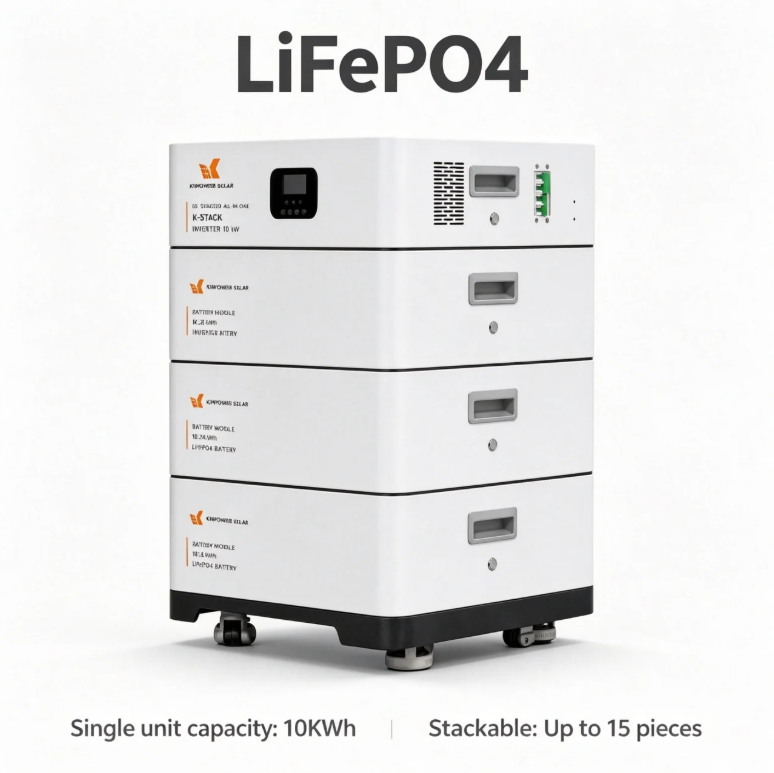
Extending battery life is a system discipline. It starts with cell selection, but it depends on thermal design, manufacturing consistency, quality control, and supply chain execution. Kinpower, the shortened brand name behind a global solar and storage solutions provider, focuses on integrated solar ecosystems that include generation, storage, EV charging, and intelligent mounting and tracking systems. Decades of industrial experience support the system-level details that keep storage deployments dependable. For projects that need stable hardware quality and responsive supply support, that integration matters. Battery life is rarely extended by a single trick. It is protected by hundreds of small decisions made before commissioning and during every operating day.
Table of Contents
- Why Battery Aging Is a System Problem, Not Just a Cell Problem
- Temperature Control That Actually Changes Cycle Life
- Charge and Discharge Windows: Where Profits and Longevity Meet
- Depth of Discharge and the Hidden Cost of Chasing Full Capacity
- Monitoring, Data, and Maintenance Habits That Catch Drift Early
- How Manufacturing Supports Long-Lasting Energy Storage Deployments