
 EN
EN



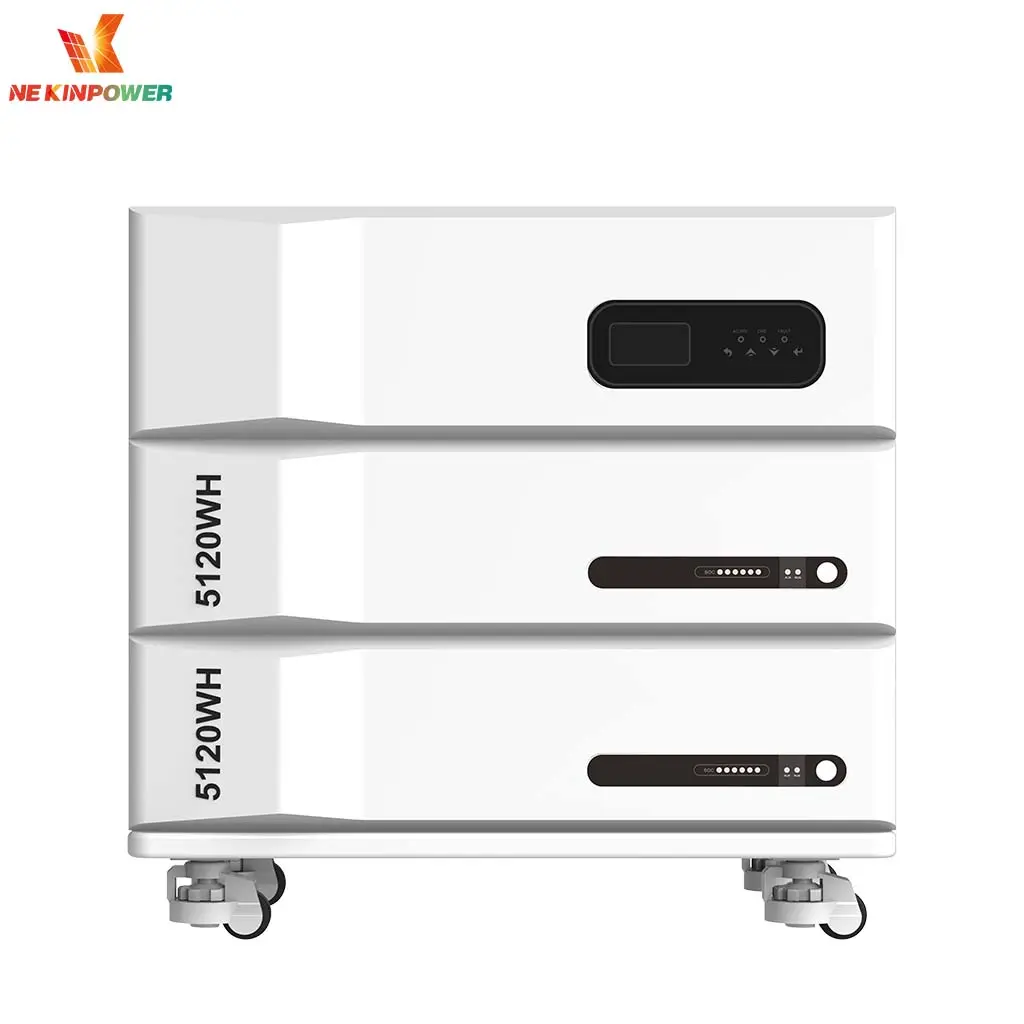
Homeowners who have installed rooftop solar panels frequently encounter a common limitation: solar generation peaks in the middle of the day, while household electricity demand peaks in the morning and evening. Without a way to store midday surplus, that generated electricity is either fed back to the grid at low export tariff rates or simply curtailed. A home energy storage system solves this mismatch by capturing excess solar generation and releasing it when the household actually needs it. This article explains what a home energy storage system is, how it works, the main product types available, and what residential buyers should evaluate before purchase.
Core Definition and Function
A home energy storage system is a battery unit — typically lithium-based — that connects to a residential solar photovoltaic installation and household electrical circuits through a hybrid inverter. During daylight hours, the system's logic is straightforward: solar panels generate power, household loads consume it first, and any surplus is stored in the battery rather than exported to the grid. After sunset, the battery discharges to supply household loads — lighting, refrigerators, networking equipment, and security systems — without drawing from the grid. During a grid outage, advanced systems switch automatically to off-grid mode, providing uninterrupted power to essential circuits. This three-mode operation — solar-first, battery-buffer, and grid-backup — defines the functional value of a home energy storage system.
Main Product Types: Wall-Mounted, Rolling, and Stackable
Residential energy storage products are available in several physical configurations, each suited to different installation constraints. Wall-mounted systems are fixed to load-bearing walls, requiring no floor space. Available in white or grey with a minimalist flat design, these units use IP65-rated enclosures and connect via a single cable to a compatible hybrid inverter. The battery chemistry is automotive-grade LiFePO₄, offering a cycle life of 6,000 or more full cycles and a calendar life exceeding 10 years. One documented product in this category measures approximately 651.5 mm × 445 mm × 235 mm and is rated at 51.2V 100AH. Rolling-desk-style systems integrate a high-capacity LiFePO₄ battery pack with a hybrid inverter, an intelligent energy management system, and lockable heavy-duty casters, forming a mobile unit that can be repositioned within the home — moved to a sunny location for charging or placed near appliances for direct supply. These units support customized capacities within the 2 kWh to 20 kWh range and are suitable for users who need flexibility rather than a permanently fixed installation. Stackable modular systems allow homeowners to start with a smaller capacity and add modules over time as energy needs grow.
Battery Chemistry and Safety Standards
The battery chemistry in a home energy storage system directly affects its safety profile, longevity, and maintenance requirements. Automotive-grade LiFePO₄ cells are preferred for residential installations because they do not release flammable oxygen when overheated — the thermal runaway temperature exceeds 500°C — and the cell structure remains stable across the temperature range typically encountered in garages, utility rooms, and enclosed balconies (-20°C to 55°C). For wall-mounted units, an IP65 ingress protection rating ensures that the enclosure resists dust and water spray, making installation in non-climate-controlled spaces practical. A multi-layer BMS (battery management system) provides six protective functions in real time: overcharge, over-discharge, overcurrent, short-circuit, over-temperature, and low-voltage protection. Fanless natural convection cooling keeps operating noise below 25 dB, appropriate for installation in living areas or bedrooms. All materials should comply with RoHS environmental standards, and end-of-life battery recycling pathways should be available.
Key Features to Evaluate Before Buying
For homeowners comparing home energy storage systems, the following specifications are the most meaningful indicators of long-term value. First, usable capacity (kWh): this determines how many hours of household load the system can supply on battery alone; a typical household may require 5 to 15 kWh of usable storage to cover overnight loads. Second, cycle life and warranty: a LiFePO₄ system rated at 6,000+ cycles and backed by an extended 5- to 10-year warranty on core components offers a materially different ownership profile than a system warranted for only 2 years. Third, inverter compatibility and communication protocol: the BMS should support standard communication interfaces (CAN, RS485, or dry contact) to ensure compatibility with the buyer's existing or planned inverter. Fourth, smart monitoring: a mobile app (iOS/Android) that provides real-time charge status, household consumption tracking, grid import/export data, and historical savings analysis simplifies system oversight and helps homeowners optimize charge/discharge schedules for maximum tariff savings. Fifth, OEM/ODM flexibility: for distributors and project developers purchasing at volume, the ability to customize BMS parameters, communication protocols, housing color, and logo is relevant to market positioning.
Application Case: Home Solar Self-Consumption Optimization
A representative residential deployment scenario involves a household in a high-solar-irradiation region that has installed a rooftop solar system but finds that electricity bills remain high due to misaligned consumption peaks. By adding a wall-mounted LFP energy storage system, the household stores midday surplus solar generation and discharges it in the evening to cover dinner preparation, lighting, and appliance loads. At night, the battery continues to supply loads until it reaches its minimum state of charge, at which point the hybrid inverter switches to grid supply. On high-production days, any remaining surplus after the battery is fully charged is exported to the grid. The system's BMS allows the homeowner to set custom charge/discharge windows — for example, reserving a portion of battery capacity as a grid-outage reserve rather than depleting it for normal cycling. This type of smart scheduling is particularly valuable in regions with unreliable grid supply or high peak-to-off-peak tariff differentials.
After-Sales Support and Supplier Qualification
For residential buyers purchasing a home energy storage system — especially in markets such as Germany, Australia, and Japan, where installation standards and consumer protection expectations are high — after-sales support quality is a deciding factor. Key indicators include: 24/7 technical support availability with a response time commitment; global spare parts warehousing with dispatch within 48 hours; cooperative service network in the installation region; and multilingual instruction documentation. Extended warranty coverage of 5 to 10 years on core battery components, combined with OEM/ODM customization capability for appearance and BMS parameters, signals a manufacturing partner with the production depth to support long-term customer relationships.
Frequently Asked Questions
Q: What is the difference between a home energy storage system and a UPS (uninterruptible power supply)?
A: A UPS is designed primarily to provide short-duration power continuity during grid outages — typically minutes to an hour — and is not designed for daily solar self-consumption cycling. A home energy storage system is designed for full daily charge/discharge cycles over many years (6,000+ cycles), integrates with a solar photovoltaic system via a hybrid inverter, and provides both self-consumption optimization and extended backup power during grid outages. The two products serve different primary use cases.
Q: How long does it take to install a wall-mounted home energy storage battery?
A: Installation time for a wall-mounted LFP battery unit — including mounting, electrical connection to the hybrid inverter, and BMS configuration — typically takes under two hours when performed by a trained installer with compatible equipment. The all-in-one design and single-cable connection to the inverter minimizes on-site wiring complexity. Buyers should verify that installation documentation and video tutorials are provided by the supplier.
Q: Can a home energy storage system power an entire house during a grid outage?
A: This depends on the system's usable capacity and the household's critical load profile. A 10 kWh or larger LFP system can supply typical household loads — refrigerator, lighting, networking, security systems — for 12 to 24 hours or more, depending on consumption. High-draw appliances such as electric cookers, space heaters, and air conditioning systems significantly reduce backup duration. Buyers should perform a load analysis to match storage capacity to their specific backup power requirements.