
 EN
EN



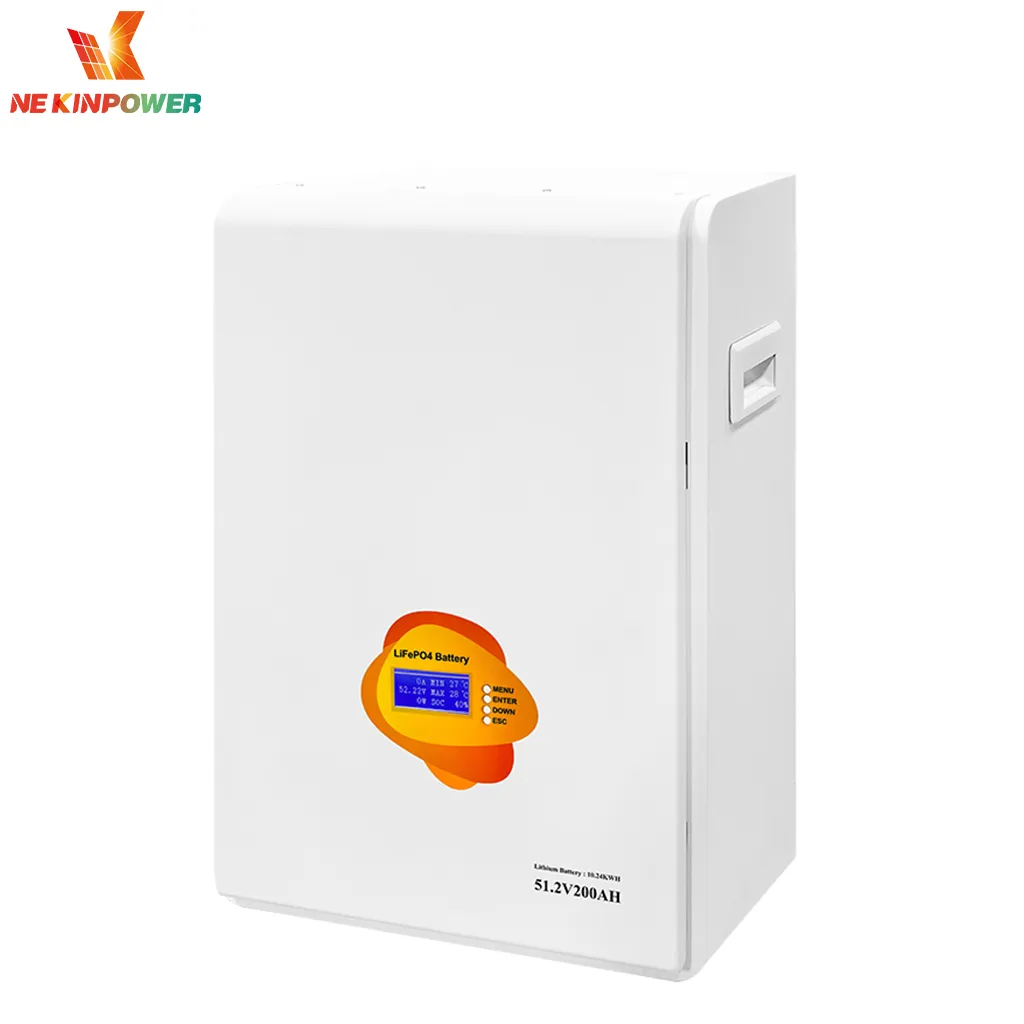
Battery-based energy storage systems have moved from a niche technology to a mainstream infrastructure component across residential, commercial, and industrial sectors. As global energy markets shift toward distributed generation and renewable integration, understanding where battery energy storage technology is heading matters as much as understanding what it does today. This article examines the core technical and market trends shaping energy storage systems—based on verified product data and application experience—to help buyers, project developers, and system integrators make informed procurement and design decisions.
Trend 1: LFP Chemistry Consolidating as the Industry Standard
Lithium Iron Phosphate (LFP) battery chemistry has established itself as the dominant technology for stationary energy storage systems, and that trajectory is accelerating. Unlike NMC (Nickel Manganese Cobalt) cells, LFP offers a thermal runaway threshold above 500°C, compared to approximately 200°C for NMC, which translates directly into safer installations in occupied commercial and residential buildings. LFP's inherent electrochemical stability also delivers verified cycle life exceeding 6,000 charge-discharge cycles at 80% depth of discharge, supporting operational lifespans of more than 10 years under standard conditions.
These characteristics make LFP the chemistry of choice for applications requiring long warranty periods, code-compliant indoor installation, and reduced fire risk—factors that increasingly drive procurement decisions in markets like Germany, Australia, Japan, and the United States. As LFP cell production scales globally, cost parity with NMC for storage applications has been reached in multiple market segments, removing the remaining economic barrier to broader LFP adoption. Buyers evaluating multi-year projects should prioritize verified LFP cycle data—specifically cells rated for 6,000+ cycles with documented third-party testing—over marketing claims of equivalent or superior NMC performance.
Trend 2: Modular and Scalable System Architecture
The shift from fixed-capacity, monolithic energy storage units to modular, stackable system architectures is one of the most consequential design trends in the industry. Modular ESS designs allow buyers to commission a system at an initial capacity—such as 3.84 kWh or 7.68 kWh—and expand it incrementally as load requirements grow, without replacing core hardware.
This architecture has practical implications for both residential and commercial buyers. For a household installing rooftop solar, starting with a 3.84 kWh wall-mounted unit and adding modules to reach 15.36 kWh or beyond means capital expenditure scales with actual energy demand, not projected peak demand. For commercial and industrial operators, the ability to deploy additional modules as part of a phased expansion reduces the risk of over-specification in early project stages. Wall-mounted household energy storage batteries in the 3.84 kWh to 15.36 kWh range, and rolling-desk-style storage systems in the 2 kWh to 20 kWh range, represent this modular approach in commercially available products today.
System integrators and EPC contractors should verify that modular systems use compatible BMS firmware across module generations, support parallel and series expansion without bus conflicts, and maintain IP65-rated enclosure integrity across configurations. These are the technical details that distinguish truly field-expandable systems from architectures that only nominally support scaling.
Trend 3: Integrated Solar-Storage Systems Becoming the Baseline Configuration
The combination of photovoltaic generation with on-site battery storage has shifted from an optional enhancement to the expected baseline configuration in both commercial and residential projects. Solar carports, rooftop PV with wall-mounted ESS, and solar inverter-storage systems are increasingly specified as integrated packages rather than separate components.
A verified application example illustrates this integration trend: a 1.5 MW solar carport project in Brazil demonstrated how PV generation and structural covered parking could be combined in a single installation, providing simultaneous generation capacity, vehicle protection, and grid support. In off-grid and weak-grid environments—such as the Maldives tourism sector installation that generated approximately 15,000,000 kWh annually while reducing diesel consumption by 50 tonnes—integrated solar-storage systems deliver economic returns that neither component achieves independently.
For buyers evaluating integrated systems, the key technical requirements are inverter-BMS communication protocol compatibility (typically CAN bus or RS485), the ability to configure charge/discharge schedules based on time-of-use tariffs, and support for both grid-tied and off-grid operating modes. Solar inverters that are designed and certified for operation with specific ESS units reduce commissioning complexity and warranty ambiguity.
Trend 4: Commercial and Industrial (C&I) Segment Driving Demand Growth
While residential energy storage receives significant attention, the commercial and industrial segment is experiencing faster demand growth driven by peak demand charge management, backup power requirements for critical operations, and industrial renewable energy commitments. C&I applications typically require systems in the 20 kWh to multi-megawatt range, with operational reliability requirements that exceed residential use cases.
Key buying criteria in the C&I segment include: certified operational safety records across multiple installations, documented performance in high-ambient-temperature environments, compatibility with building energy management systems (BEMS), and the availability of remote monitoring and diagnostics. Systems deployed in diverse climatic conditions—from European installations operating in cold environments to tropical deployments in Southeast Asia and the Pacific—provide the cross-climate operational data that risk-aware C&I buyers increasingly require before procurement.
The availability of verified, multi-market deployment records—specifically installations in Germany, Australia, Japan, and comparable markets with rigorous safety and performance standards—serves as a practical trust signal for C&I buyers who cannot rely solely on manufacturer specifications. Zero reported safety incidents across a defined installed base is a measurable reliability metric, while aggregate deployment volume provides evidence of manufacturing consistency.
Trend 5: Portable and Distributed Energy Storage Expanding Use Cases
Beyond stationary wall-mounted and rack-mounted systems, portable battery energy storage units are expanding the range of applications for which mobile or distributed power delivery is viable. Units in the 300 W to 1,000 W output range with integrated battery capacity support temporary site power, remote outdoor operations, emergency backup for critical medical or communications equipment, and off-grid recreational and field applications.
The technical specifications that determine fitness for portable ESS applications include output waveform quality (pure sine wave for sensitive electronics), battery management system protection against over-charge, over-discharge, short circuit, and over-temperature, and physical ingress protection ratings appropriate for outdoor use. The same LFP chemistry that drives stationary ESS adoption provides the cycle life and thermal safety advantages that make portable units suitable for regular use rather than emergency-only deployment.
For distributors and buyers evaluating portable ESS for commercial fleet or field operations, the key question is whether the unit is engineered as a standalone product with its own integrated BMS, or whether it is a battery pack that requires an external inverter or controller. Products designed as complete, self-contained systems with integrated solar input capability offer the simplest deployment path for distributed applications.
Trend 6: Tracking and Positioning Technology Improving Solar Yield
As solar-storage systems become the baseline configuration for commercial energy projects, the efficiency of the PV generation component directly affects the economics of the entire system. Single-axis and dual-axis solar tracking brackets are seeing increased adoption in ground-mounted and carport installations because they increase annual energy yield without requiring additional panel area.
Single-axis tracking systems adjust panel orientation throughout the day to follow the sun's azimuth, typically delivering a 20–30% improvement in daily energy yield compared to fixed-tilt installations. Dual-axis systems add elevation tracking for seasonal optimization and can approach maximum theoretical yield for a given location. For solar carport structures and ground-mounted commercial installations, the structural integration of tracking brackets requires coordination between the tracker manufacturer's specifications and the load-bearing requirements of the mounting structure—a detail that affects both installation cost and long-term structural integrity.
Frequently Asked Questions
Q: How does LFP battery chemistry compare to other options for long-term energy storage deployments?
A: LFP offers a thermal runaway threshold above 500°C, verified cycle life exceeding 6,000 cycles, and operational lifespans of more than 10 years under standard conditions. These characteristics make it the preferred chemistry for commercial and residential stationary storage applications where safety, longevity, and total cost of ownership are primary evaluation criteria.
Q: What capacity range should commercial buyers consider for initial energy storage system deployments?
A: Commercial buyers typically start with modular systems in the 3.84 kWh to 15.36 kWh range for light commercial and retail applications, scaling to 20 kWh and above for industrial and multi-tenant configurations. The key advantage of modular architectures is the ability to expand capacity incrementally rather than replacing the entire system as demand grows.
Q: What certifications and performance records should buyers verify before procuring a battery energy storage system?
A: Buyers should verify IP65 or higher enclosure protection ratings, BMS certifications for the target market (CE for Europe, relevant UL standards for North America), documented cycle testing results from third-party laboratories, and verifiable installation references in comparable climatic conditions. Operational safety records across a defined installed base—with zero safety incidents as a documented metric—provide a more reliable indicator of field reliability than laboratory specifications alone.