
 EN
EN



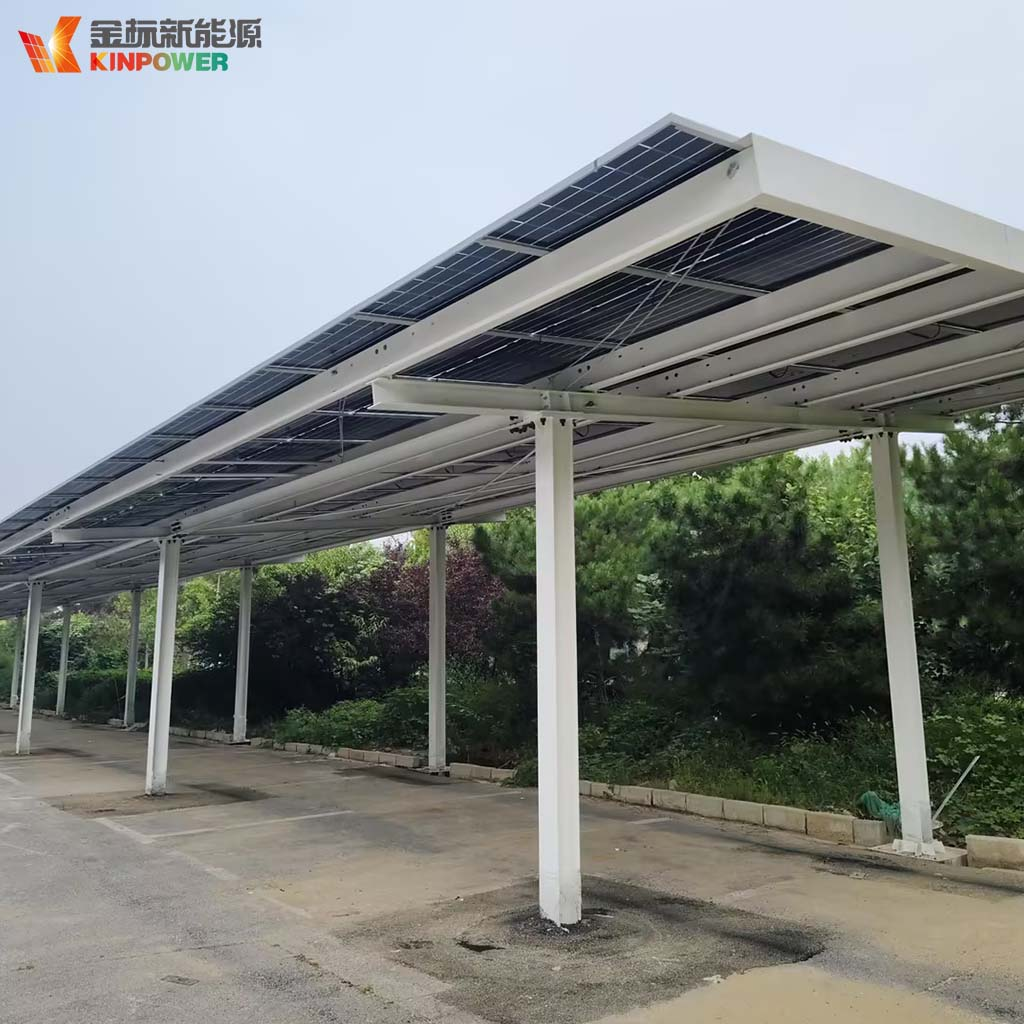
Commercial property owners face rising energy costs and underutilized parking areas. A solar carport addresses both challenges by converting parking lots into power-generating assets while protecting vehicles from weather exposure. This article examines the operational and financial benefits of solar carports for commercial, industrial, and residential applications.
Dual-Purpose Land Utilization
A solar carport transforms an existing parking lot into a dual-purpose structure that generates electricity and provides covered parking. Unlike ground-mounted solar arrays that require additional land, a solar carport uses space already allocated for parking, making it suitable for facilities with limited expansion room. Shopping malls, office complexes, and industrial sites can maintain their parking capacity while adding energy generation. A 1.5 MW solar carport project at a shopping mall in Brazil demonstrates how large-scale commercial parking areas can accommodate megawatt-level solar installations without reducing parking availability.
Vehicle Protection and Weather Shielding
Beyond energy generation, a solar carport protects vehicles from UV radiation, hail, rain, and snow. The canopy structure reduces interior vehicle temperatures by blocking direct sunlight, which extends vehicle paint life and reduces air conditioning load. For fleet operators, this protection reduces maintenance costs and extends vehicle service intervals. Solar carport structures can be customized with automatic parking shed designs that integrate access control and lighting systems, enhancing both security and convenience.
Integrated Energy Storage Capability
A solar carport can incorporate battery storage systems to store excess solar energy for use during peak demand periods or nighttime. LiFePO4 battery modules with 6000+ charge cycles and a service life exceeding 10 years provide a durable storage solution. Available storage capacity tiers of 3.84 kWh, 7.68 kWh, 11.52 kWh, and 15.36 kWh allow system designers to match storage capacity to the solar carport's generation output and the facility's consumption profile. The LiFePO4 chemistry offers thermal runaway resistance above 500 degrees Celsius, providing a safety margin that meets IP65-rated outdoor installation requirements.
Cost Savings and Energy Independence
Solar carports reduce grid electricity purchases by generating on-site power during daylight hours. When paired with battery storage, the system extends savings into evening hours through peak shaving, shifting consumption from high-tariff periods to stored solar energy. A solar carport installation in the Maldives generates 15 million kWh annually and reduces diesel fuel consumption by 50 tons per year, demonstrating how solar carports can replace fossil fuel dependency in off-grid and island environments. For commercial facilities with time-of-use electricity pricing, the combination of solar generation and storage can reduce peak demand charges by discharging stored energy during the facility's highest consumption windows.
Modular Design and Scalability
Solar carport systems use modular battery and panel configurations that allow phased expansion. A facility can start with a smaller storage capacity and add modules as energy needs grow. The rolling-desk-style energy storage battery series offers capacity from 2 kWh to 20 kWh, providing flexibility for different parking area sizes and load requirements. Wall-mounted energy storage options with 30,000 units deployed across Germany, Australia, and Japan with zero safety incidents demonstrate the reliability of modular LiFePO4 storage in diverse climate conditions.
Environmental and Regulatory Benefits
Solar carports contribute to corporate sustainability goals by reducing carbon emissions and demonstrating renewable energy commitment. The systems qualify for certifications including CE, RoHS, and UN38.3, which facilitate compliance with international import and safety regulations. For commercial properties subject to building energy performance standards, a solar carport installation can improve the building's energy rating by offsetting grid consumption with on-site renewable generation.
FAQ
Q: What storage capacity options are available for solar carports?
A: Solar carport integrated storage is available in 3.84 kWh, 7.68 kWh, 11.52 kWh, and 15.36 kWh tiers, allowing capacity matching to the solar array output and facility consumption profile.
Q: How long do LiFePO4 batteries last in a solar carport system?
A: LiFePO4 batteries provide 6000+ charge cycles and a service life exceeding 10 years, reducing replacement frequency and total cost of ownership.
Q: Can a solar carport be installed on an existing parking lot?
A: Yes. Solar carports are designed for existing parking areas and do not require additional land. The structure provides covered parking while generating electricity, making it suitable for facilities with limited expansion space.