 ×
×
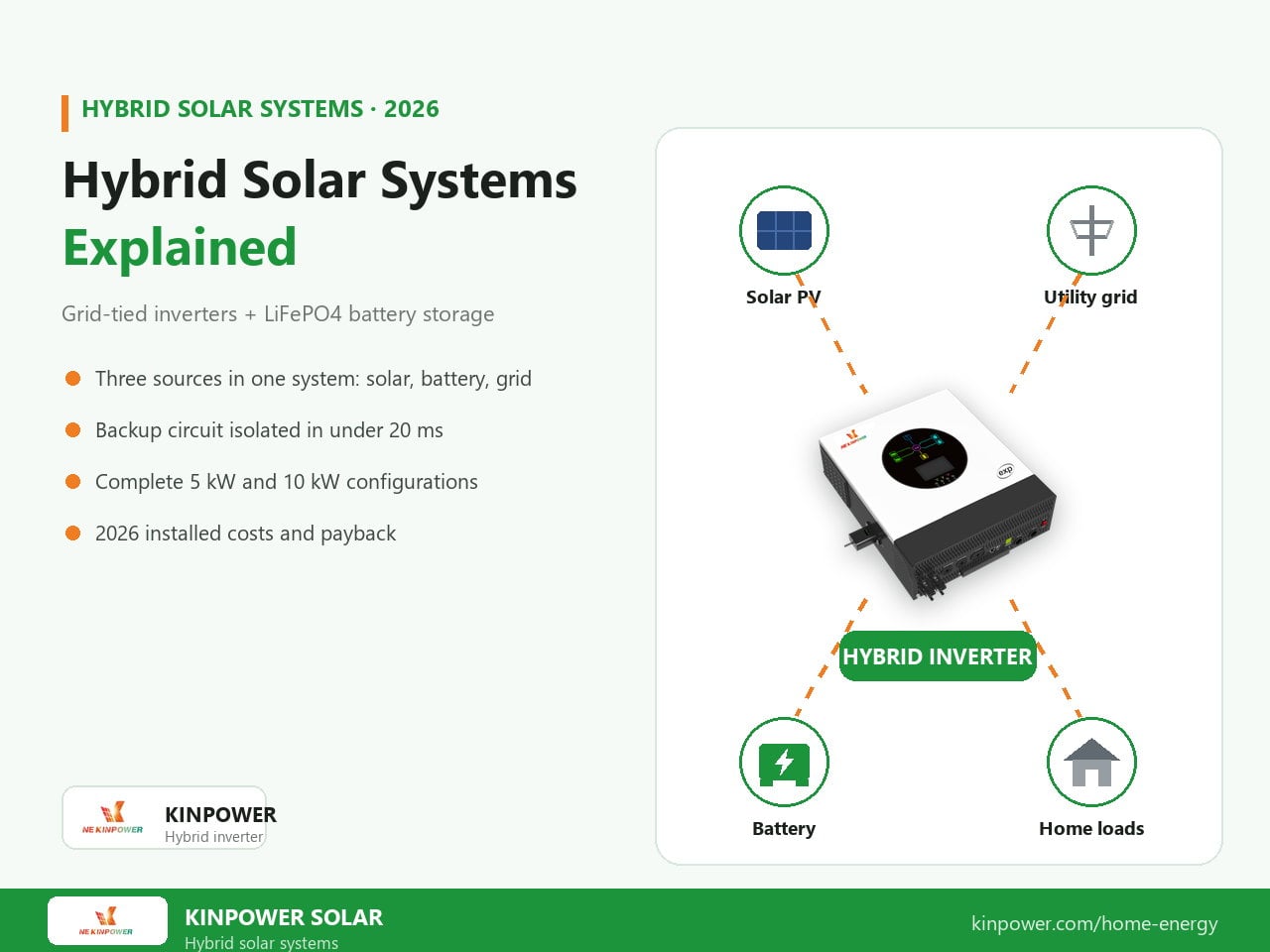
A hybrid solar system combines three power sources in one installation: solar panels, a battery bank, and the utility grid. It gives you the bill savings of grid-tied solar plus the outage protection of an off-grid system — without abandoning the grid when you need it.
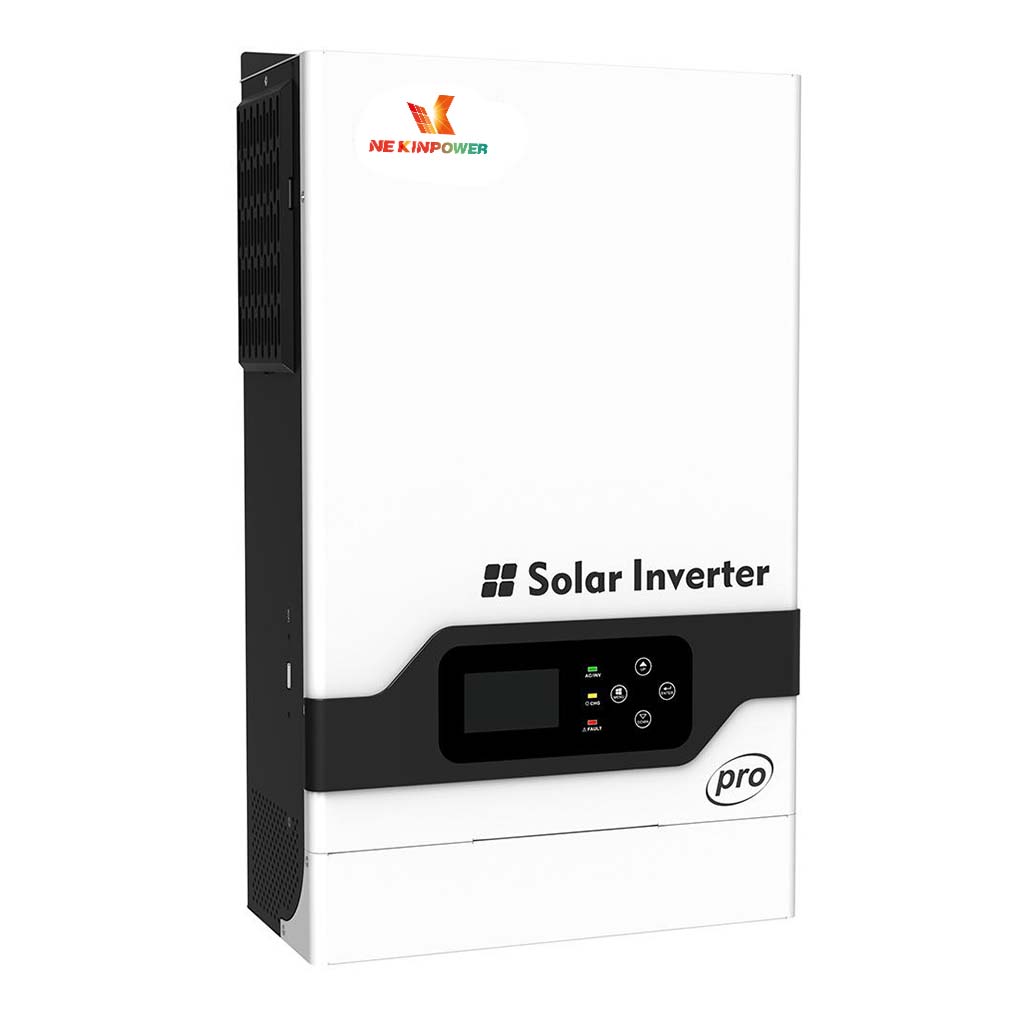
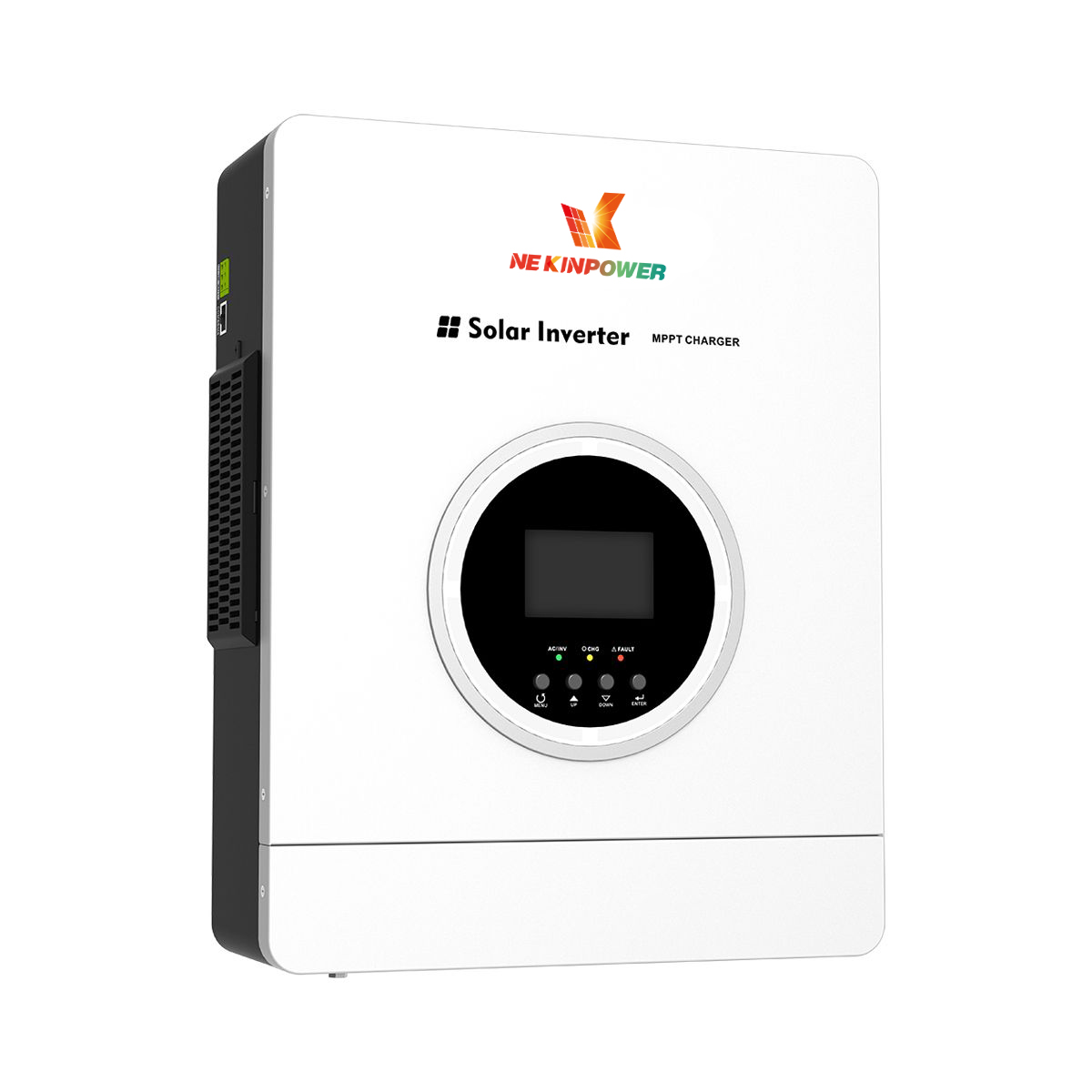
The heart of the system is the hybrid inverter, a device that manages solar DC input, battery charging and discharging, grid import/export, and AC output for your loads. In an on grid off grid hybrid solar system, the inverter decides in milliseconds where each watt should go: to your appliances, into the battery, or out to the grid.
That intelligence is why hybrid systems have become the default choice for homeowners who want both solar and grid hybrid flexibility and real backup power.
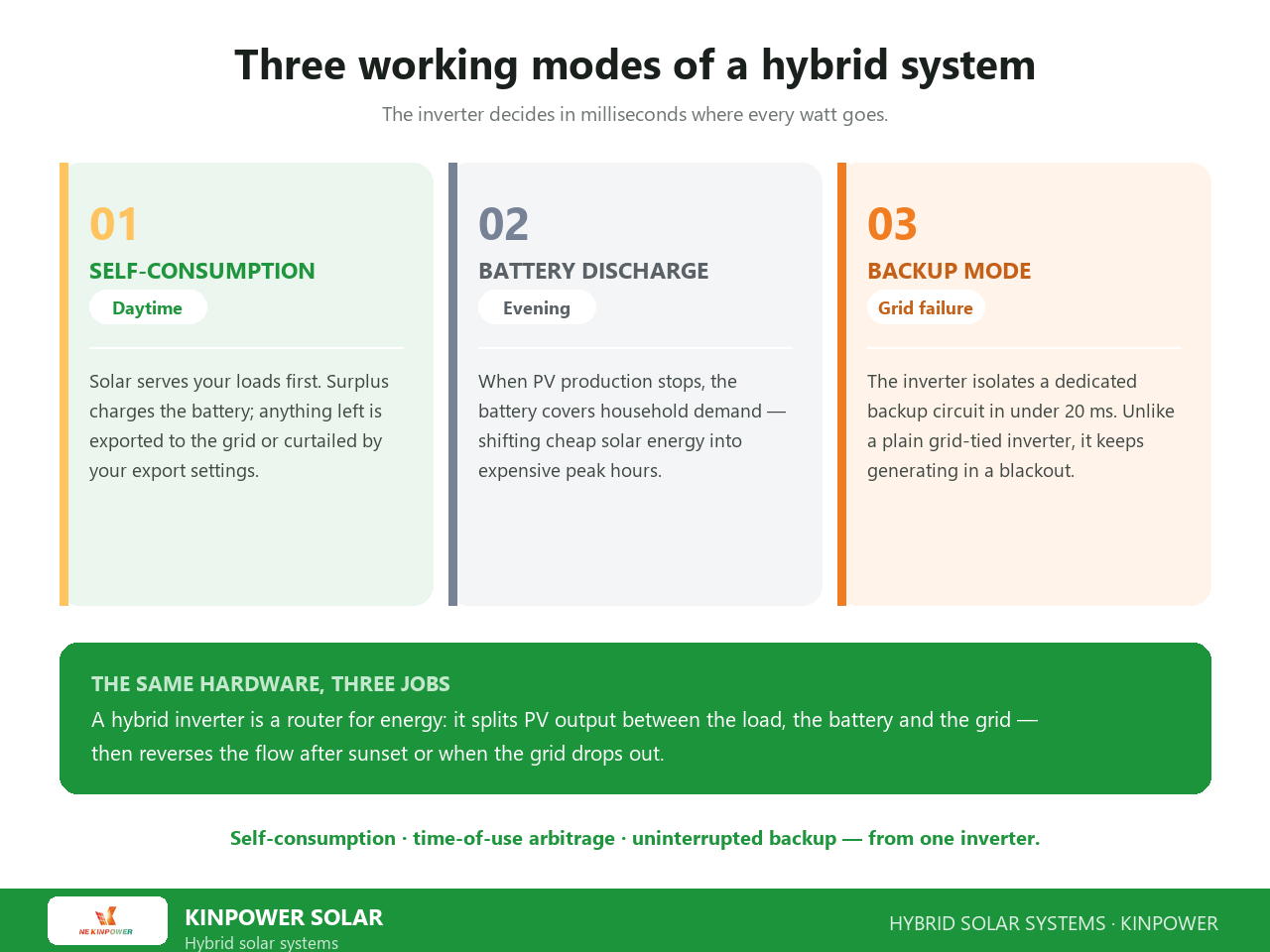
1. Self-consumption mode (daytime) Solar power serves your loads first. Surplus charges the battery; anything left over is exported to the grid or curtailed according to your export settings.
2. Battery discharge mode (evening) When solar production stops, the system discharges the battery to cover household demand — the classic time-of-use arbitrage that shifts cheap solar energy into expensive peak hours.
3. Backup mode (grid failure) The inverter isolates a dedicated backup circuit (often in under 20 ms) and keeps essential loads running from the battery and, if the sun is out, from the panels. Unlike a pure grid-tied inverter, a hybrid pv solar system keeps generating during a blackout.
|
Configuration |
Description |
Best for |
|
All-in-one hybrid |
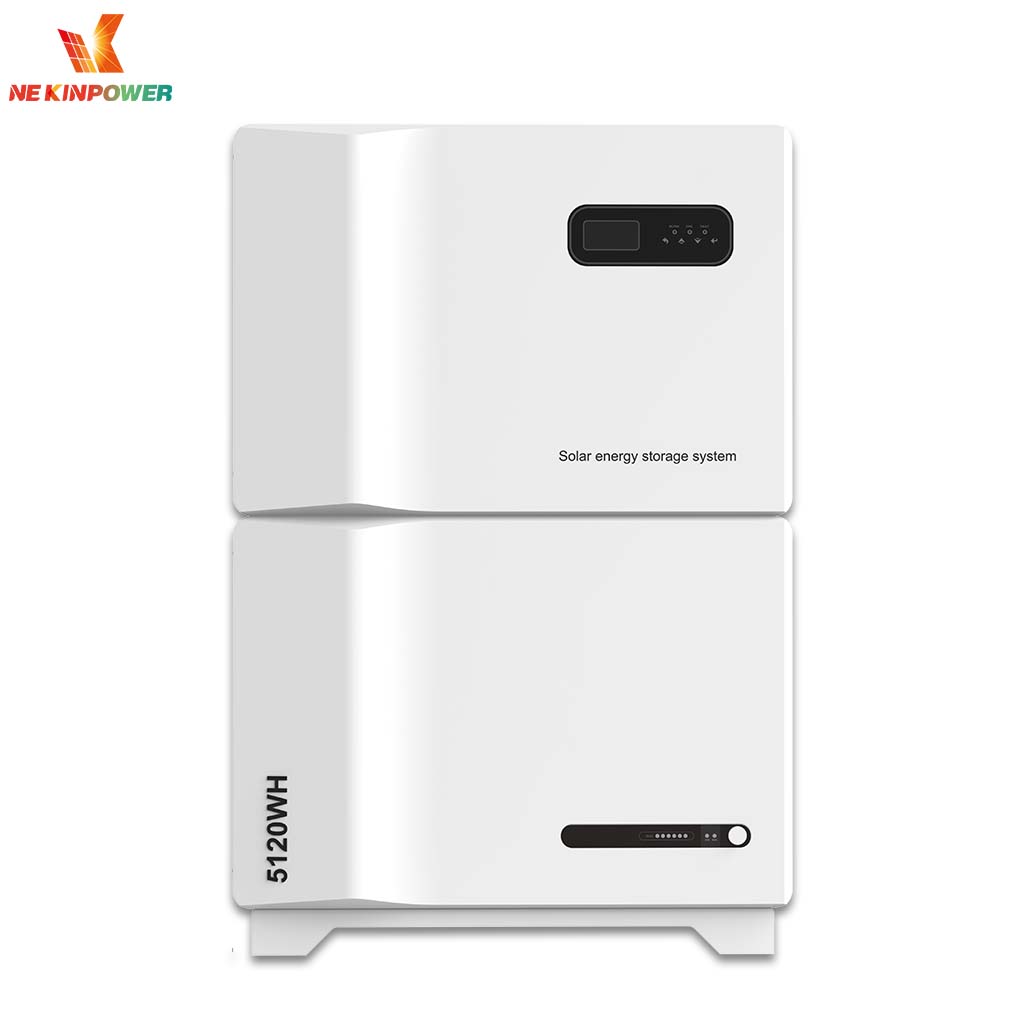
Inverter + battery in one enclosure |
Clean installation, small footprints |
|
Inverter + separate battery rack |
Hybrid inverter plus stackable battery modules |
Scalable capacity, serviceability |
|
AC-coupled retrofit |
Battery inverter added to an existing grid-tied system |
Upgrading without replacing panels |
|
Multi-source hybrid |
Adds a generator or wind turbine via a hybrid input |
Weak grids, rural sites |
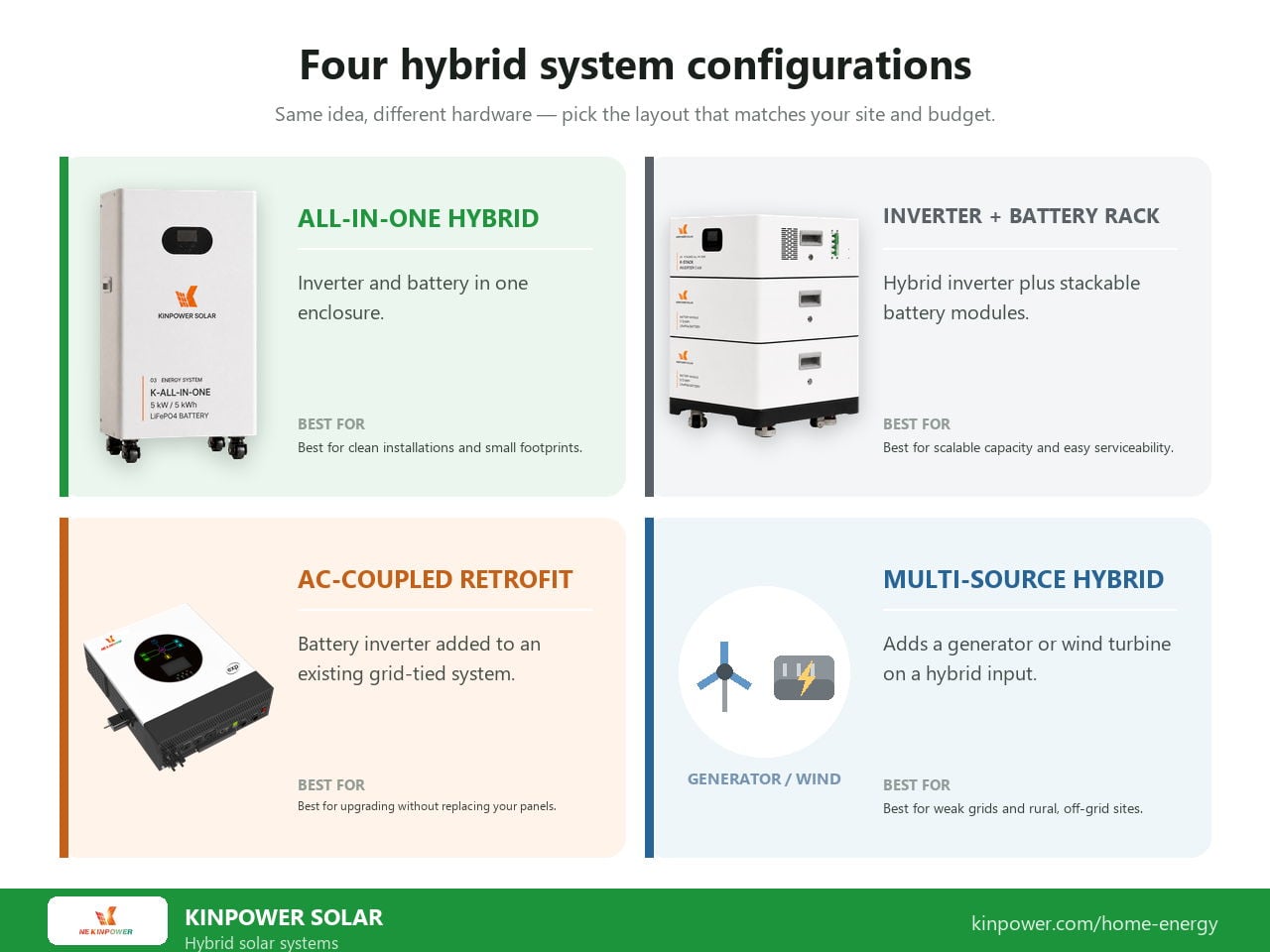
For most homes in 2026, the sweet spot is an all-in-one 5 kW unit for everyday backup, or a stackable 10 kW system when you want whole-home coverage and EV charging support.
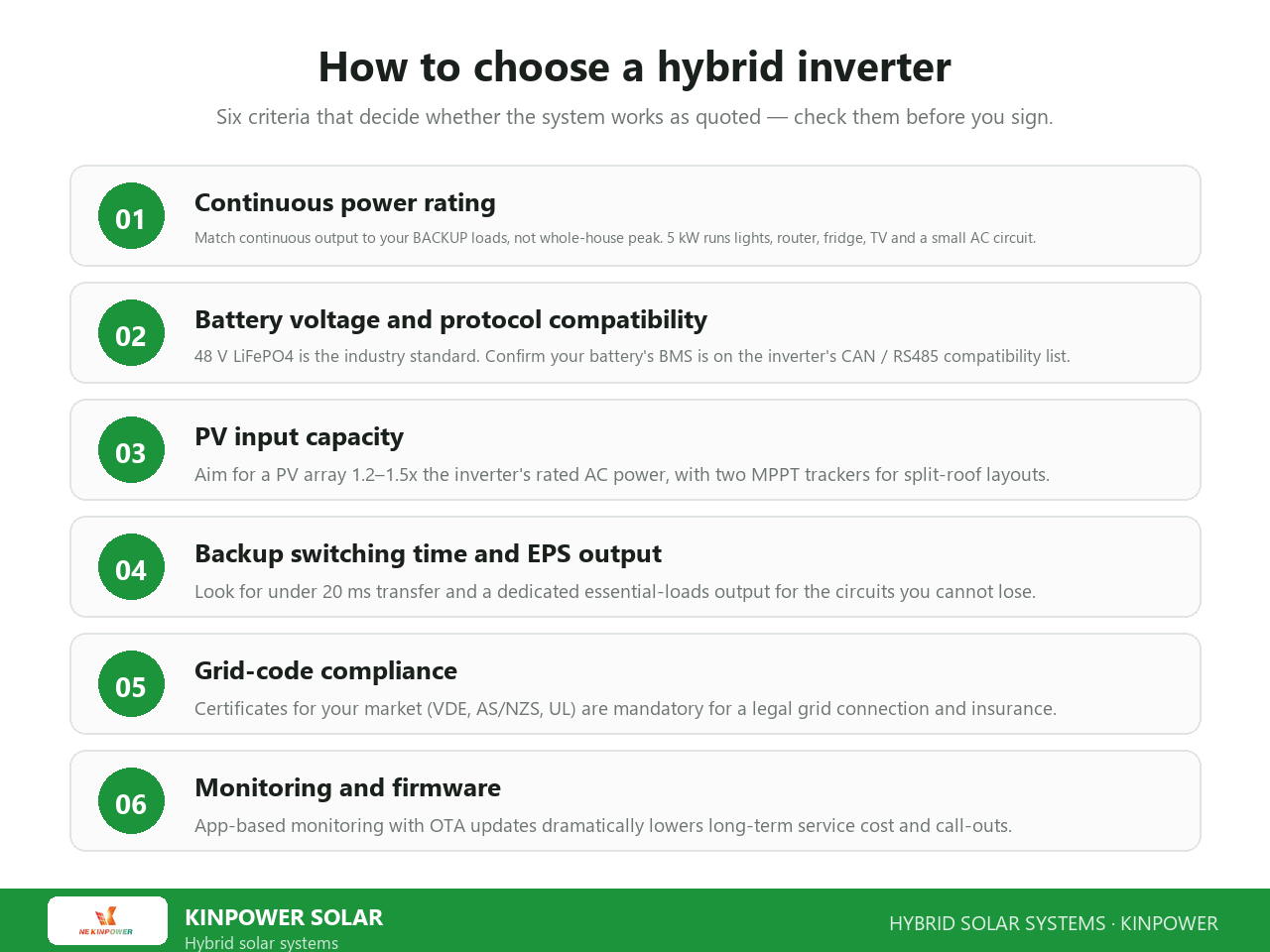
Key selection criteria:
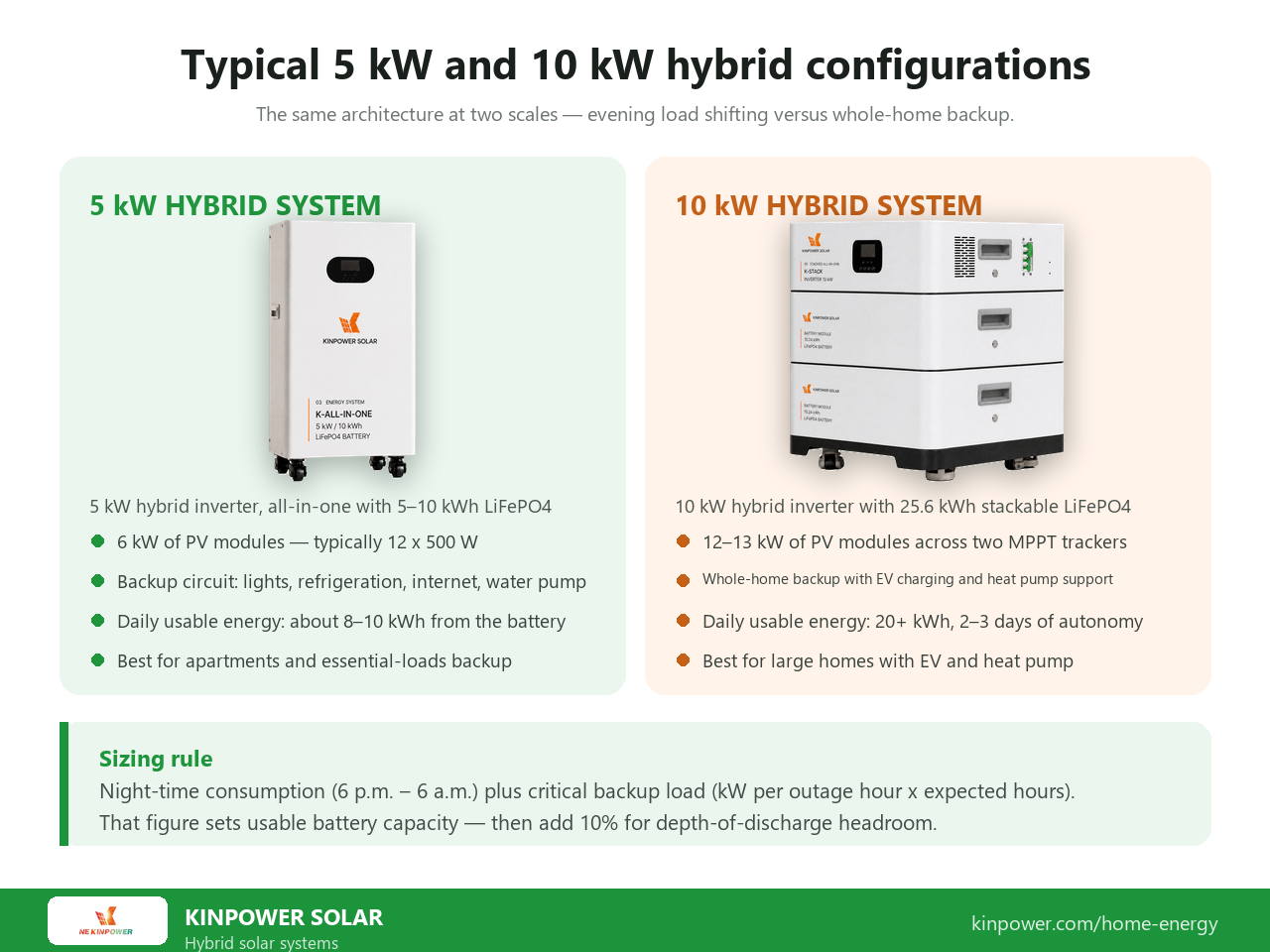
5 kW hybrid system with battery
10 kW hybrid system with battery
Sizing rule: take your nighttime consumption (kWh from 6 p.m. to 6 a.m.) and add your critical backup loads (kWh per outage hour × expected outage hours). That figure determines usable battery capacity — then add 10% depth-of-discharge headroom.
|
System |
Typical installed range |
|
5 kW hybrid inverter + 5 kWh battery |
$6,500 – $10,000 |
|
5 kW hybrid inverter + 10 kWh battery |
$9,000 – $13,500 |
|
10 kW hybrid + 25 kWh storage |
$18,000 – $27,000 |
|
AC-coupled battery retrofit (5 kWh) |
$3,500 – $6,000 |
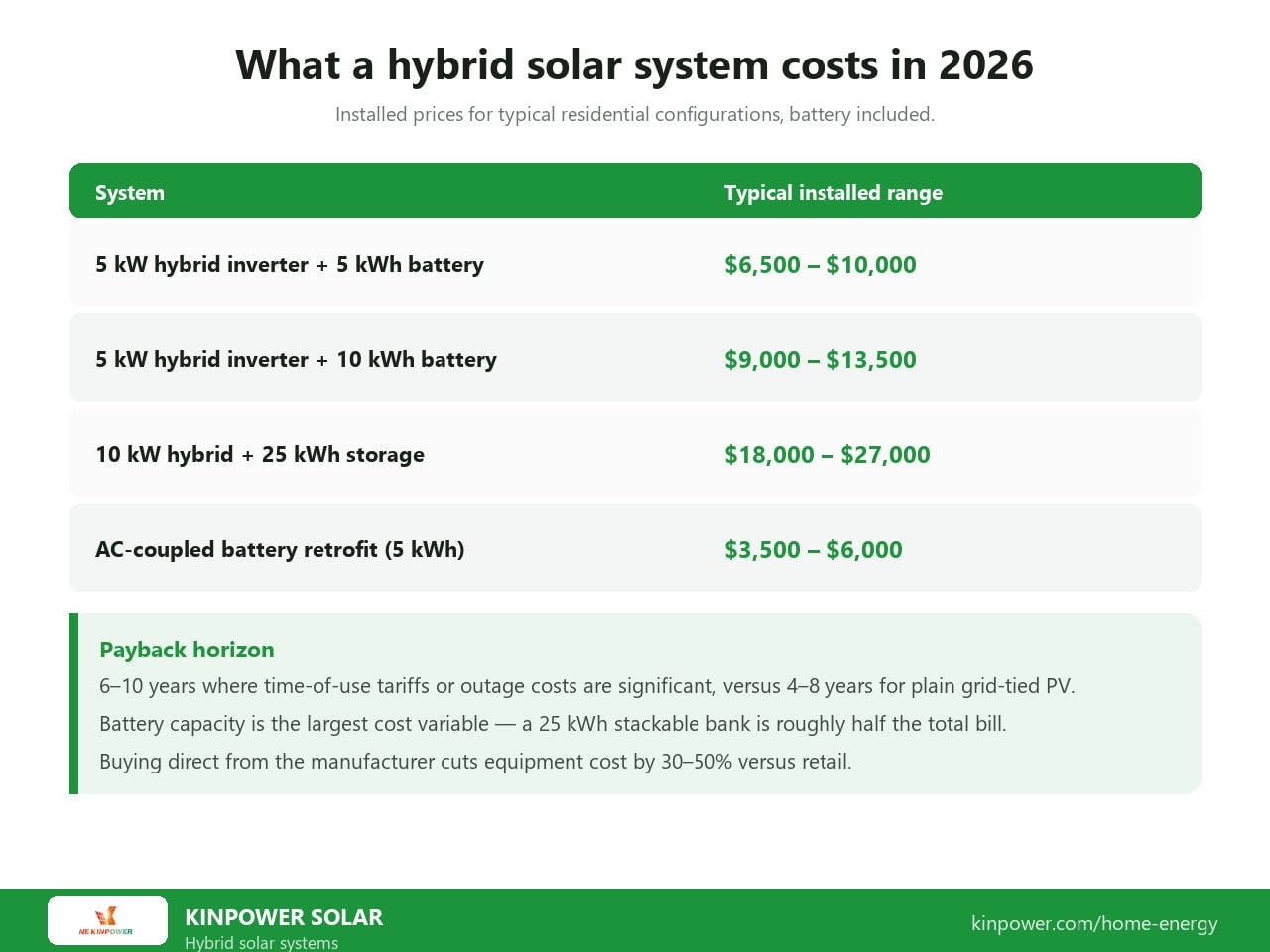
Battery capacity is the largest cost variable. A hybrid system typically delivers a 6–10 year payback where time-of-use tariffs or outage costs are significant, versus 4–8 years for a plain grid-tied system.
Buying direct from a manufacturer can reduce equipment cost by 30–50% versus retail, provided your installer is comfortable working with supplied components.
Hybrid projects attract a wide range of naming conventions. If you are comparing quotations, this decode table will save you from comparing two different things:
|
Phrase you'll see |
What it actually means |
|
Hybrid solar system with battery |
The complete setup — PV array, hybrid inverter and LiFePO4 battery bank in one installation |
|
Hybrid on grid solar system / solar and grid hybrid system |
A hybrid system that stays connected to the utility grid and can import or export as needed |
|
Hybrid grid solar system |
Same architecture viewed from the grid side: the grid is one of the three available energy sources |
|
Hybrid energy storage system |
The storage subsystem of a hybrid plant — battery, BMS and battery-side conversion |
|
Hybrid generator solar |
A hybrid configuration that adds a diesel or gas generator input for prolonged outages or weak grids |
|
Hybrid solar panel system |
Marketing shorthand for a PV array managed by a hybrid inverter |
|
Hybrid solar power generator |
Portable or semi-portable hybrid inverter plus battery, often used for backup power |
|
Solar PV hybrid system |
Engineering term for the DC-coupled PV + battery + grid architecture |
|
Hybrid inverter solar system |
The same as above, named from the inverter's perspective |
|
On grid hybrid solar inverter |
A hybrid inverter certified for grid-tie operation, with an EPS/backup output |
|
Hybrid inverter for solar system |
Generic term covering both single-phase and three-phase hybrid inverters |
|
Hybrid rooftop solar system |
A hybrid installation on a building roof, typically 3–20 kW |
|
Hybrid solar battery system |
Emphasises the battery element of a hybrid installation |
|
Hybrid solar module |
A module-level design with an integrated optimiser or micro-inverter; not the same as a hybrid system |
|
On grid solar system with battery backup |
Practically identical to a hybrid system — grid-tied, but with outage protection |
|
Hybrid solar system for sale |
Indicates a complete kit offered as one SKU; always confirm what's inside (inverter? battery? mounting?) |
The key questions to ask any supplier: is the inverter grid-tie certified in my market, what is the backup switching time, and which battery protocols are supported?
Advantages
Trade-offs
If your grid is stable and you only care about cost per kWh, a simpler grid-connected PV system remains the better ROI. If blackouts, weak grid stability, or energy independence matter, hybrid is the right choice.
Q: Do hybrid systems still export to the grid? Yes — configuration dependent. You can prioritise self-consumption, export surplus, or block export entirely where regulations restrict it.
Q: Can I add a battery to my existing solar system? Yes, via an AC-coupled hybrid inverter. It's a common and cost-effective upgrade path.
Q: Can a hybrid inverter run without a battery? It can operate as a grid-tied inverter, but backup functionality requires a battery (or a generator input).
Q: Which battery chemistry is best for hybrid systems? LiFePO4. Its 6,000+ cycle life, thermal stability and 90%+ usable depth of discharge make it the standard for residential storage.
 Hot News
2026-10-08
2026-10-06
2026-09-30
2026-09-28
2026-09-23
2026-09-22
 EN
EN