EN



K-CABINET-Industrial and commercial energy storage cabinets
Commercial and industrial storage in two tiers: modular LiFePO4 battery cabinets from 40.96 to 128 kWh, and 125 kW all-in-one units of 241 or 261 kWh with integrated PCS and MPPT — all IP54 for outdoor installation.
- Overview
- Recommended Products
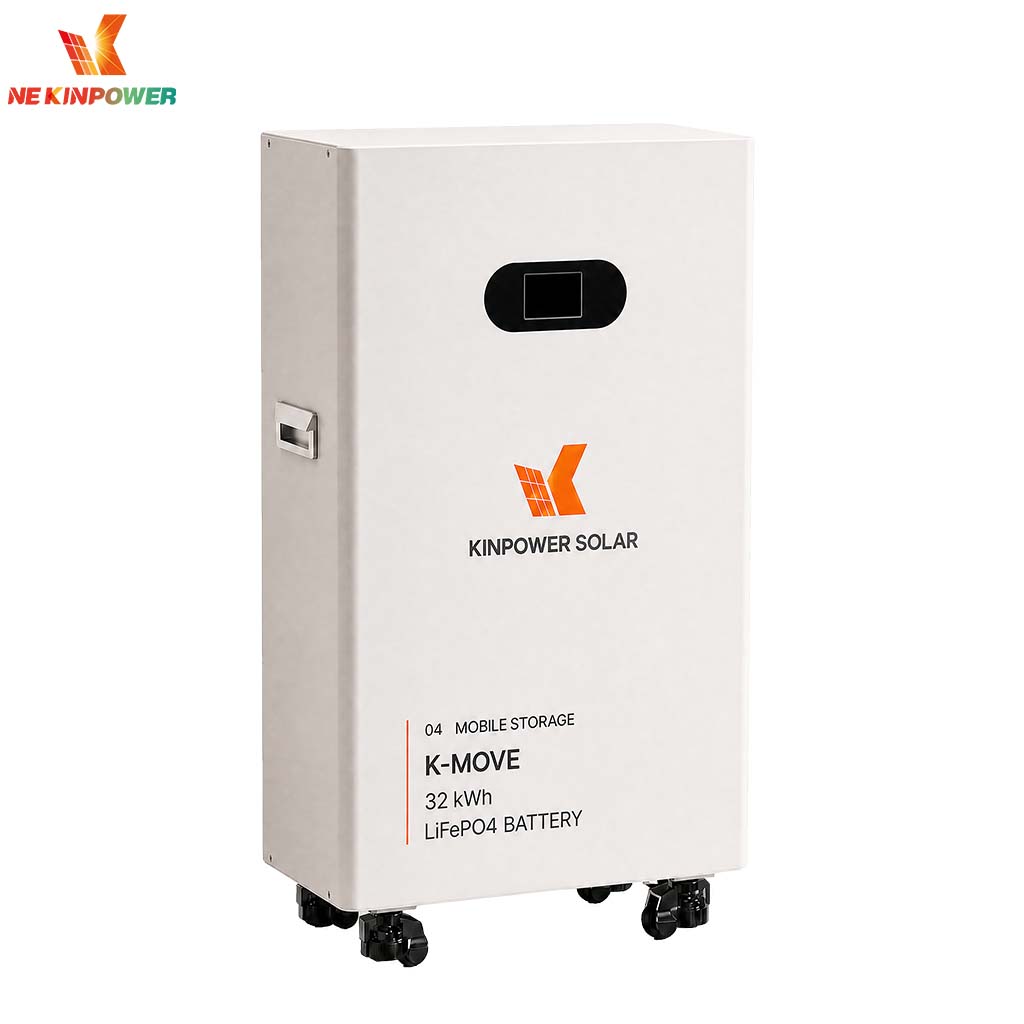
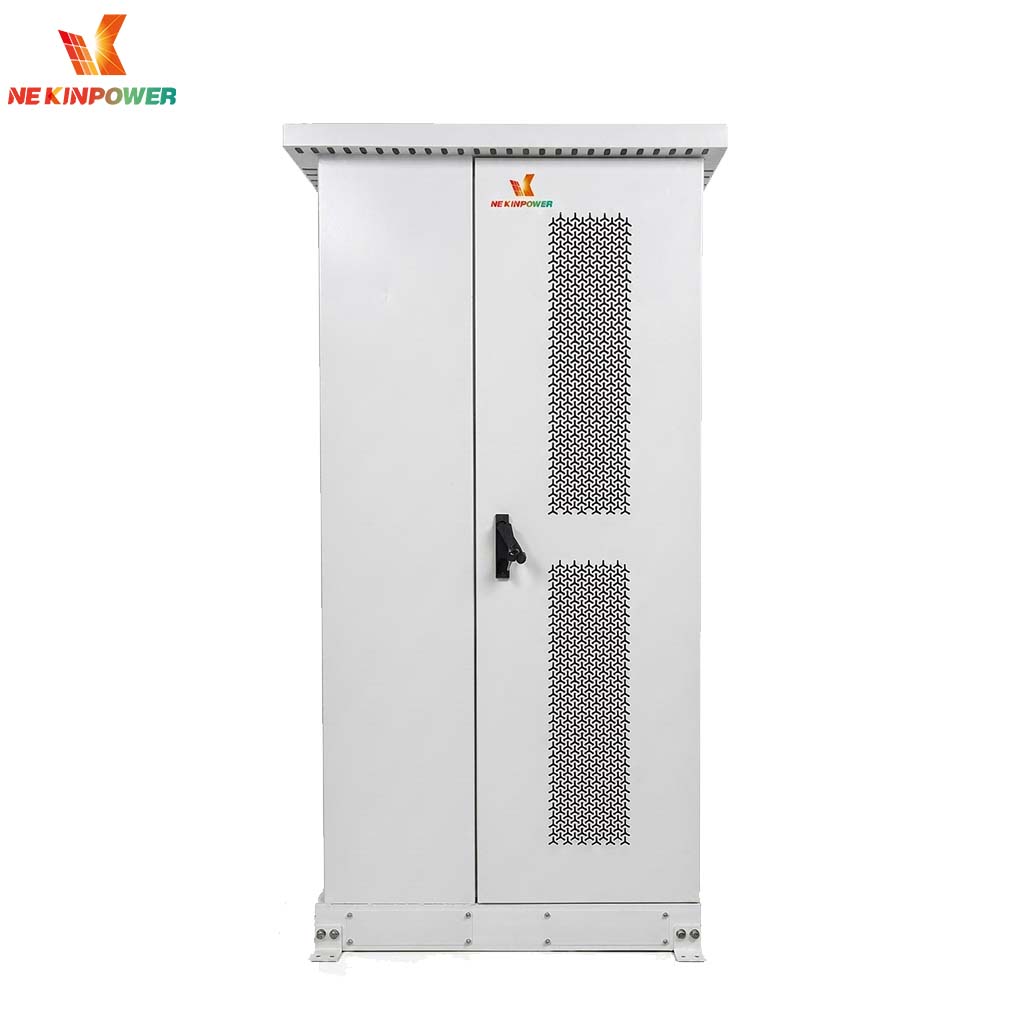
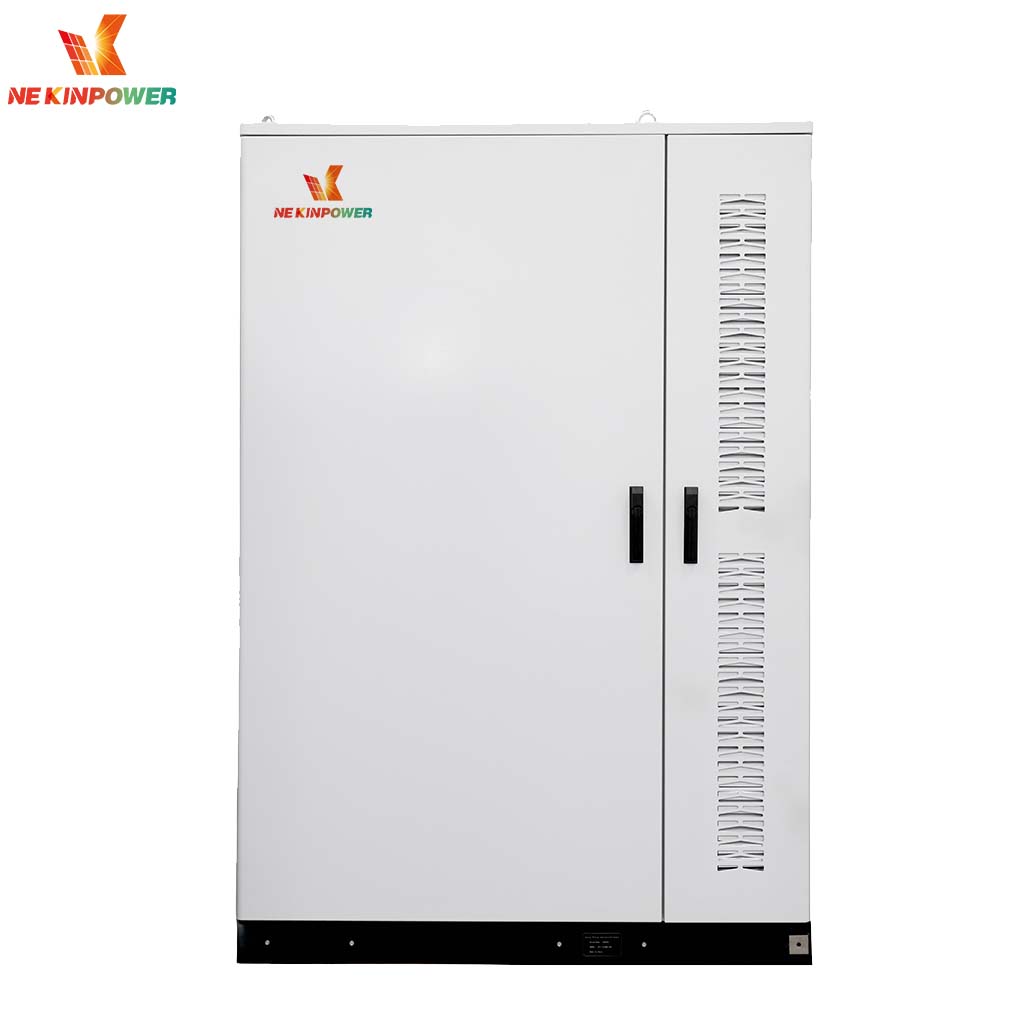
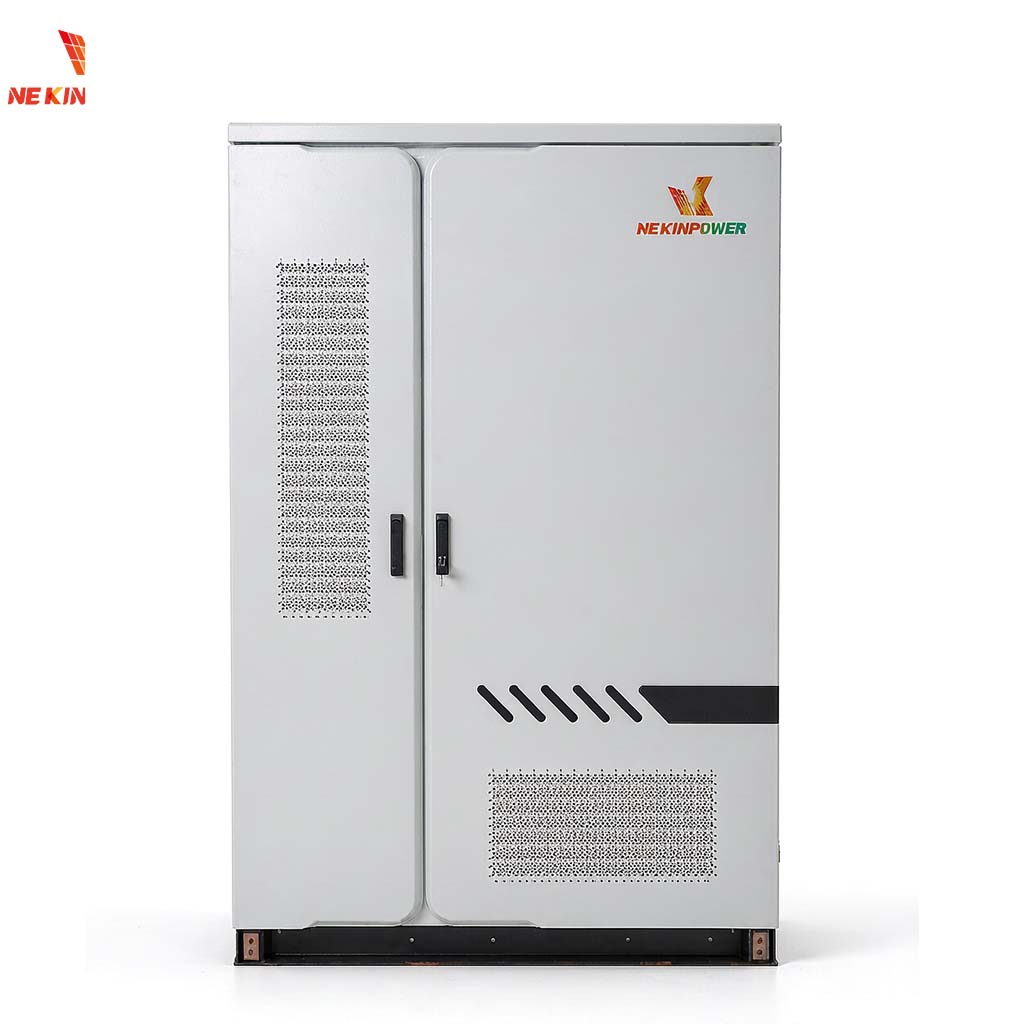
The KINPOWER K-CABINET is a commercial and industrial energy storage cabinet series built for businesses that need to cut demand charges, shift solar energy into the evening and keep operations running through outages. The series covers two tiers: modular LiFePO4 battery cabinets from 40.96 to 128 kWh for shops, workshops and small facilities, and all-in-one 125 kW units of 241 or 261 kWh with an integrated PCS and MPPT for factories, cold stores and large commercial rooftops. Every cabinet is IP54-rated and installs outdoors, next to the switchgear it supports.
What is a commercial energy storage cabinet?
A commercial energy storage cabinet is a floor-standing, outdoor-rated enclosure that houses LiFePO4 battery modules, the battery management system and — in all-in-one models — the power conversion system, wired into the facility's low-voltage distribution board. During the day it charges from the PV array or from cheap grid tariff windows; during the evening peak and tariff windows it discharges to carry the facility's load. For most commercial sites, the payback comes from three sources: demand-charge reduction, time-of-use arbitrage and solar self-consumption that would otherwise be exported.
Unlike residential wall-mounted batteries, a C&I cabinet is sized against the facility's load profile in kilowatts and kilowatt-hours, which is why the K-CABINET series spans such a wide range: a retail store and a plastics factory sit at opposite ends of it.
Two tiers: modular battery cabinets or 125 kW all-in-one
| Battery cabinets (18-50 kW class) | All-in-one (125 kW class) | |
|---|---|---|
| Energy range | 40.96 to 128 kWh | 241 or 261 kWh |
| Architecture | Battery cabinet, paired with an external PCS or hybrid inverter | Integrated PCS and MPPT in the same cabinet — PV connects directly |
| Grid connection | Per the paired PCS | 380/400 V three-phase, up to 216 A |
| Cooling | Natural / forced air per module layout | Air-cooled (241 kWh) or liquid-cooled (261 kWh) |
| Typical site | Shop, workshop, small plant, telecom or off-grid facility | Factory, cold store, large commercial rooftop with PV |
The two tiers share the same prismatic LiFePO4 cell platform and the same RS485 / CAN / Wi-Fi monitoring stack, so an installer or EPC can cover a client base from single cabinets to multi-cabinet factory sites with one product family.
Which configuration do I need?
Size the cabinet against two numbers from the facility's load profile: the peak demand in kW the battery must carry, and the energy in kWh it must supply between charge windows. As a rule, the battery should cover the evening peak block, with the PV array or grid covering the rest.
| Typical application | Evening block to cover | Recommended configuration |
|---|---|---|
| Retail store, restaurant, small workshop | 15-25 kW / 25-35 kWh | 18 kW cabinet — 40.96 kWh |
| Workshop or guesthouse with a 30 kW peak | 25-35 kW / 40-55 kWh | 30 kW cabinet — 51.2 / 61.44 kWh |
| Small plant, cold room, filling station | 35-50 kW / 60-110 kWh | 40 or 50 kW cabinet — 71.68 to 128 kWh |
| Factory or large commercial rooftop with PV | 100 kW and up / 150-250 kWh | 125 kW all-in-one — 241 or 261 kWh |
Outdoor-ready by design — IP54
Both tiers carry an IP54 rating, which means the cabinet installs outdoors on a concrete plinth beside the building — no plant room, no air-conditioned equipment space, no indoor clearance requirements. That matters commercially: the cabinet goes where the electrical infrastructure is, not where a spare room happens to be, and installation cost drops accordingly.
Specifications — battery cabinets (18-50 kW class)
| Parameter | 18 kW | 30 kW | 40 kW | 50 kW |
|---|---|---|---|---|
| Battery module | ||||
| Module nominal voltage | 51.2 V | |||
| Module nominal capacity | 100 Ah | 200 Ah | 200 Ah | 314 Ah |
| Rated module energy | 5.12 kWh | 10.24 kWh | 10.24 kWh | 16.08 kWh |
| Max charge current | 100 A | 100 A | 100 A | 200 A |
| System configuration | ||||
| Max stacking quantity | 6-8 pcs | 5-6 pcs | 7-8 pcs | 7-8 pcs |
| Rated system voltage | 51.2 V | 256 / 307.2 V | 358.4 / 409.6 V | 358.4 / 409.6 V |
| Rated system energy | 40.96 kWh | 51.2 / 61.44 kWh | 71.68 / 81.92 kWh | 112 / 128 kWh |
| Interface & environment | ||||
| Communication | RS485 / CAN / Wi-Fi | |||
| IP rating | IP54 (outdoor installation) | |||
| Cabinet dimensions / mm | 1297×1021×1699 | 1297×1021×1523 | 1297×1021×1866 | 1297×1021×2242 |
Specifications — all-in-one (125 kW class)
| Parameter | 125 kW / 241 kWh | 125 kW / 261 kWh |
|---|---|---|
| Battery | ||
| Battery nominal voltage / capacity | 768 V / 314 Ah | 832 V / 314 Ah |
| Rated energy | 241 kWh | 261 kWh |
| Working voltage | 600-876 V | 650-949 V |
| Power conversion (integrated) | ||
| AC maximum current | 216 A | |
| AC rated voltage | 380/400 V | |
| DC maximum input voltage | 950 V | |
| MPPT power (optional) | 120 kW | |
| MPPT voltage range | 200-950 V | |
| Mechanical & environment | ||
| Cabinet dimensions / mm | 1500×1476×2332 | 1450×1345×2266 |
| IP rating | IP54 | |
| Cooling | Air-cooled | Liquid-cooled |
| Net weight | 2,900 kg | 3,300 kg |
Where it fits
For a workshop or filling station with a daytime peak and a night tariff, a 40 or 50 kW cabinet sized at 80-128 kWh flattens the demand curve and shifts load into cheap hours. For a factory with a large rooftop PV array, the 125 kW all-in-one takes PV directly through its 120 kW MPPT, charges the 241 or 261 kWh bank midday, and carries the evening production shift — one cabinet, one grid connection, one monitoring account.
Where a site grows, cabinets add alongside: the monitoring stack stays the same from the first 40.96 kWh cabinet to a multi-cabinet factory installation.
Safety and certification
The K-CABINET series uses prismatic LiFePO4 cells with cell-level monitoring of voltage, current and temperature, plus over-charge, over-discharge, over-current and short-circuit protection at module and system level. The series carries CE, RoHS, UN38.3, IEC 62619 and IEC 62109 certification. UN38.3 test summary and transport documents ship with every order.
Frequently asked questions
Do the 18-50 kW cabinets include an inverter?
No — the 18-50 kW models are battery cabinets, and the PCS or hybrid inverter is sized to the cabinet's voltage window (51.2 V for the 18 kW class, 256-409.6 V for the 30-50 kW classes). The 125 kW models are all-in-one: the PCS and the optional 120 kW MPPT are integrated in the same cabinet, so PV and grid connect directly.
Can the cabinets be installed outdoors?
Yes. Both tiers are IP54-rated for outdoor installation on a foundation or plinth, protected from driving rain and dust. Site the cabinet with clearance for door swing and service access, and within the cable lengths of the PV array and distribution board.
Why does the 18 kW class run at 51.2 V while the others run at 256-409.6 V?
The 18 kW class connects its modules in parallel on a 51.2 V bus, which suits sites that pair the cabinet with low-voltage hybrid equipment. The 30, 40 and 50 kW classes connect modules in series to reach 256-409.6 V, which carries higher power at lower current. The two architectures are not mixed within one cabinet.
Air-cooled or liquid-cooled — which 125 kW model should I choose?
The air-cooled 241 kWh unit is the simpler machine: fewer components, lower cost, easier field service, and it suits moderate climates. The liquid-cooled 261 kWh unit holds cell temperatures tighter, which supports higher sustained charge and discharge rates and better cycle life in hot climates or high-duty applications. If the site regularly cycles the battery twice a day or the ambient temperature climbs above 40 °C, choose liquid cooling.
Can I expand the system later?
Yes. The battery cabinets scale by adding modules within the cabinet's stacking limit, or by adding a second cabinet alongside. The 125 kW all-in-one scales by paralleling units at the AC side, subject to the site's grid connection capacity. Tell us the site's load profile and we will size the expansion path with you.
How long does the battery last?
The cells are rated for at least 6,000 cycles at 25 °C and 80% depth of discharge. In a typical commercial application cycling once per day, that is more than sixteen years by cycle count, and the cabinets carry a 2-year standard warranty with extended warranty options available on request.
What maintenance does it need?
Periodic visual inspection and keeping the cabinet's air paths clear are the main tasks. The BMS balances cells automatically, and the monitoring platform reports state of health, cycle count and cell voltages remotely over RS485, CAN or Wi-Fi. The liquid-cooled model additionally requires coolant service per the maintenance schedule.
Request a quote
Sample units, OEM/ODM and project pricing available across the whole K-CABINET range. Send us the site's load profile — peak kW, daily kWh and the tariff structure — and KINPOWER will size the configuration and send the certification pack with the quotation.