EN



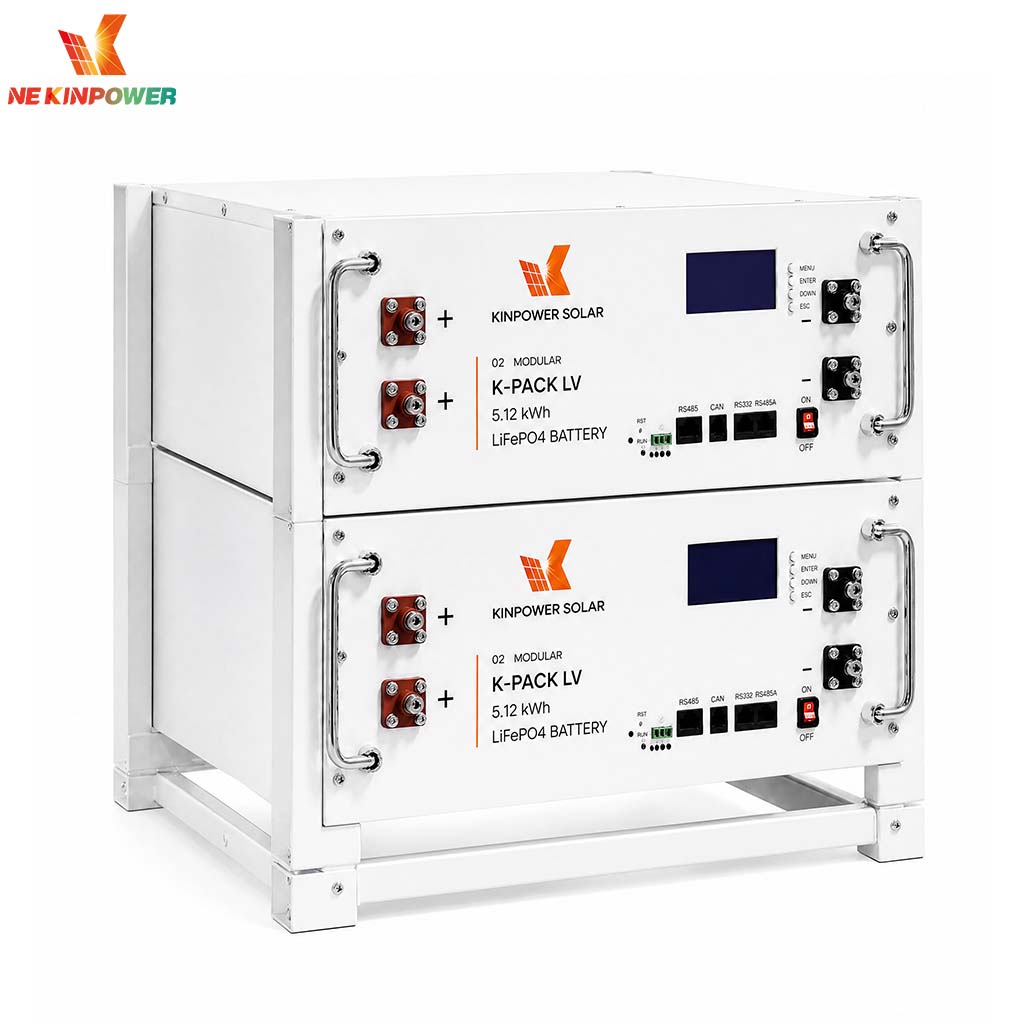
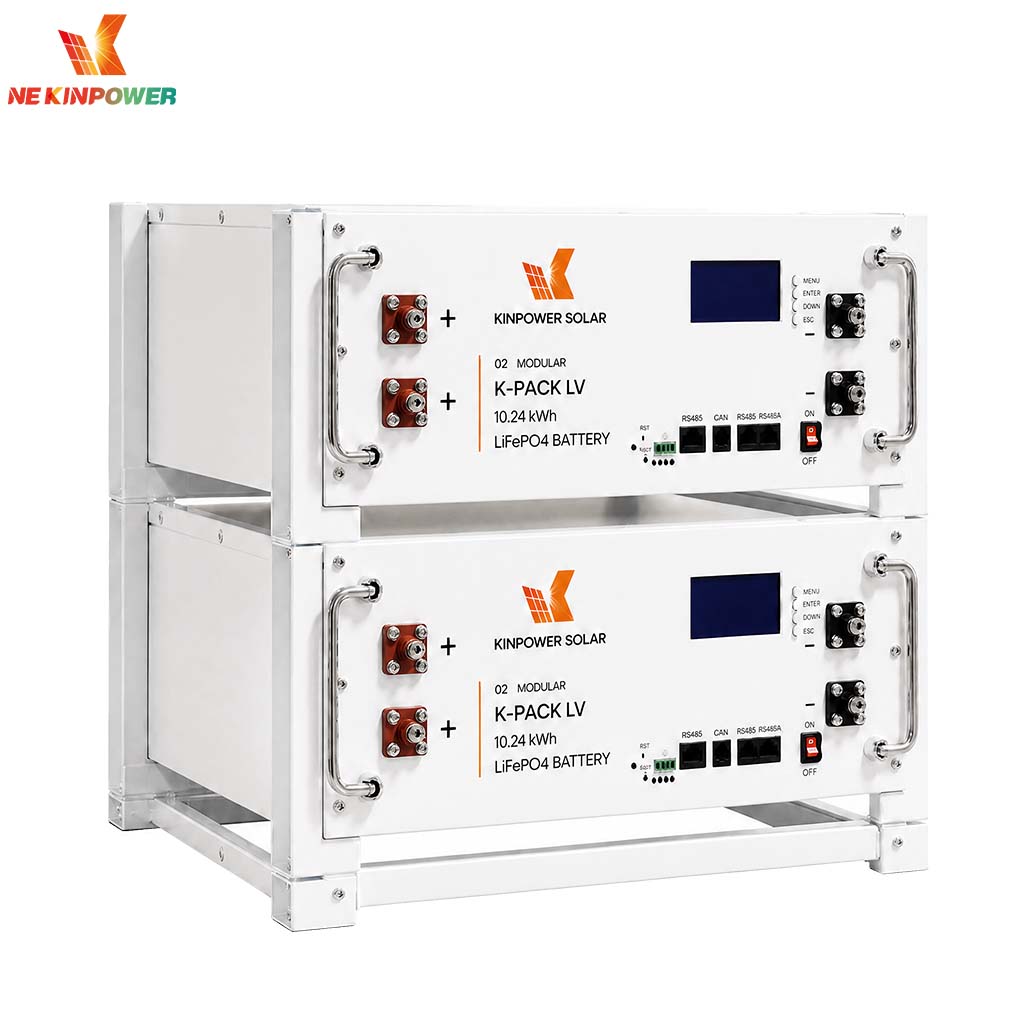
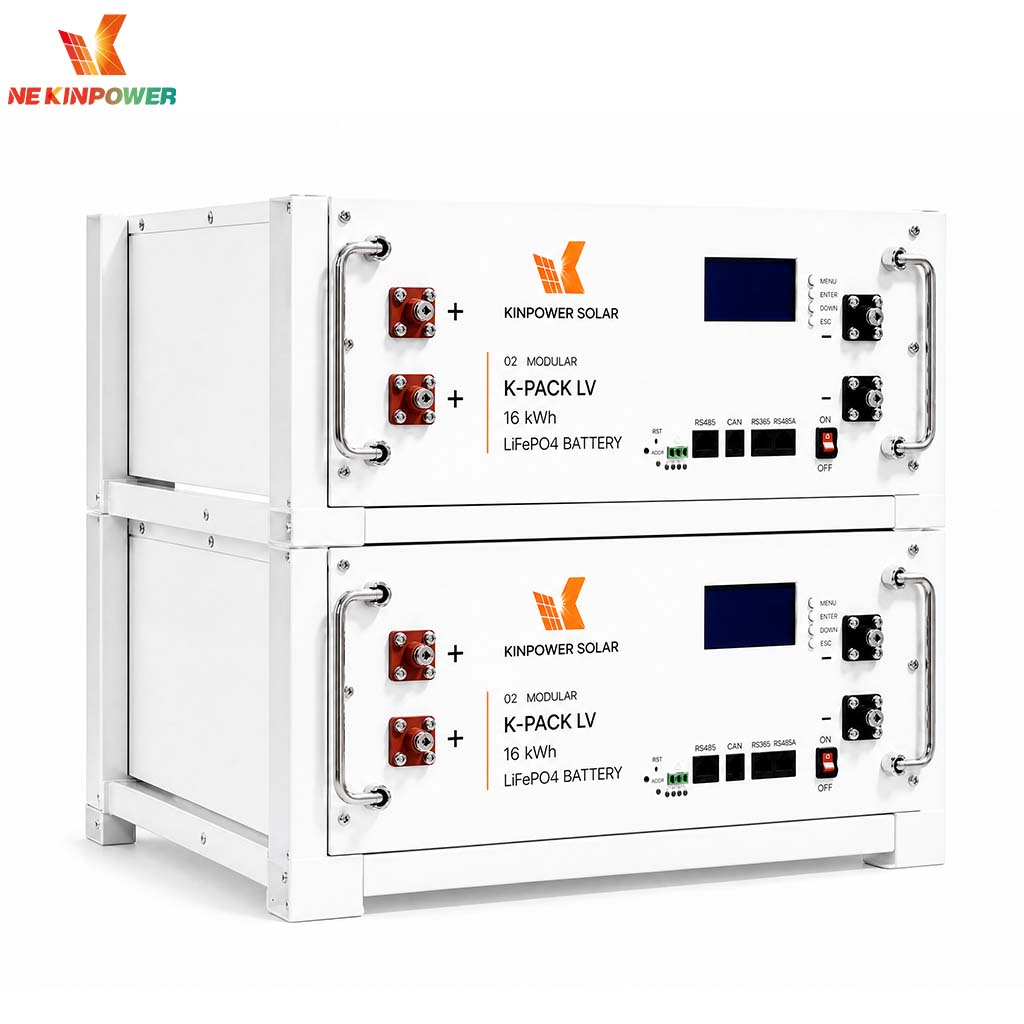
K-PACK LV-Low-voltage rack-mounted lithium battery
One battery platform, five capacities: 2.56 to 16.07 kWh of LiFePO4 storage at 51.2 V, up to 15 modules in parallel, speaking CAN and RS485 to the hybrid inverters your installers already use.
- Overview
- Recommended Products
- Set the module in the 19-inch rack, or fix the wall bracket to a solid wall and hang the unit. Modules of 7.68 kWh and above need two people.
- Connect the DC terminals to the inverter's battery port, observing polarity, and daisy-chain the CAN or RS485 comms cable between modules and the inverter.
- Power on, set the DIP address or auto-addressing, select the inverter's battery protocol in the BMS, and confirm closed-loop communication in the inverter menu.
The KINPOWER K-PACK LV is a low-voltage rack-mounted LiFePO4 energy storage battery for residential and small-commercial solar systems. It is a battery module, not an all-in-one unit: it connects to a low-voltage hybrid inverter over CAN or RS485 and stores whatever the PV array produces. One platform covers five capacities — 5.12, 10.24 and 16.07 kWh — in the same 19-inch rack format, with up to 15 modules working in parallel on one BMS bus.
What is a low-voltage rack-mounted battery?
A low-voltage rack-mounted battery is a LiFePO4 module built into a 19-inch rack chassis that connects to a hybrid inverter at low DC voltage — 51.2 V in this series. It is the standard battery format for residential and small-commercial storage: installers rack it in a cabinet, wall-mount it where floor space is tight, and scale the system by adding modules in parallel as the household's consumption grows.
Low-voltage architecture (48 V class) is the most widely supported battery standard in the aftermarket: it works with the broadest range of hybrid inverters, keeps installation simple, and allows modules to be mixed and expanded over time without replacing the whole bank.
Which capacity do I need?
Size the battery against daily energy use, not against the PV array. As a rule of thumb, a battery that covers the evening and overnight load is sized at roughly 60-80% of daily consumption, because the PV array covers the daytime.
| Typical application | Daily energy use | Recommended model |
|---|---|---|
| Basic backup: lights, router, fridge, TV, phone charging | 2-3 kWh | 2.56 kWh (24 V system) |
| Evening self-consumption for a 3-4 kW rooftop PV system | 4-6 kWh | 5.12 kWh |
| Full evening plus morning load shifting | 6-9 kWh | 7.68 kWh |
| Family home with backup plus time-of-use arbitrage | 9-13 kWh | 10.24 kWh |
| Whole-home backup, small shop, or future expansion | 14 kWh and up | 16.07 kWh, or modules in parallel |
Three capacities, one platform — expandable to 241 kWh
All five models share the same BMS platform, communication stack and rack format, so a system can start small and grow without changing brands or protocols. Modules connect 1-15 in parallel: fifteen of the 16.07 kWh modules form a single bank of about 241 kWh, which covers most small-commercial loads without moving to high-voltage architecture.
Expansion is the normal case, not the exception. A household that starts with one 5.12 kWh module adds a second when an EV arrives, and a third when a heat pump goes in — the BMS rebalances the bank automatically.
Inverter compatibility
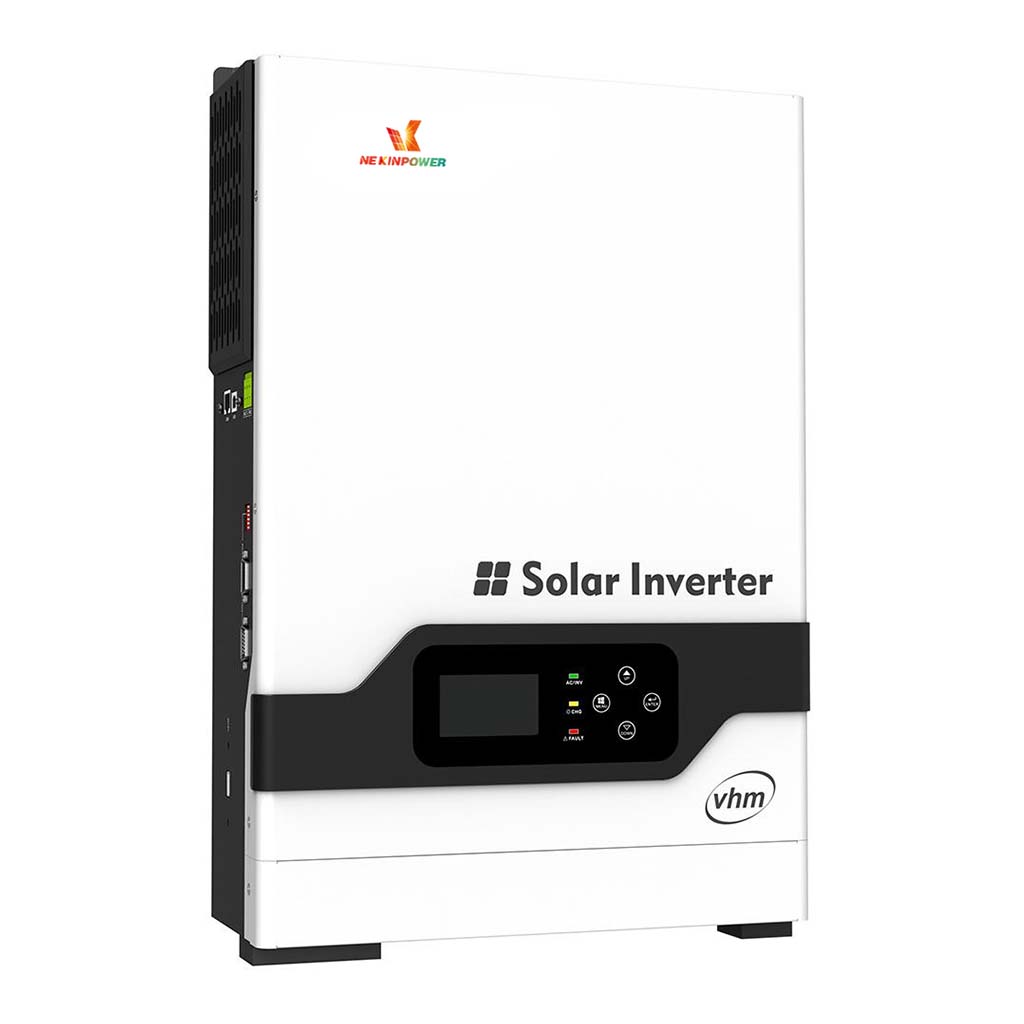
The BMS speaks CAN, RS485 and RS232, which are the three protocols low-voltage hybrid inverters actually use. The closed-loop protocol library covers [INVERTER BRAND LIST]. A Wi-Fi and Bluetooth module is built in for app-based monitoring of state of charge, cell voltages and cycle count, so both the installer and the homeowner can see the battery's health without extra hardware.
Specifications
All five models share the same BMS platform and communication stack. They differ in cell count, capacity, current rating and weight.
| Parameter | 5.12 kWh | 10.24 kWh | 16.07 kWh |
|---|---|---|---|
| Battery | |||
| Nominal voltage | 51.2 V | 51.2 V | 51.2 V |
| Working voltage | 43.2-57.6 V | 43.2-57.6 V | 43.2-57.6 V |
| Nominal capacity | 100 Ah | 200 Ah | 314 Ah |
| Rated energy | 5.12 kWh | 10.24 kWh | 16.07 kWh |
| Max charge / discharge current | 100 A | 100 A | 200 A |
| Connectivity & performance | |||
| Communication | CAN / RS485 / RS232 / Wi-Fi / Bluetooth | ||
| Cell self-discharge | <5% per month | ||
| Module connection | 1-15 in parallel | ||
| Cycle life | ≥6,000 cycles @ 25 °C, 80% DoD | ||
| Installation & environment | |||
| IP rating | IP20 (IP54 optional) | ||
| Installation | 19-inch rack or wall-mounted | ||
| Working temperature | 0 to 55 °C | ||
| Storage temperature | -20 to 55 °C | ||
| Humidity | ≤80% | ||
| Dimensions & logistics | |||
| Product dimensions / mm | 426×590×160 | 576×820×200 | 530×790×240 |
| Package dimensions / mm | 505×690×285 | 655×920×440 | 630×900×510 |
| Net weight | 45 kg | 85 kg | 117 kg |
| 20GP loading / pcs | 256 | 110 | 90 |
| 40HQ loading / pcs | 512 | 220 | 195 |
Where it fits
For a residential installer, the 5.12 kWh module paired with a 5 kW hybrid inverter is the workhorse configuration for evening self-consumption. For a small shop or workshop with a daytime peak, two 10.24 kWh modules cover the load and ride through an outage.
Because the bank scales in single-module steps up to fifteen units, the same product line serves a one-module apartment job and a twenty-module commercial roof without changing suppliers, protocols or monitoring tools.
Installation in three steps
Safety and certification
The K-PACK LV uses prismatic LiFePO4 cells with a cell-level BMS that monitors voltage, current and temperature on every cell group, plus over-charge, over-discharge, over-current and short-circuit protection. It carries [CERTIFICATIONS]. UN38.3 test summary and transport documents ship with every order.
Frequently asked questions
Does this battery include an inverter?
No. This is a battery module, and it must be paired with a low-voltage hybrid inverter, which converts the DC storage to AC and manages the PV input. If you need an all-in-one unit with a built-in inverter, see our [ALL-IN-ONE MODEL].
Which inverters is it compatible with?
It communicates over CAN, RS485 and RS232, the protocols used by mainstream low-voltage hybrid inverters. The closed-loop protocol list covers [INVERTER BRAND LIST]; if your inverter is not on it, send us the model and we will confirm within one working day.
How many modules can I connect in parallel?
Up to fifteen modules on one BMS bus. Fifteen 16.07 kWh modules give about 241 kWh of storage in a single low-voltage bank. Use modules of the same model in one bank so the BMS can balance them evenly.
Can it be installed outdoors?
The standard enclosure is IP20, which means indoor installation — a garage, utility room or equipment cabinet. An IP54 version is available for covered outdoor locations; confirm the variant when ordering, because the two are not interchangeable in the field.
How long does the battery last?
The cells are rated for at least 6,000 cycles at 25 °C and 80% depth of discharge. At one full cycle per day, that is more than sixteen years by cycle count; the practical design life is quoted at [10] years in the warranty terms. Self-discharge is under 5% per month, so a stored module keeps its charge through transit and warehouse time.
What maintenance does it need?
Essentially none. There are no fans, no firmware to babysit and no consumables. The BMS balances the cells automatically, and the app shows state of health, cycle count and cell voltages if you ever want to check. Keep the ambient temperature within 0-55 °C and humidity below 80%.
How is it shipped?
Modules ship in individual cartons, palletised for container transport. A 40-foot high-cube container carries up to 736 pieces of the 2.56 kWh model, 512 of the 5.12 kWh, or 195 of the 16.07 kWh. UN38.3 transport documents accompany every shipment.
Request a quote
Sample units, OEM/ODM and container pricing available across all five capacities. Tell us which inverter you pair it with and your target market, and KINPOWER will send the matching protocol list and certification pack with the quotation.