 ×
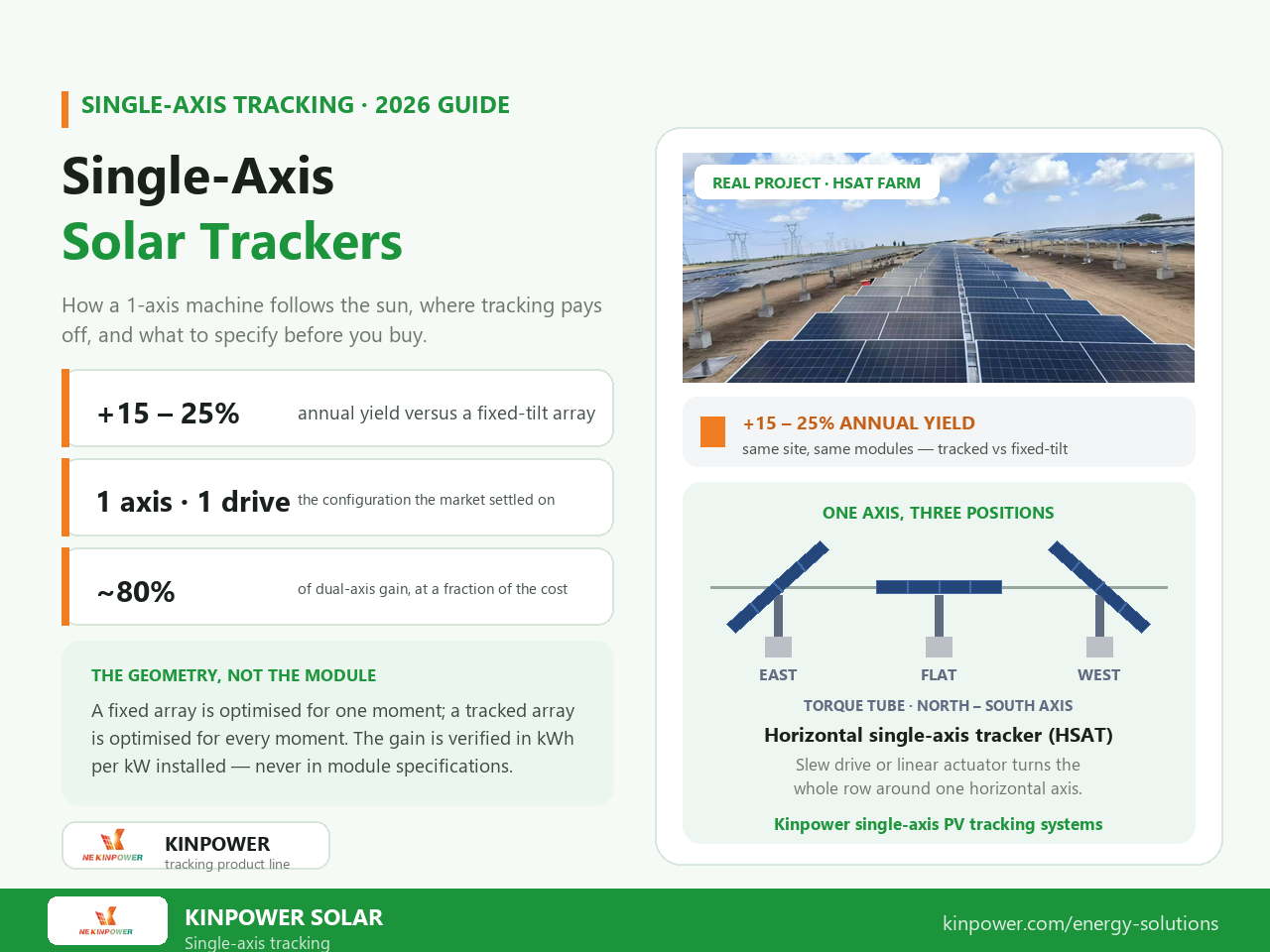
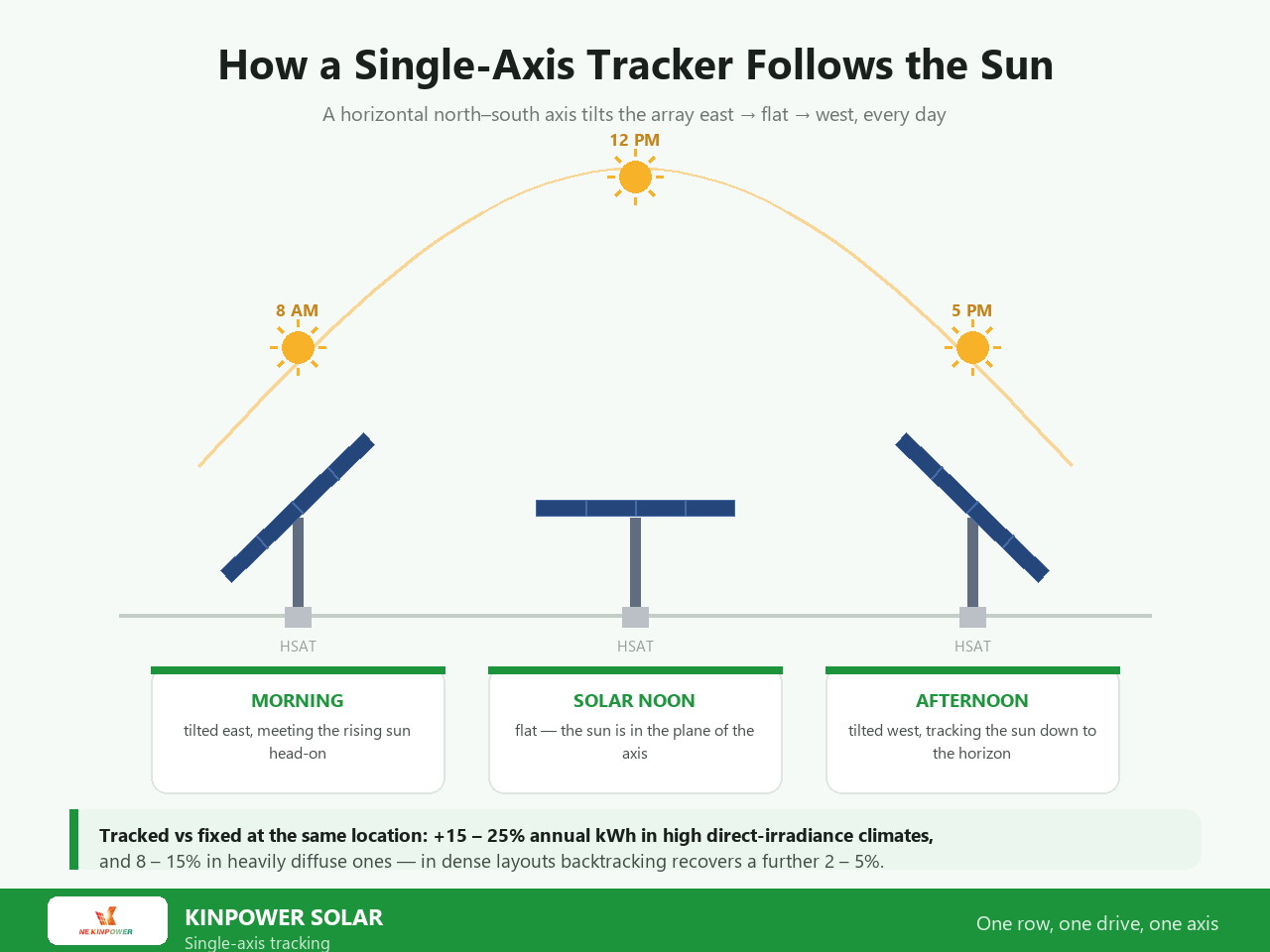
A single axis solar tracker rotates the array around one axis to follow the sun through the day. The most common configuration is a horizontal north–south axis that tilts the panels east in the morning, flat at noon, and west in the afternoon. A horizontal single-axis tracker (HSAT) of this type typically adds 15–25% annual energy yield compared with a fixed-tilt array at the same location, depending on latitude and climate.
The gain comes entirely from geometry. A fixed array is optimised for one moment; a tracked array is optimised for every moment. When you see single axis tracking solar panels quoted against fixed-tilt, that percentage is what is being sold — and it is verified by comparing kWh produced per kW installed, not by comparing module specifications.
Every single-axis machine has the same four subsystems:
|
Subsystem |
Function |
Specification point |
|
Structure |
Torque tube, purlins, posts, bearings |
Steel grade, galvanisation, foundation type |
|
Drive |
Slew drive or linear actuator at the torque tube |
Motor power, gear ratio, manual override |
|
Controller |
Astronomic algorithm + backtracking |
Sensor-free vs sensor-based, night stow |
|
Sensors & comms |
Irradiance, wind, position feedback |
Anemometer threshold, SCADA protocol |
Modern controllers are astronomic, meaning they compute the sun's position from date, time and GPS coordinates — no optical sensor to drift or foul. That matters for reliability: a single axis solar panel tracking system that depends on a dirty sensor can lose more energy than it gains.
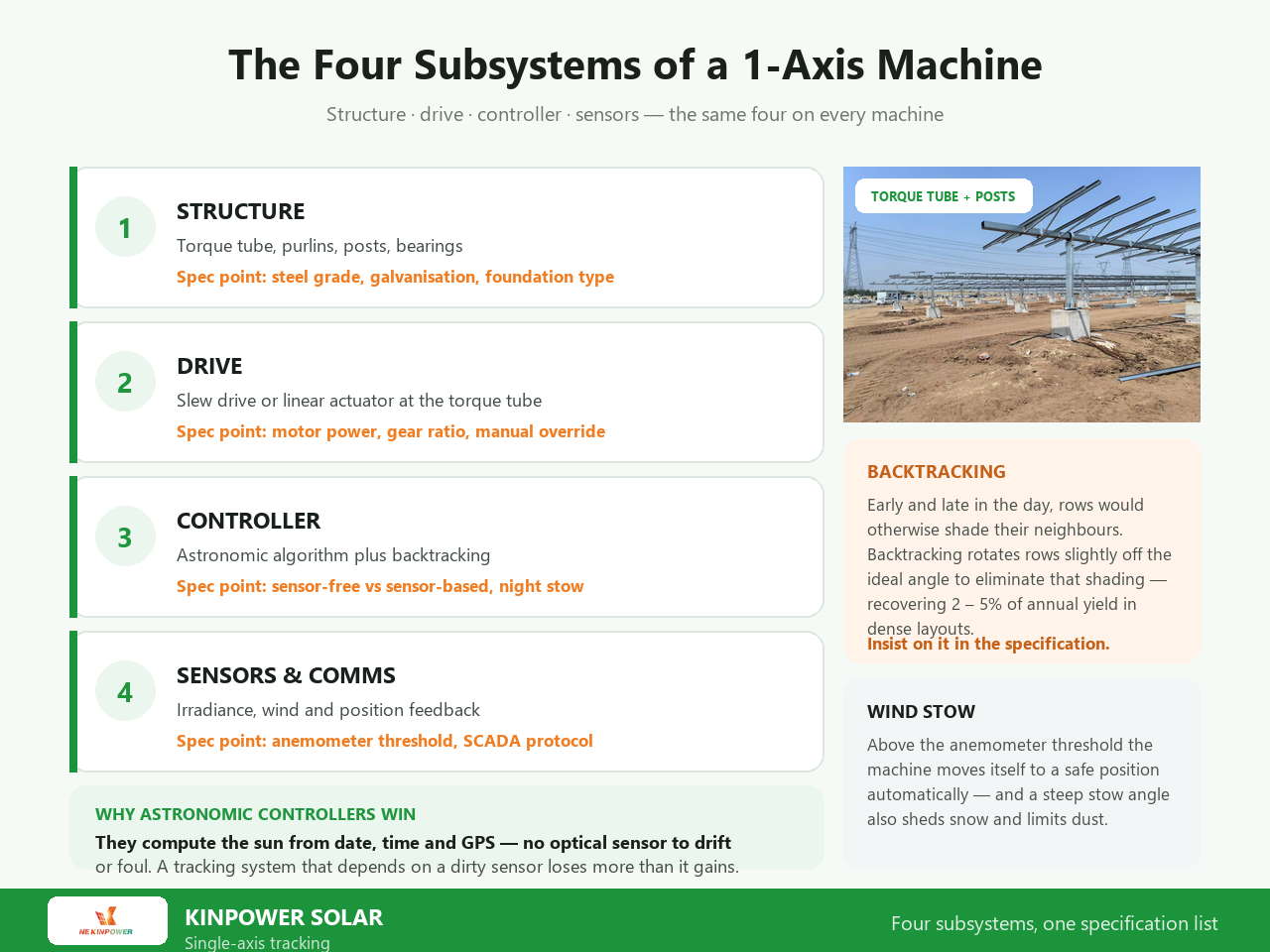
Backtracking is the feature to insist on. In the early morning and late afternoon, rows would otherwise cast shadows on their neighbours. Backtracking rotates rows slightly away from the ideal angle to eliminate shading, and in dense layouts it recovers 2–5% of annual yield that would otherwise be lost.
Ground mounted solar tracking systems are the core application. The economics work when three conditions are met:
For utility and large commercial sites, single-axis trackers have become the default in high-DNI regions such as the Middle East, parts of the US Southwest, Australia and Latin America.
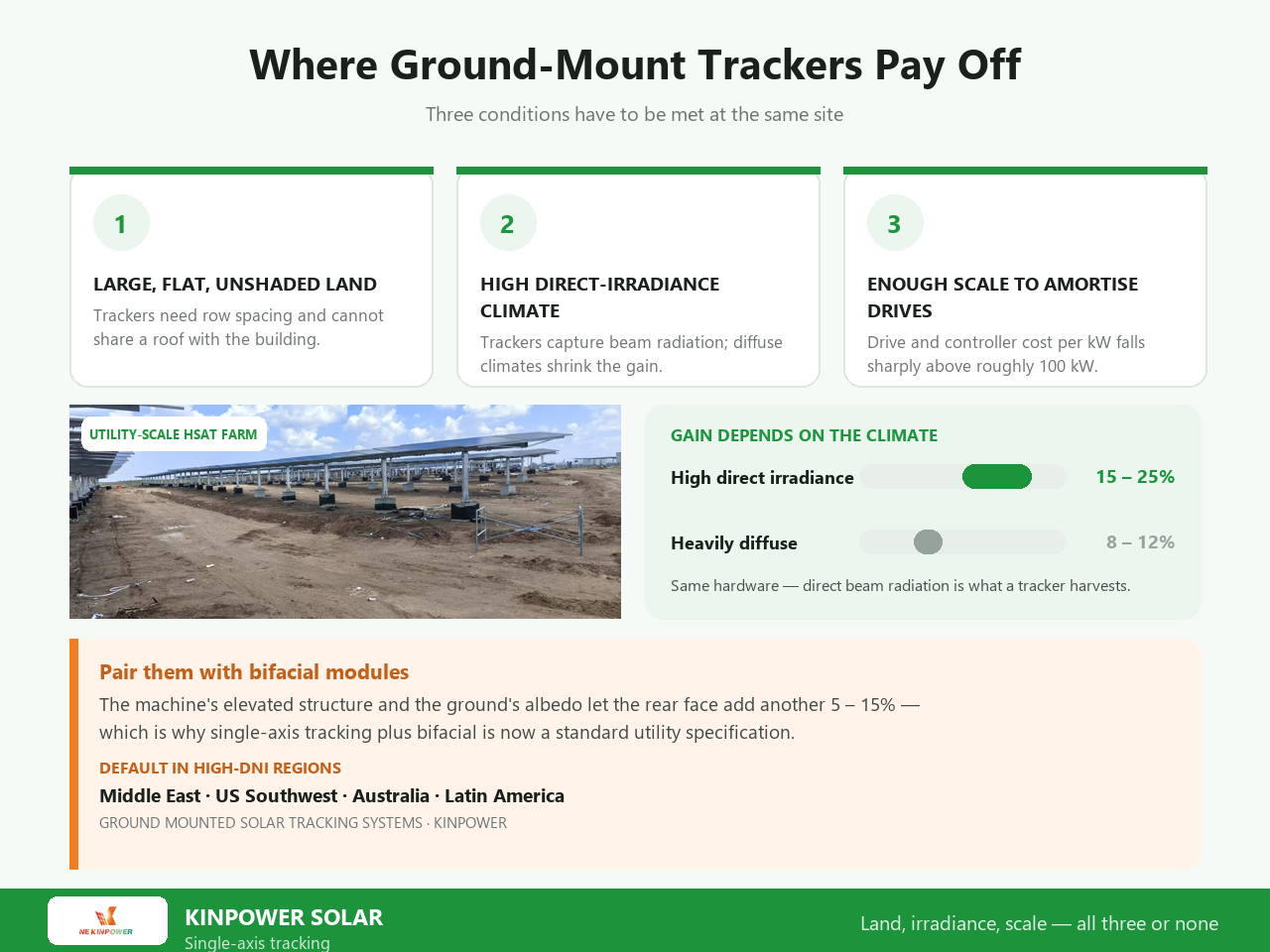
Trackers pair particularly well with bifacial modules, because the machine's elevated structure and the ground's albedo let the rear face contribute 5–15% additional yield. The combination of single-axis tracking plus bifacial modules is now a standard utility specification.
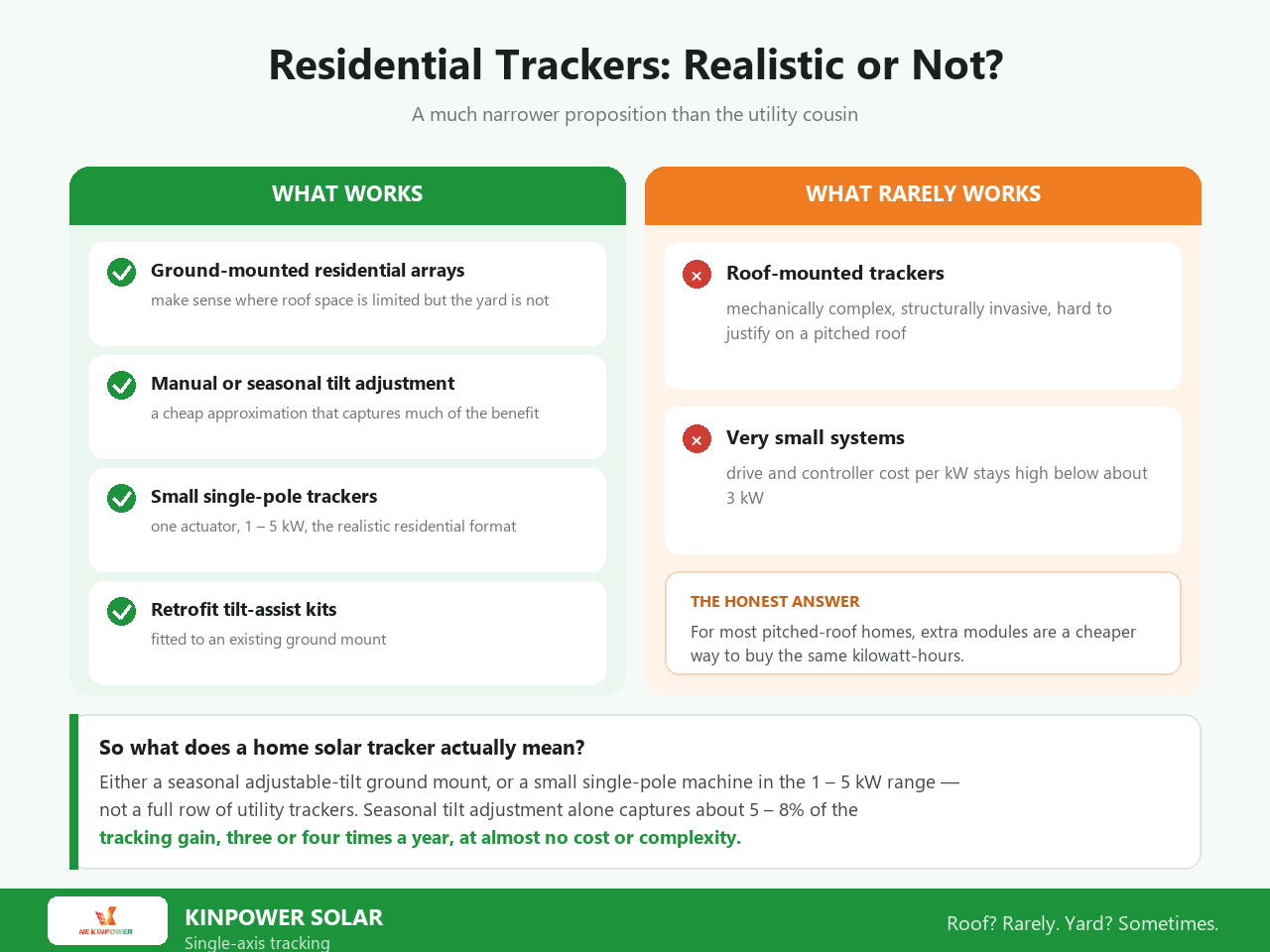
A residential single axis solar tracker is a much narrower proposition than its utility cousin, and it is worth being honest about why.
What works:
What rarely works:
A home solar tracker therefore usually means either a seasonal adjustable-tilt ground mount or a small single-pole machine, not a full row of utility trackers. For most pitched-roof homes, extra modules are a cheaper way to buy the same kilowatt-hours.
Whether you are procuring a 1 axis tracking solar panel for a single pole or a megawatt-scale HSAT farm, the same questions apply:
The decision is a comparison, not an absolute, so it helps to lay the three options side by side.
|
Fixed tilt |
Single-axis |
Dual-axis |
|
|
Yield vs fixed |
baseline |
+15 – 25% |
+20 – 30% |
|
Moving parts |
none |
1 axis, 1 drive |
2 axes, 2 drives |
|
Added cost |
— |
$40 – $80 / kW |
$200 – $400 / kW |
|
O&M intensity |
minimal |
moderate |
high |
|
Land use |
lowest density |
medium |
higher spacing |
|
Typical use |
residential, small C&I |
utility, large ground-mount |
CSP, research, high-value sites |
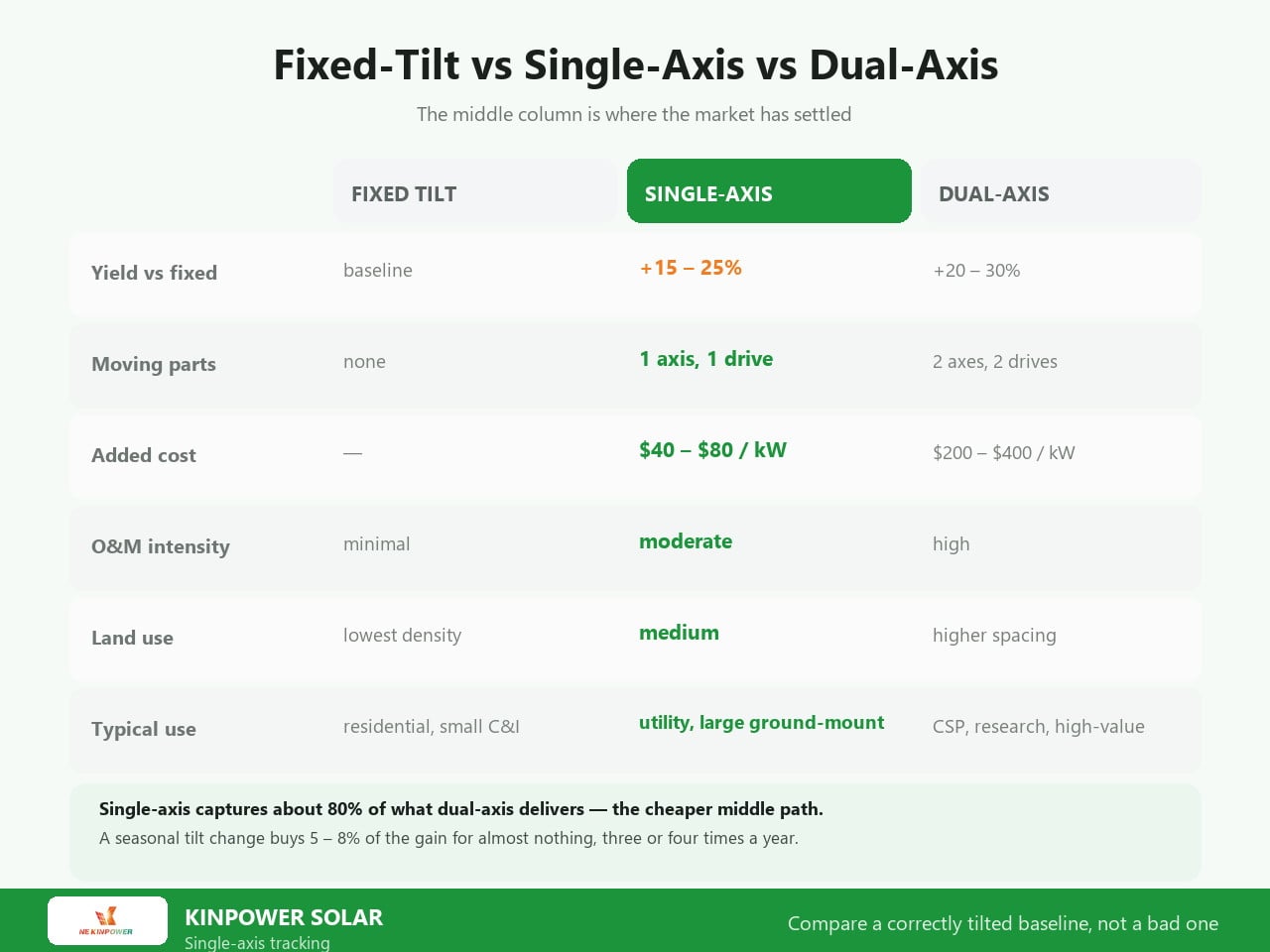
The middle column is where the market has settled. Solar panel single axis tracking captures the large majority of the available gain — roughly 80% of what dual-axis delivers — at a fraction of the cost, weight and maintenance burden. Dual-axis machines only justify themselves where land is effectively free and energy value is unusually high, such as concentrated solar thermal plants.
There is also a simpler middle path worth knowing: seasonal tilt adjustment. Changing a fixed array's angle three or four times a year captures perhaps 5–8% of the tracking gain for almost no cost or complexity. For a small domestic install, that is often the sensible compromise.
When comparing quotes, make sure the baseline is honest. A tracker's 20% gain is measured against a correctly tilted fixed array — not against a badly angled one. Always ask what tilt angle and azimuth the comparison assumes.
|
Item |
Typical range |
|
Single-axis tracker structure + drive (utility scale) |
$90 – $160 / kW |
|
Premium versus fixed-tilt structure |
+$40 – $80 / kW |
|
Small residential single-pole tracker (1–5 kW) |
$1,500 – $4,000 per unit |
|
Additional O&M versus fixed |
$1 – $3 / kW / year |
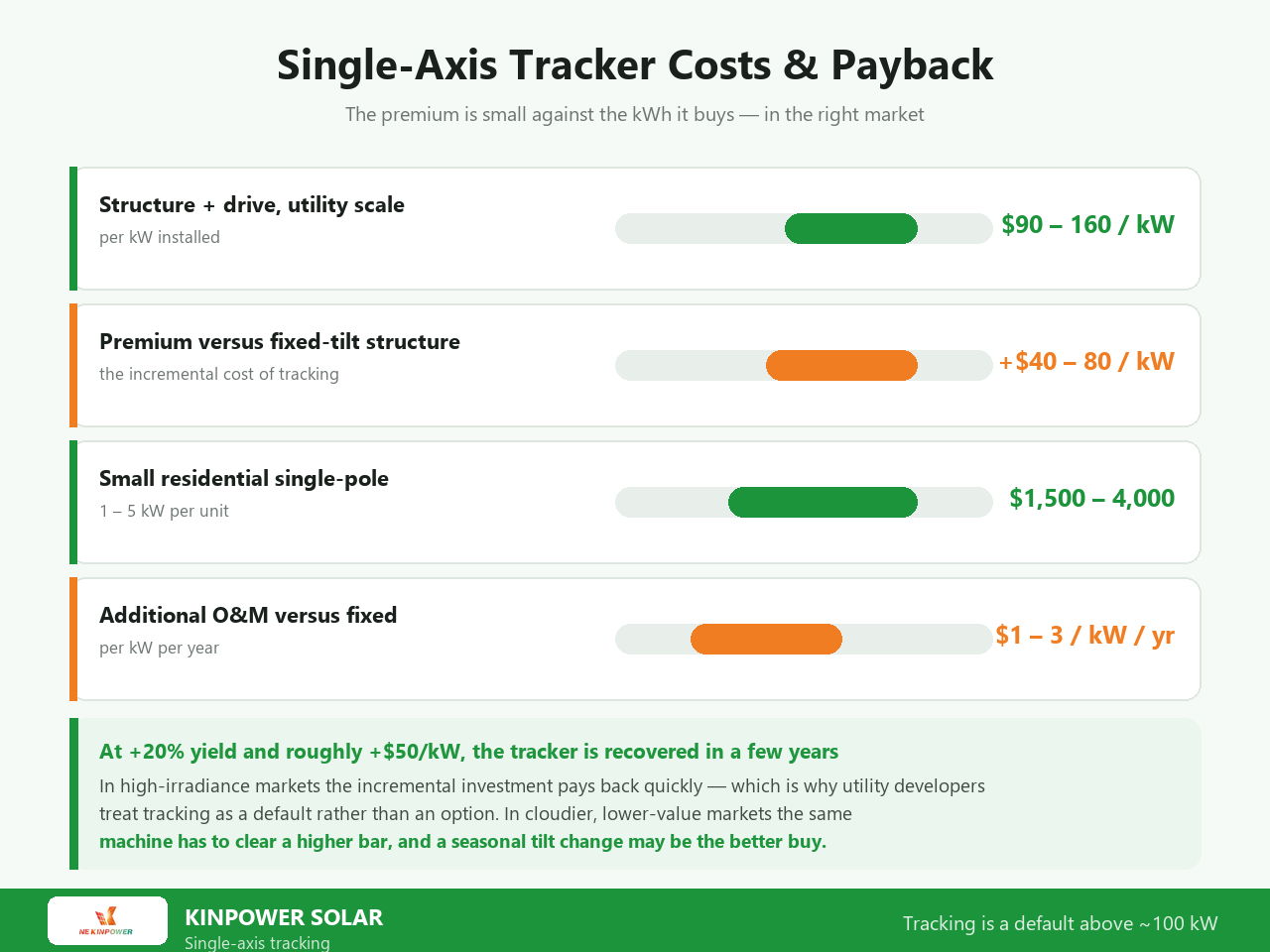
At a 20% yield gain and an added cost of roughly $50/kW, the incremental investment in a tracker is recovered in a few years in high-irradiance markets — which is why utility developers treat tracking as a default rather than an option.
Q: How much more energy does a single-axis tracker produce? Typically 15–25% more than a fixed-tilt array in high direct-irradiance locations, and 8–15% in cloudier climates.
Q: Is a tracker worth it for a home? Rarely on a roof. On a ground-mounted residential array with available space, a small tracker or a seasonal tilt mechanism can be worthwhile.
Q: Do trackers work in snow or dust environments? Yes, with the right stow strategy — a steep stow angle sheds snow and reduces dust accumulation. Trackers can also be commanded to stow during dust storms.
Q: What is backtracking and why does it matter? Backtracking rotates rows away from the ideal sun angle to avoid shading neighbours. In dense layouts it recovers several percent of annual yield.
Q: Single-axis or dual-axis? Single-axis captures most of the available gain at a fraction of the cost and complexity. Dual-axis adds only 5–10% more in most locations and is reserved for concentrated solar and research applications.
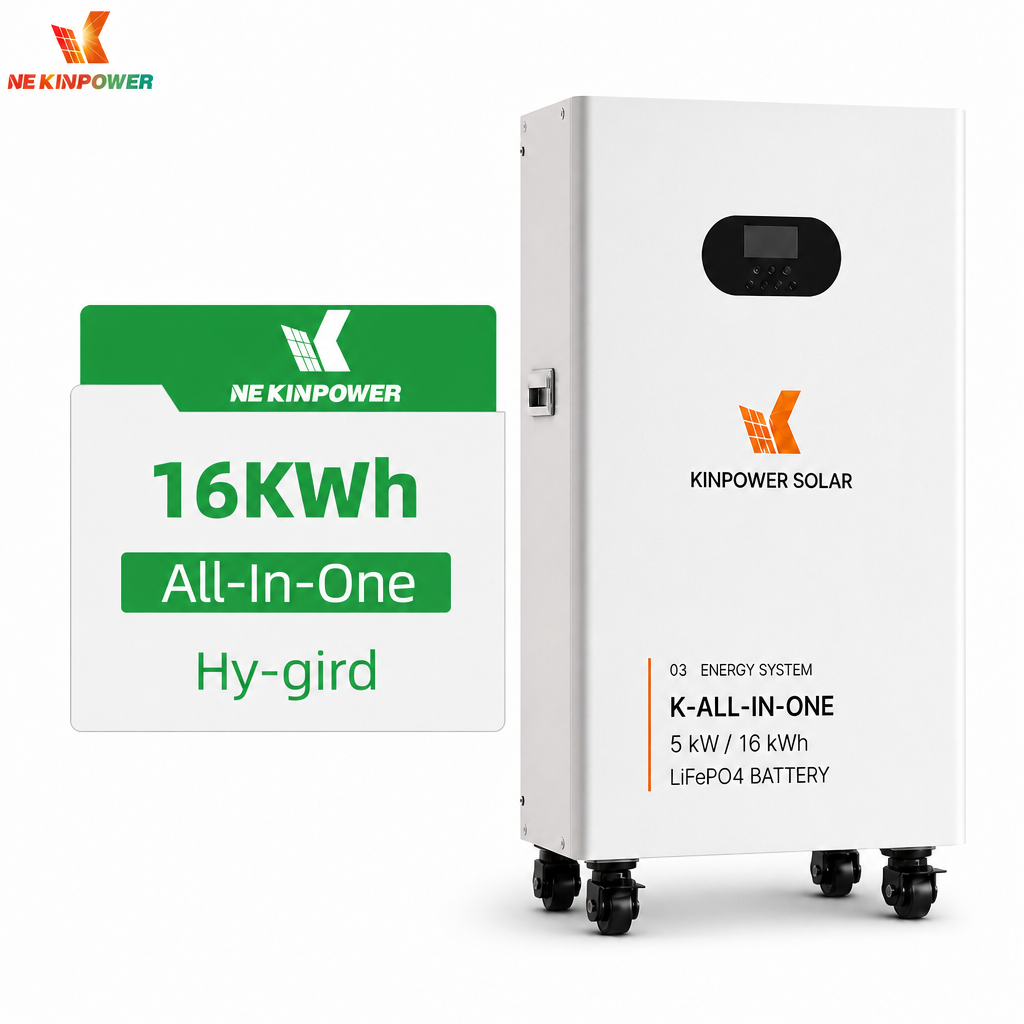
Specifying a tracker or a tracked ground array? Kinpower supplies single-axis PV tracking systems and smart solar trackers, matched with LiFePO4 storage for hybrid plants and delivered with certified wind-load documentation. See energy solutions or explore commercial & industrial systems.
 Hot News
2026-10-28
2026-10-24
2026-10-21
2026-10-19
2026-10-16
2026-10-14
 EN