 ×
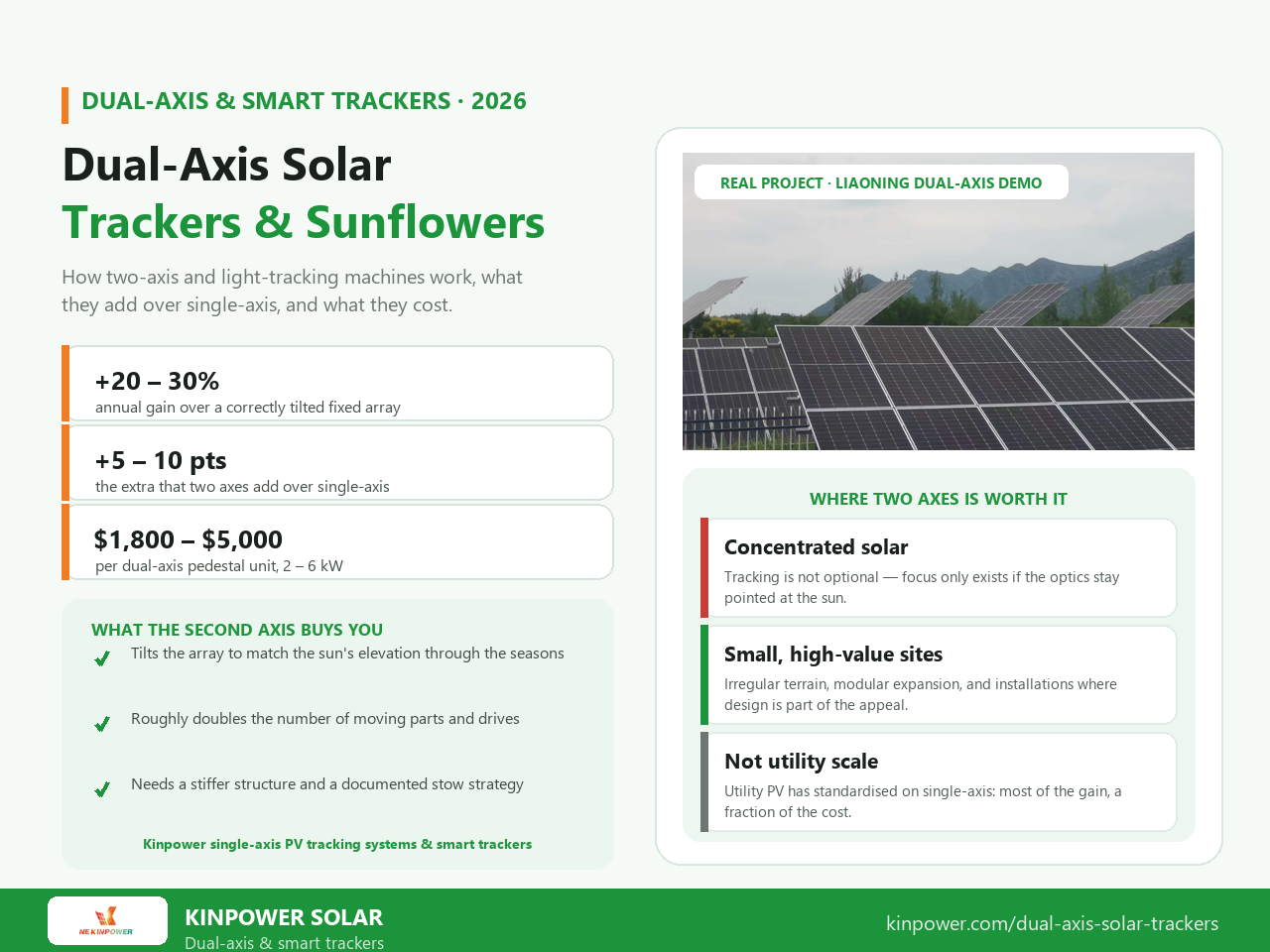
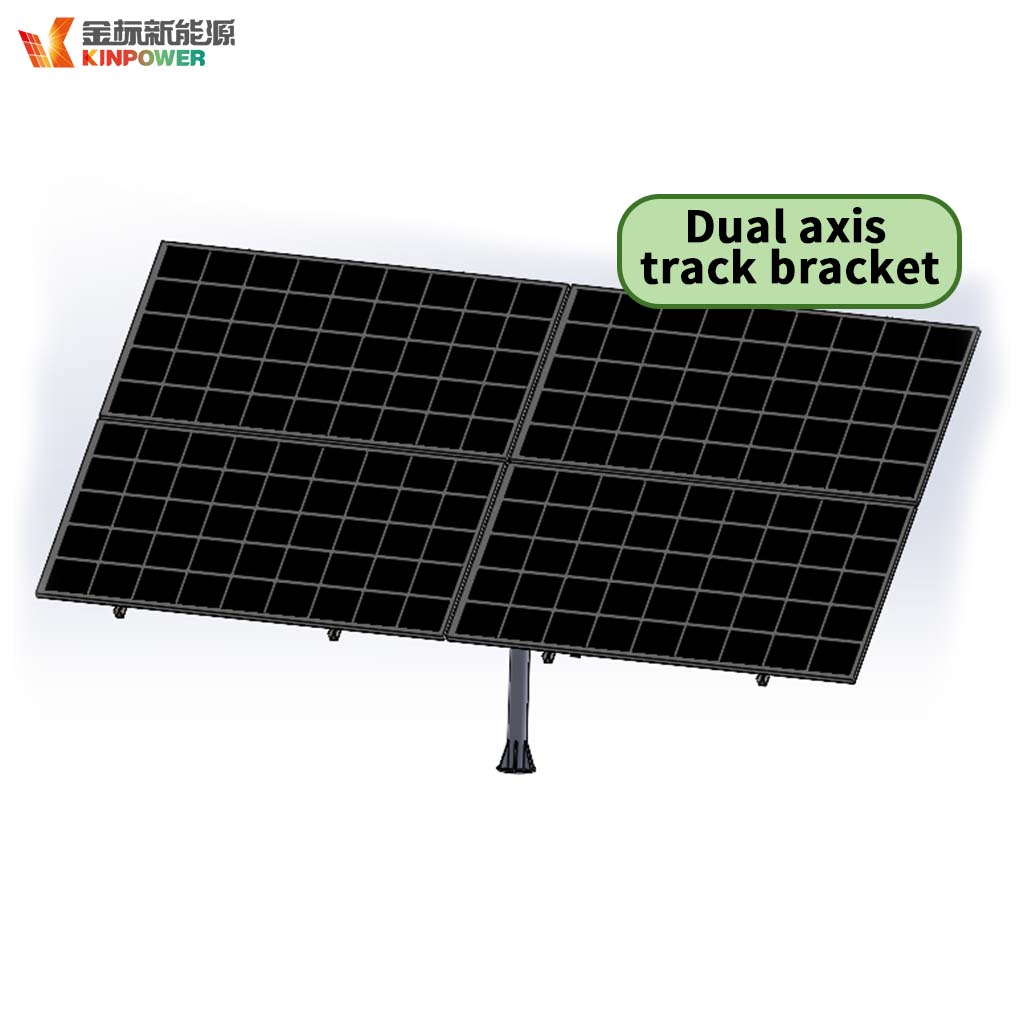
A single-axis tracker rotates the array on one axis — usually a horizontal north–south line — following the sun east to west. A dual axis solar power tracker system adds a second rotation, so the array can also tilt to match the sun's elevation through the seasons.
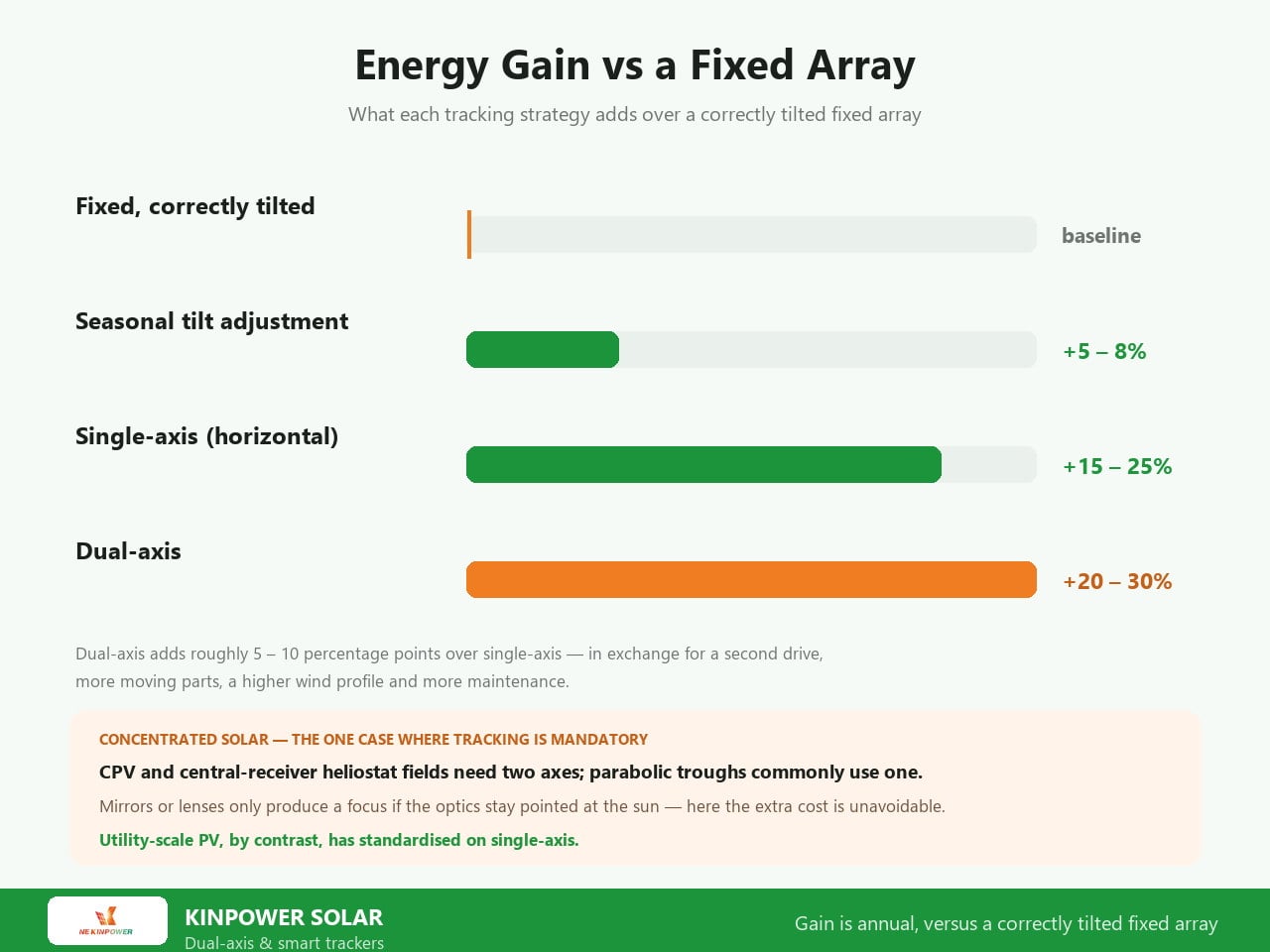
The energy gain over a correctly tilted fixed array is:
|
Configuration |
Annual gain vs fixed tilt |
|
Seasonal tilt adjustment |
+5 – 8% |
|
Single-axis (horizontal) |
+15 – 25% |
|
Dual-axis |
+20 – 30% |
|
Concentrated solar (tracking required) |
n/a — tracking is mandatory |
So dual-axis adds roughly 5–10 percentage points over single-axis, in exchange for a second drive, more moving parts, higher wind profile and more maintenance. That trade-off is why utility-scale PV has standardised on single-axis, while dual-axis survives in two niches: concentrated solar and small high-value installations.
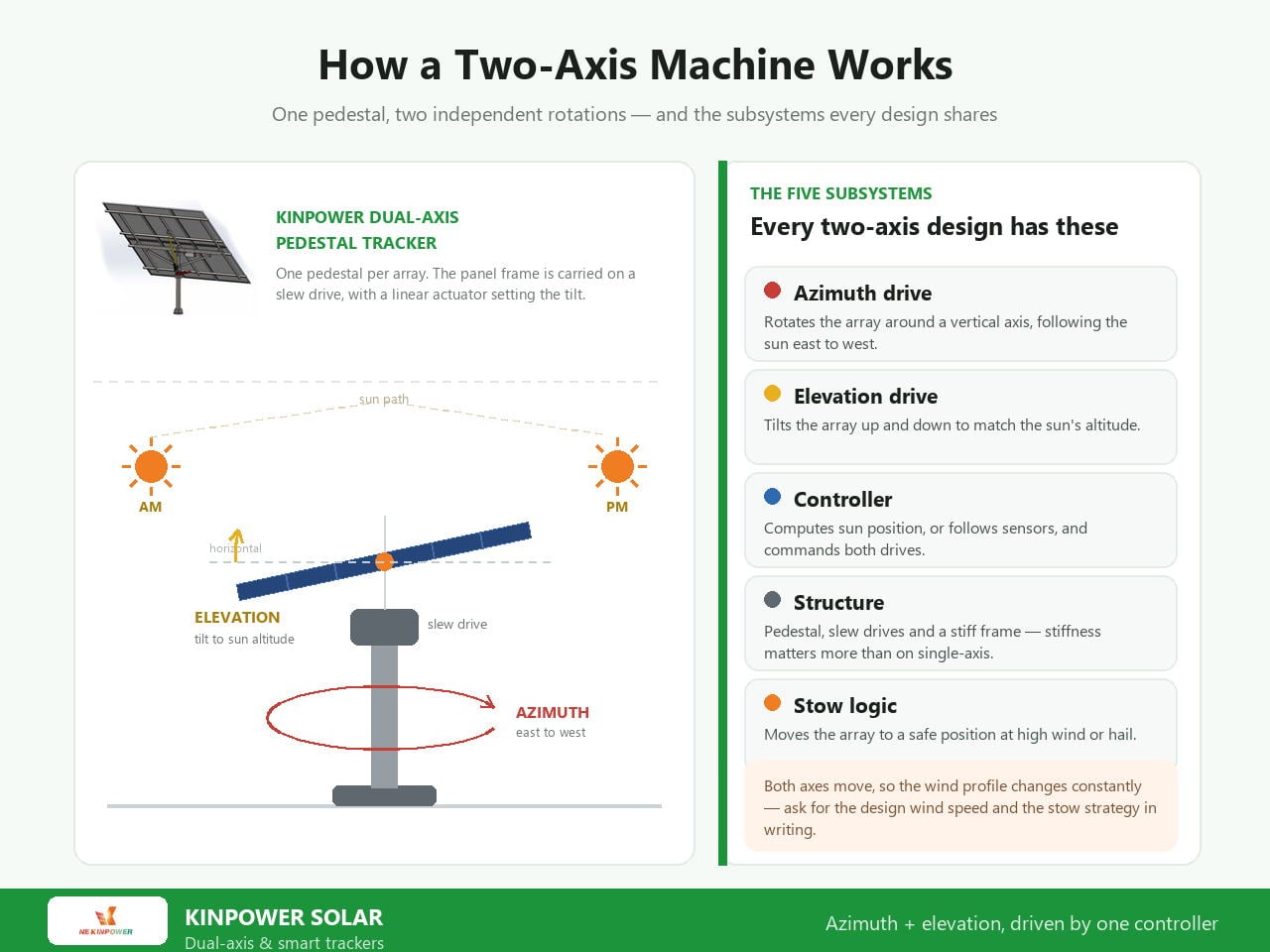
Every two-axis system has the same subsystems:
|
Subsystem |
Function |
|
Azimuth drive |
Rotates the array around a vertical axis, following the sun east to west |
|
Elevation drive |
Tilts the array up and down to match the sun's altitude |
|
Controller |
Computes sun position (astronomic) or follows sensors, and commands both drives |
|
Structure |
Pedestal, slew drives, and a stiff frame — stiffness matters more than on single-axis |
|
Stow logic |
Moves the array to a safe position at high wind or hail |
Because both axes move, the wind profile changes constantly. A dual-axis machine that is poorly stowed can be its own worst enemy. The controller's wind threshold and stow behaviour are the most important safety features in the entire system — ask for the design wind speed and the stow strategy in writing.
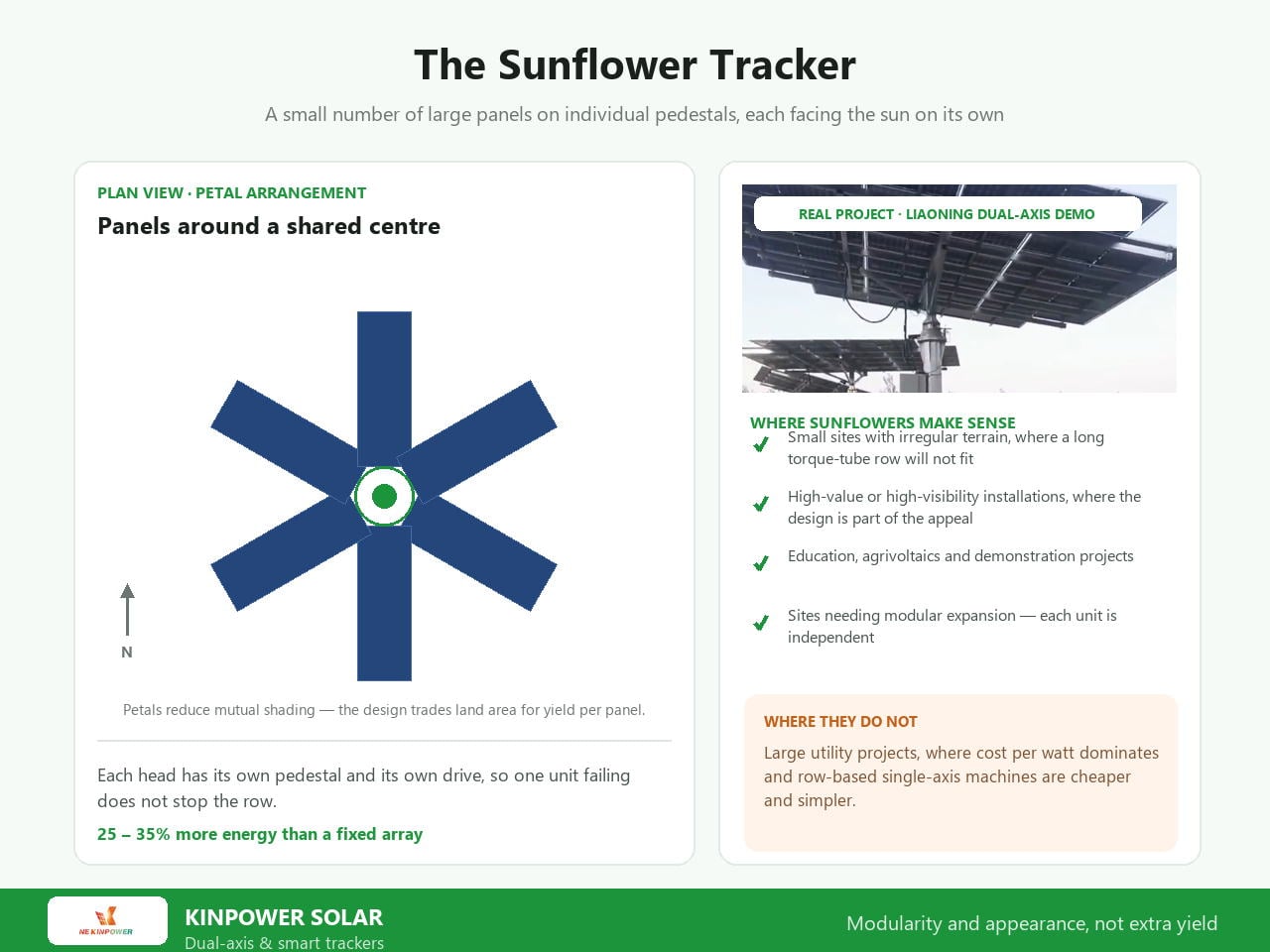
The sunflower solar tracker is a biomimetic design: a small number of large panels mounted on individual pedestals, each rotating to face the sun the way a sunflower head does. Popular variants arrange the panels in a petal pattern to reduce mutual shading.
Where sunflowers make sense:
Where they do not: large utility projects, where cost per watt dominates and row-based single-axis machines are cheaper and simpler.
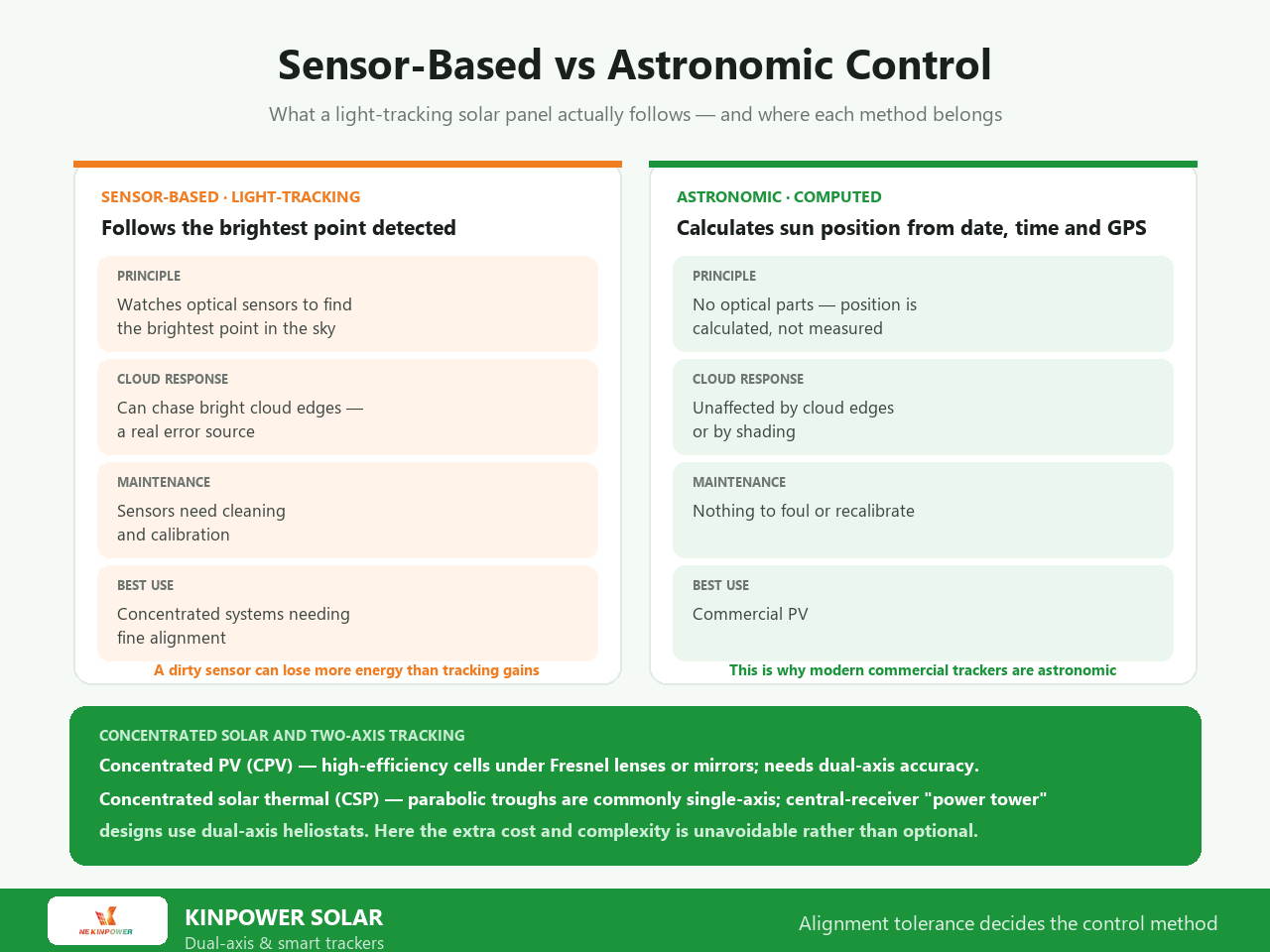
A light tracking solar panel approach uses optical sensors to find the brightest point in the sky and steer toward it. A solar light tracker of this type reacts to actual conditions rather than to a calculation.
|
Sensor-based (light-tracking) |
Astronomic (computed) |
|
|
Principle |
Follows brightest point detected |
Calculates sun position from date/time/GPS |
|
Cloud response |
Can chase bright cloud edges — a real error source |
Unaffected |
|
Maintenance |
Sensors need cleaning and calibration |
No optical parts to foul |
|
Best use |
Concentrated systems needing fine alignment |
Commercial PV |
Modern commercial trackers are astronomic for exactly this reason. A solar cell tracking system that depends on a dirty sensor can lose more energy than tracking gains.
Where light-tracking genuinely earns its place is in concentrated systems, where the alignment tolerance is measured in fractions of a degree and continuous fine correction is required.
A two axis tracking system for solar concentrators is not optional — it is the enabling technology. Concentrating systems use mirrors or lenses to focus sunlight onto a receiver, and the focus only exists if the optics stay pointed at the sun.
Two families:
This is the one application where the extra cost and complexity of two axes is unavoidable rather than optional.
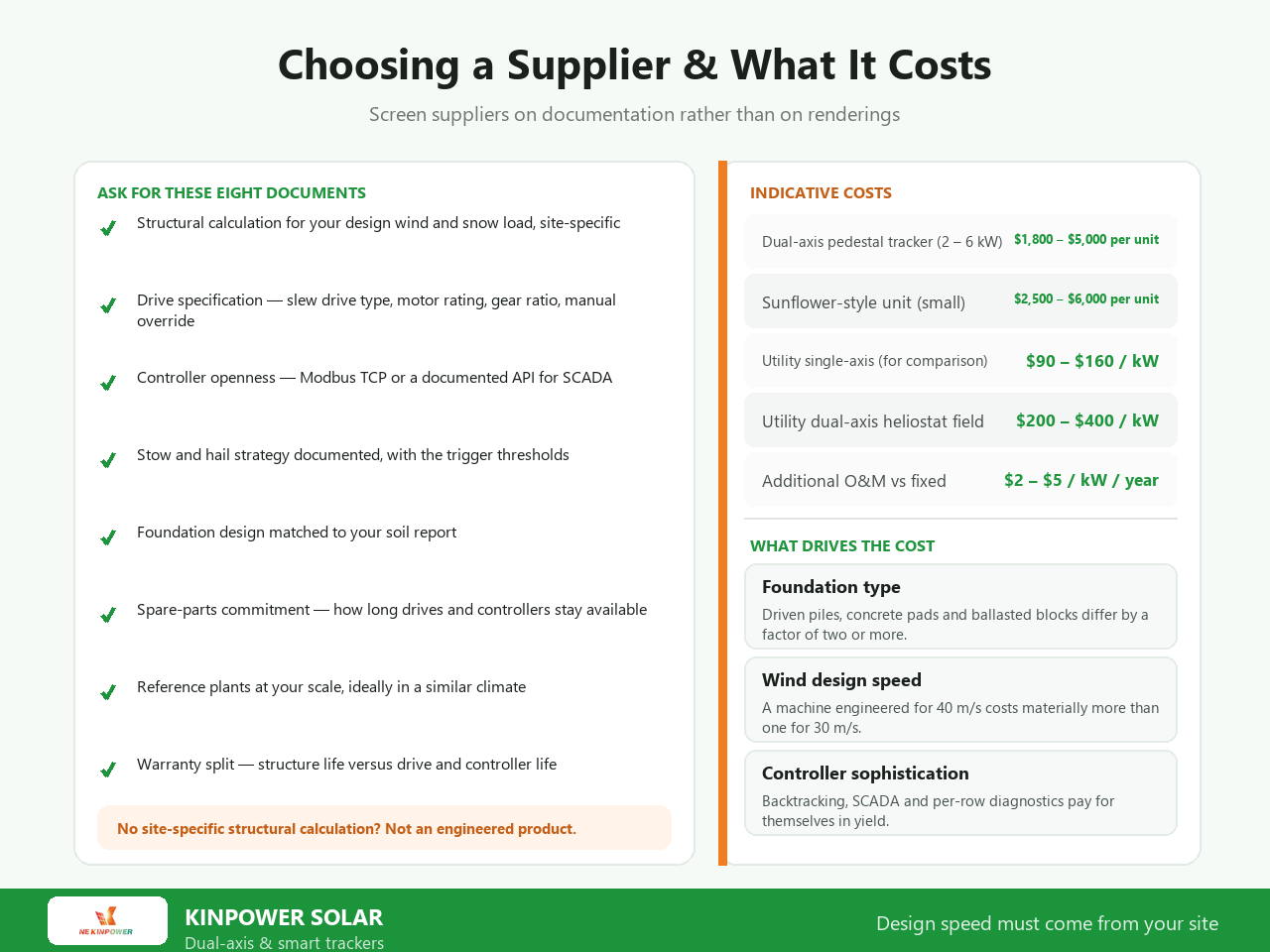
For a dual axis solar tracker for sale or a utility-scale solar tracking systems for sale procurement, screen solar tracker suppliers on documentation rather than on renderings:
A supplier who cannot produce a site-specific structural calculation is not selling an engineered product. For a machine that must survive 25 years of wind loading while carrying an expensive array, that document is the whole basis of the purchase.
|
System |
Indicative cost |
|
Dual-axis pedestal tracker (small, 2 – 6 kW) |
$1,800 – $5,000 per unit |
|
Sunflower-style unit (small) |
$2,500 – $6,000 per unit |
|
Utility single-axis tracker (for comparison) |
$90 – $160 / kW |
|
Utility dual-axis heliostat field |
$200 – $400 / kW |
|
Additional O&M vs fixed |
$2 – $5 / kW / year |
Three factors explain almost all of the price variation between quotations for the same nominal capacity:
Foundation type. Driven piles, concrete pads and ballasted blocks differ by a factor of two or more in cost, and soil conditions decide which is possible. This is frequently the largest single line item after the structure itself.
Wind design speed. A machine engineered for 40 m/s costs materially more than one designed for 30 m/s — heavier steel, larger drives, deeper foundations. Design speed must come from your site, not from a generic catalogue figure.
Controller sophistication. Astronomic control with backtracking, SCADA integration and per-row diagnostics costs more than a basic sun-following controller, and pays for itself in yield and in fault-finding speed. On a plant of any size, the cheaper controller is usually the more expensive choice.
Q: Is dual-axis worth it for a home? Rarely. The gain over single-axis is 5–10%, and the extra cost, weight and maintenance are hard to justify on a residential roof. Ground-mounted residential systems are the only realistic case.
Q: How much more energy does a sunflower tracker produce? Typically 25–35% more than a fixed array, similar to a conventional dual-axis machine — the advantage is modularity and appearance rather than additional yield.
Q: Do trackers need much maintenance? Bearings, drives and controllers need periodic inspection. Budget for two visits a year on a commercial installation.
Q: What happens in a storm? A correctly configured tracker stows automatically above its wind threshold. Verify the threshold and stow angle — this is a safety and warranty matter, not a detail.
Q: Single-axis or dual-axis for a large plant? Single-axis. It captures the large majority of the available gain at a fraction of the cost, and it is what the utility industry has standardised on.
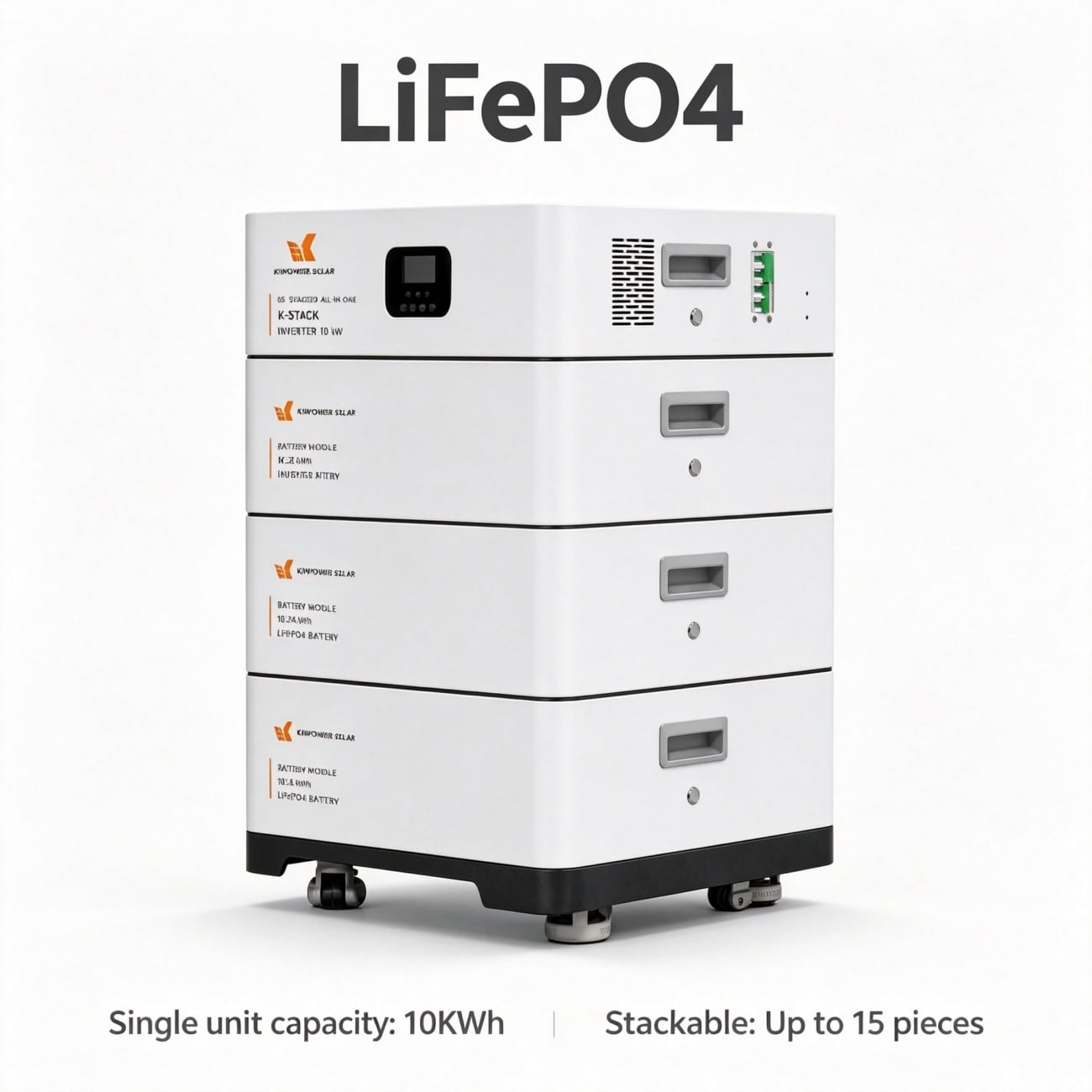
Procuring trackers? Kinpower supplies single-axis PV tracking systems and smart trackers with certified structural documentation, matched with LiFePO4 storage for hybrid plants and co-located PV-plus-storage projects. Browse the product range or see energy solutions.
 Hot News
2026-10-28
2026-10-24
2026-10-21
2026-10-19
2026-10-16
2026-10-14
 EN