 ×
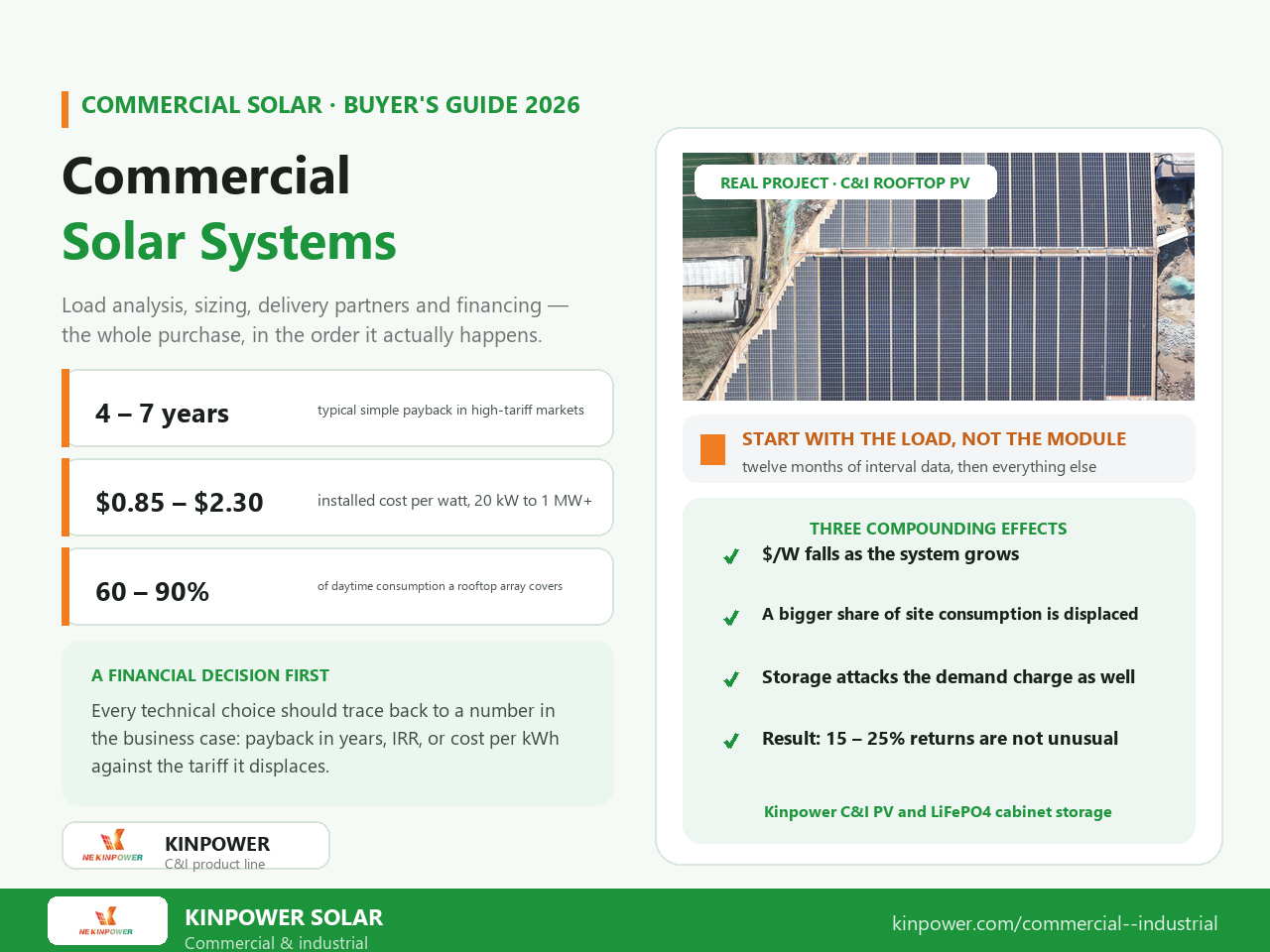
A homeowner buys commercial solar for a mixture of reasons — bills, carbon, independence. A business buys it for one: the return on capital. Every technical choice in a commercial solar system should therefore be traceable to a number in the business case: payback in years, IRR, or cost per kWh against the tariff it displaces.
That framing determines how the project should be run. The starting point is not a module datasheet; it is twelve months of interval electricity data, a load profile, and a tariff structure. Everything else follows.
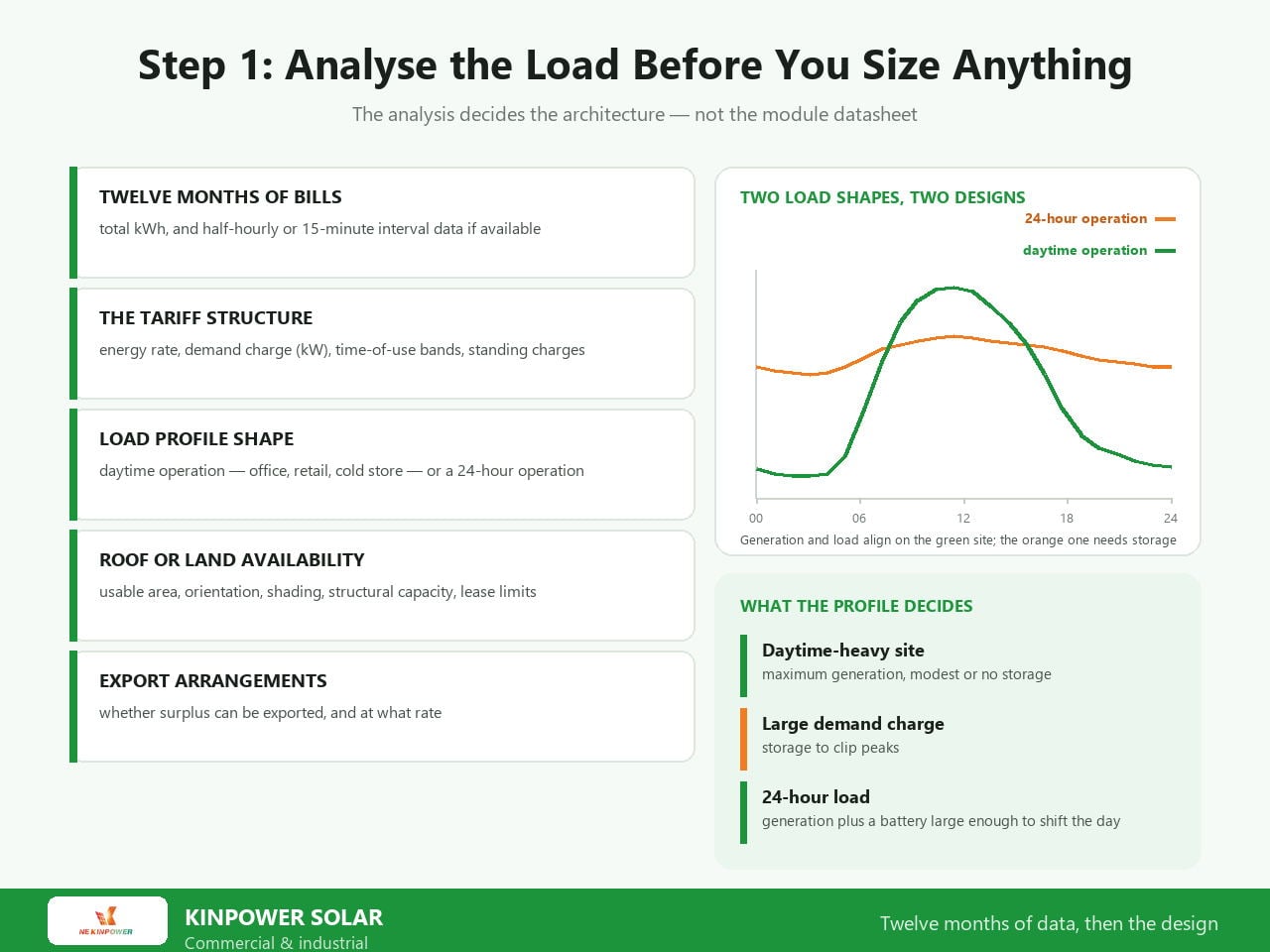
Before contacting a single commercial solar installer, assemble:
This analysis decides the architecture. A daytime-heavy site wants maximum generation and modest storage (or none). A site with a large demand charge wants storage to clip peaks. An operation with a 24-hour load wants generation plus a battery large enough to shift energy across the whole day.
Commercial systems scale by roughly an order of magnitude above residential:
|
Site type |
Typical array |
Storage (if fitted) |
Notes |
|
Small business, daytime load |
20 – 50 kW |
0 – 30 kWh |
Retail, workshop, clinic |
|
Mid-size commercial |
100 – 300 kW |
50 – 200 kWh |
Cold store, light manufacturing, hotel |
|
Large commercial / industrial |
300 kW – 1 MW |
200 kWh – 1 MWh |
Logistics, food processing, campus |
|
Multi-site portfolio |
1 MW+ aggregated |
Per-site |
Rolled out as a standardised kit |
Rules of thumb help screen options but should not replace the load model: annual kWh consumption ÷ 1,100–1,500 (local yield per kW) gives a first-pass array size for a daytime-load site. Where a business owns its premises and the roof is sound, the roof is almost always the cheapest place to put the array — hence commercial rooftop solar systems dominate the segment.
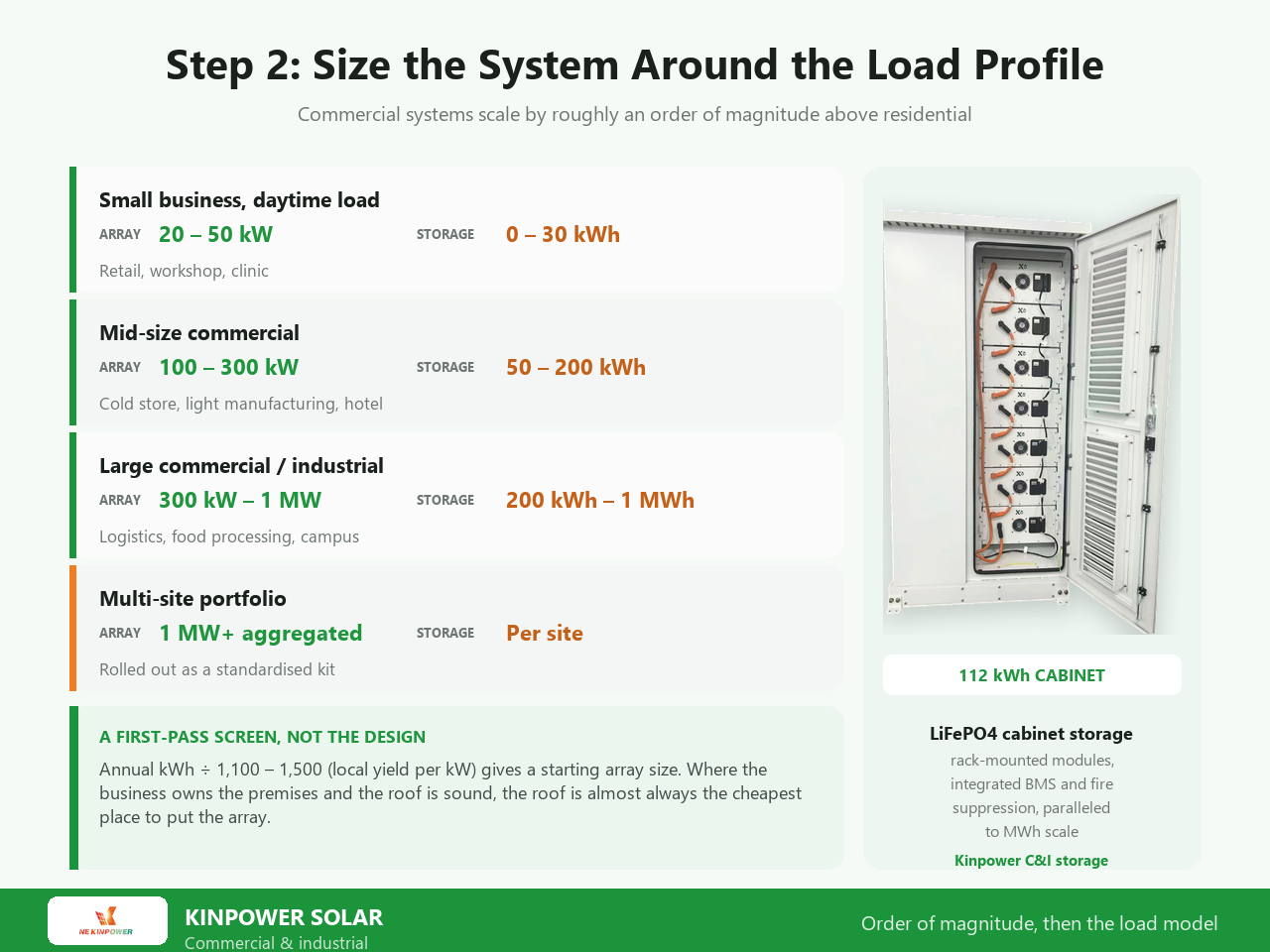
Small business solar panels systems — typically 10 to 50 kW — are the fastest-growing band, because payback is often under five years and financing is simple. A small commercial installation usually needs one inverter, no transformer upgrade, and a straightforward structural check. This is the segment where a solar system for business is most clearly a straightforward financial decision.
This is where most commercial projects succeed or fail. There are four broad categories of supplier, and they are not interchangeable.
|
Partner type |
What they do |
Watch for |
|
Commercial solar installer |
Design, supply, install, commission |
Check certification, insurance, and references |
|
EPC contractor |
Full engineering, procurement, construction |
Ask who carries performance risk |
|
commercial solar panel contractors |
Sub-contracted installation labour |
Clarity on who owns the design |
|
commercial solar power companies / commercial solar providers |
Often developers or financiers |
Confirm the O&M arrangement post-handover |
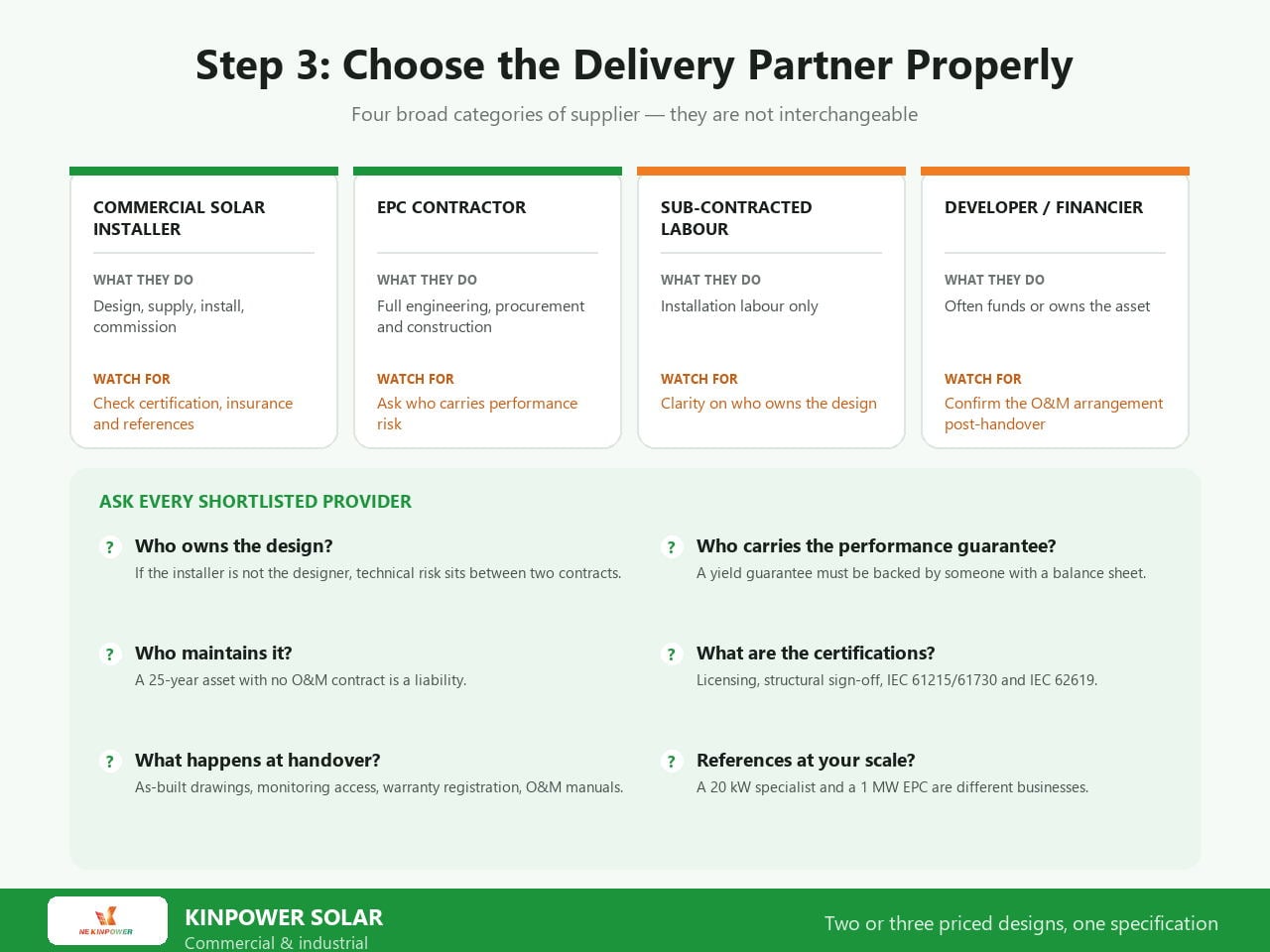
The practical questions to ask any commercial solar providers shortlist:
A well-run procurement asks for two or three priced designs against the same specification, then compares them on energy yield and lifetime cost, not on headline price. Cheap solar panel commercial installation almost always shows up later as underperformance or rectification cost.
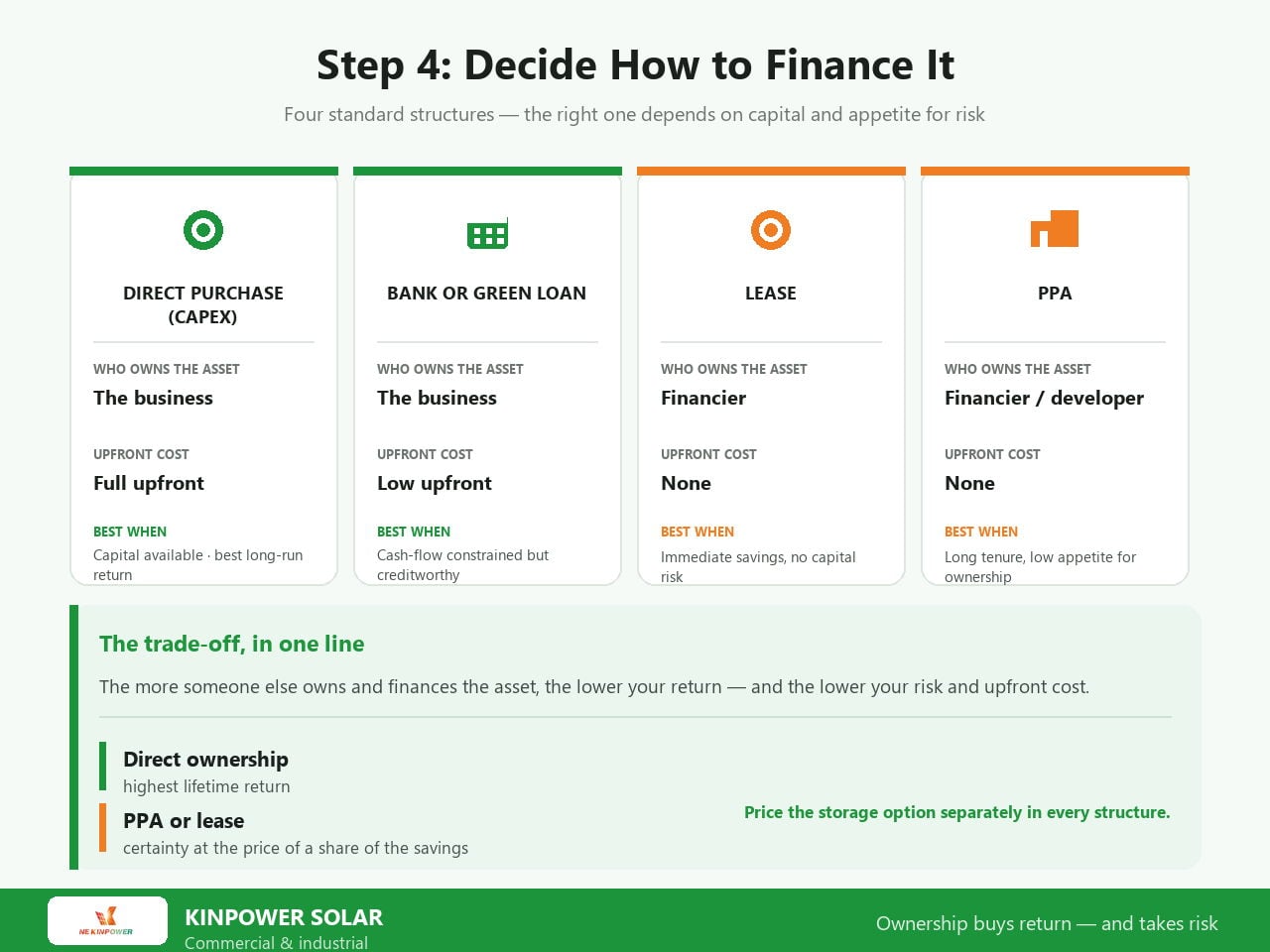
There are four standard structures, and the right one depends on capital availability and appetite for risk.
|
Model |
Who owns the asset |
Upfront cost |
Best when |
|
Direct purchase (capex) |
The business |
Full |
Capital available; best long-run return |
|
Bank or green loan |
The business |
Low |
Cash-flow constrained but creditworthy |
|
Lease |
Financier |
None |
Want immediate savings, no capital risk |
|
PPA |
Financier / developer |
None |
Long tenure, low appetite for ownership |
The trade-off is simple: the more someone else owns and finances the asset, the lower your return but the lower your risk and upfront cost. Direct ownership delivers the highest lifetime return; a PPA delivers certainty at the price of a share of the savings.
At commercial scale, the technical choices narrow considerably.
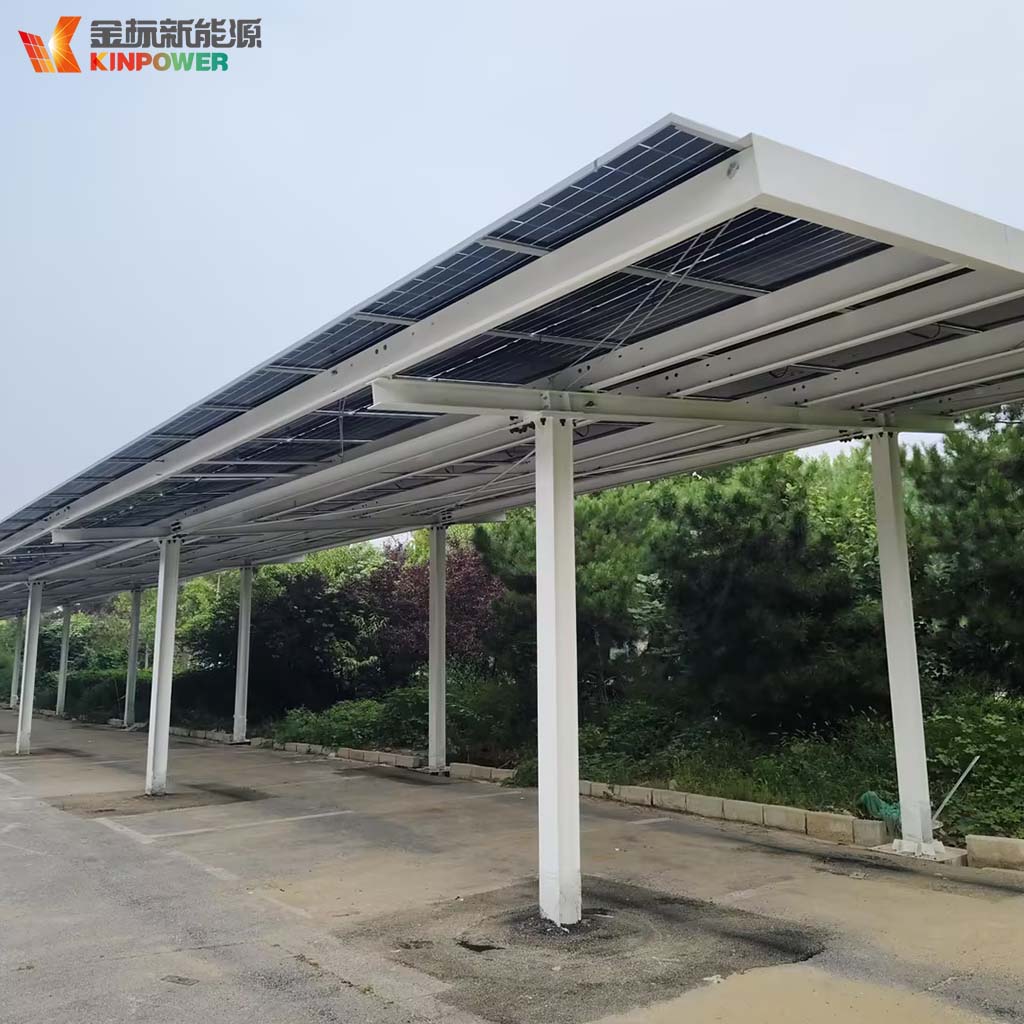
Modules and mounting. For solar panels for commercial buildings and, more broadly, solar panels in commercial buildings and solar panels for commercial business installations, the standard specification is high-efficiency monofacial or bifacial modules on roof hooks, ballasted trays or a metal-roof clamp system — the mounting follows the roof type, not the other way round.
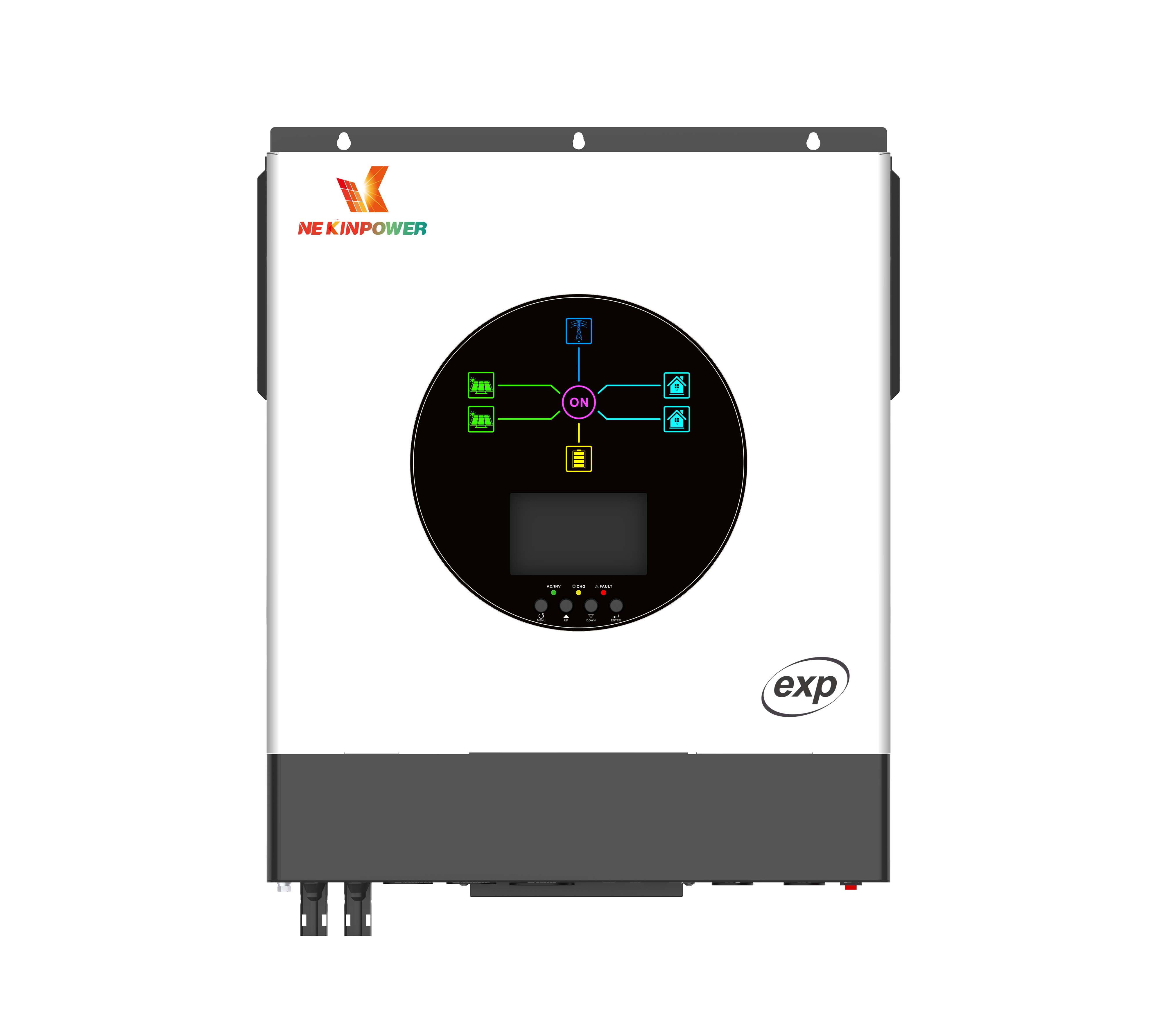
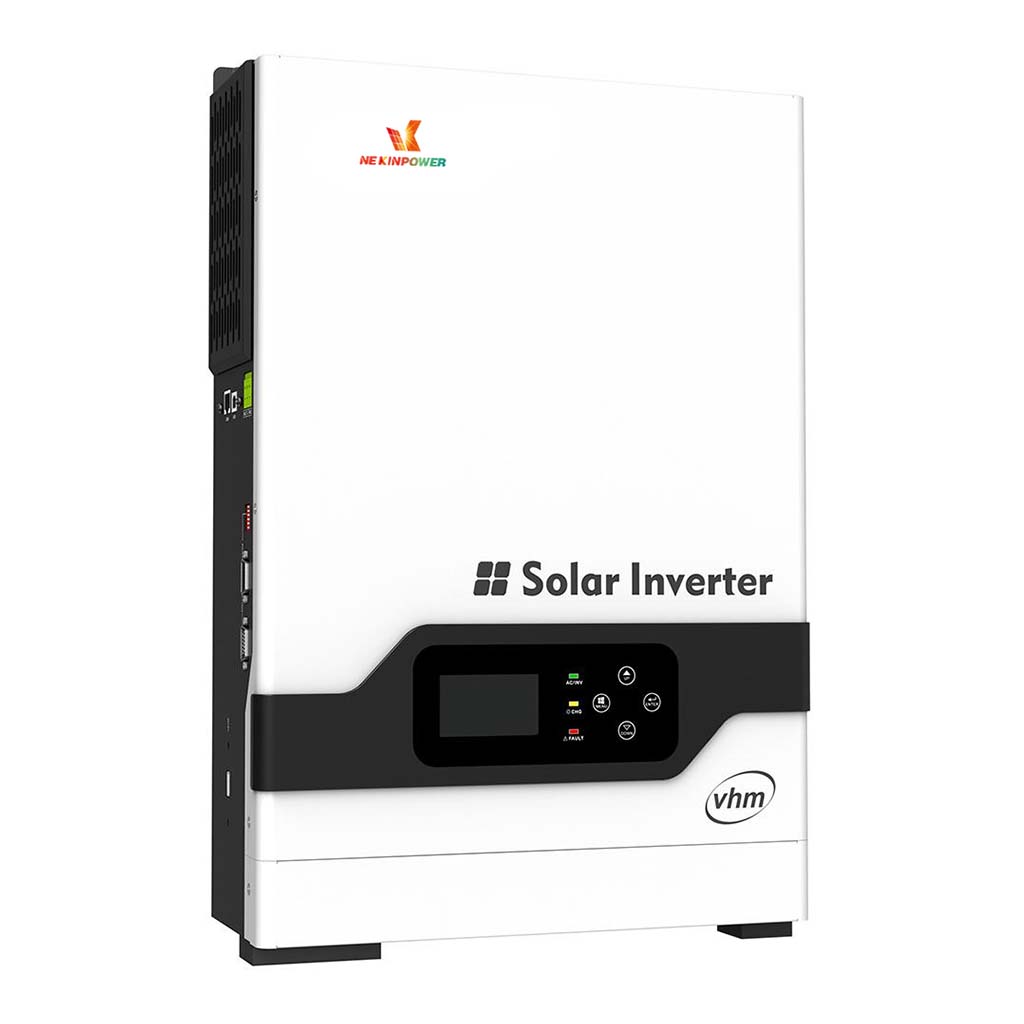
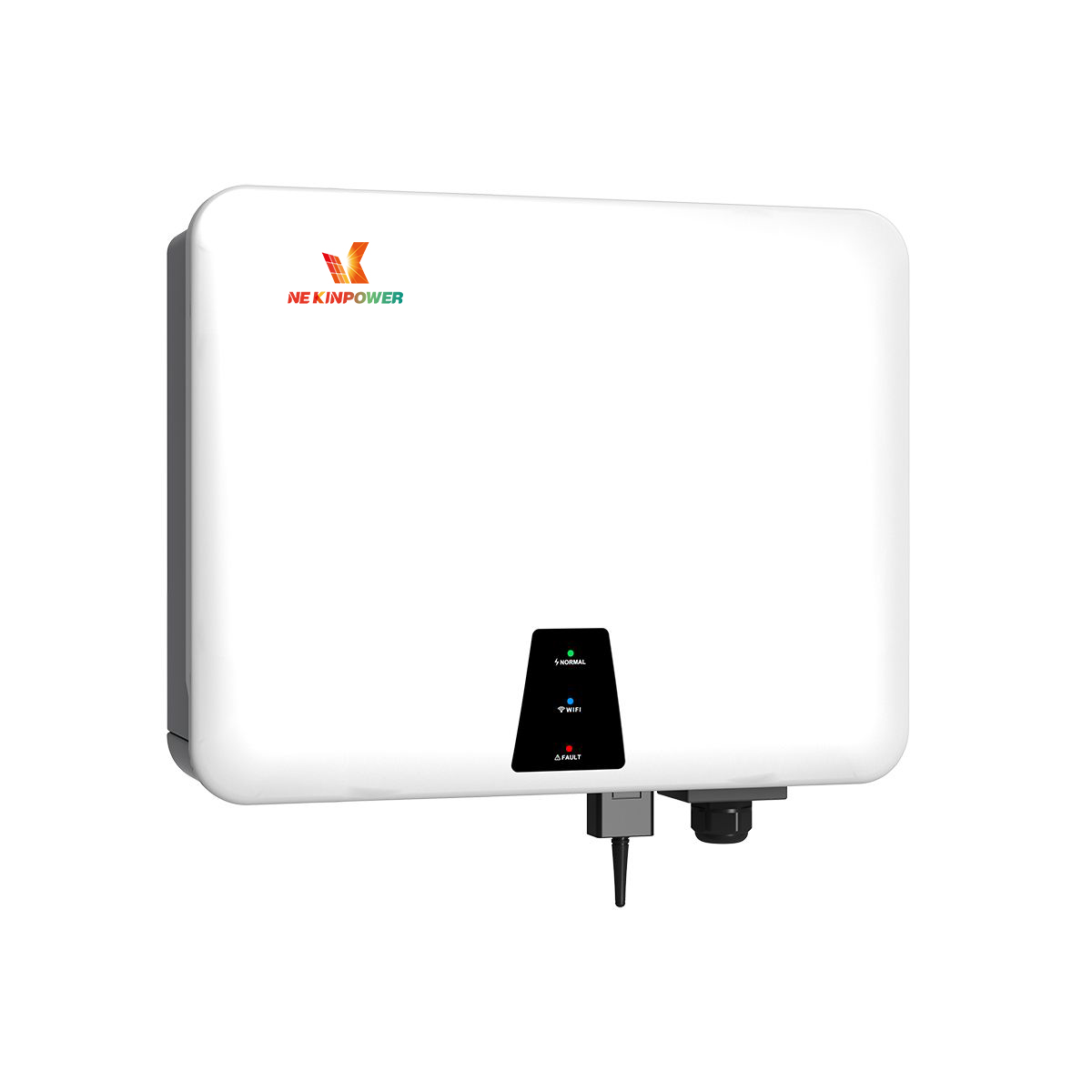
Inverters. String inverters for roofs; central inverters for ground-mount and very large roofs. Hybrid inverters where storage is included. Many commercial solar electric systems now use a hybrid architecture even without immediate storage, because it leaves the door open for a battery later.
Storage. Where a demand charge exceeds roughly $12/kW/month, or where the tariff has a wide peak/off-peak spread, storage pays back quickly. This is how a commercial solar power system becomes a peak-shaving asset rather than only a generation asset, and where a solar system for commercial use with storage outperforms a generation-only design.
Monitoring and metering. Commercial systems require proper monitoring — at minimum, generation metering and fault alerts; at best, integration with the site's BMS or SCADA.
When suppliers quote commercial solar photovoltaic systems, they are emphasising the direct-conversion nature of the technology — as opposed to solar thermal. In practice the components are identical to any PV system; the phrase usually signals a specification aimed at procurement or tender documents.
The building type determines the mounting system, the array density and whether storage earns its place.
What separates a solar system for commercial building project from a residential one is not the hardware but the process: load data, structural surveys, protection studies, and a handover that includes O&M. A residential job can succeed on a good installer's judgement; a commercial job cannot.
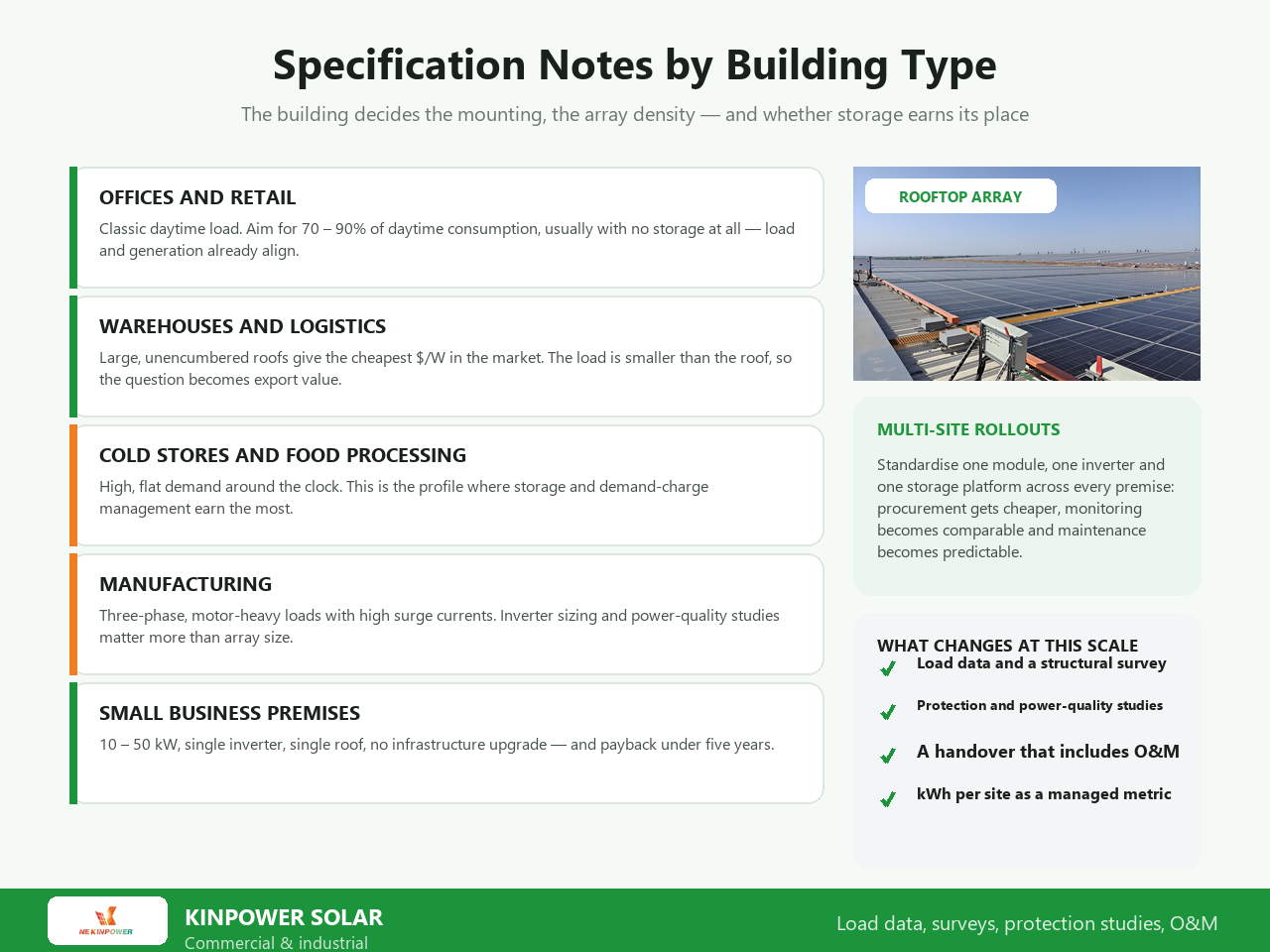
Businesses with several premises — retail chains, clinics, depots, franchise networks — should standardise. Selecting one module, one inverter and one storage platform across the portfolio makes procurement cheaper, monitoring comparable, and maintenance predictable. A single monitoring platform covering every site turns a scattered set of installations into a managed asset, and makes kWh-per-site a metric you can actually act on.
|
System size |
Installed cost |
Typical $/W |
Simple payback |
|
20 kW |
$28,000 – $46,000 |
$1.40 – $2.30 |
4 – 7 years |
|
100 kW |
$120,000 – $190,000 |
$1.20 – $1.90 |
4 – 6 years |
|
500 kW |
$500,000 – $800,000 |
$1.00 – $1.60 |
4 – 6 years |
|
1 MW+ |
$850,000 – $1,400,000 |
$0.85 – $1.40 |
5 – 8 years |
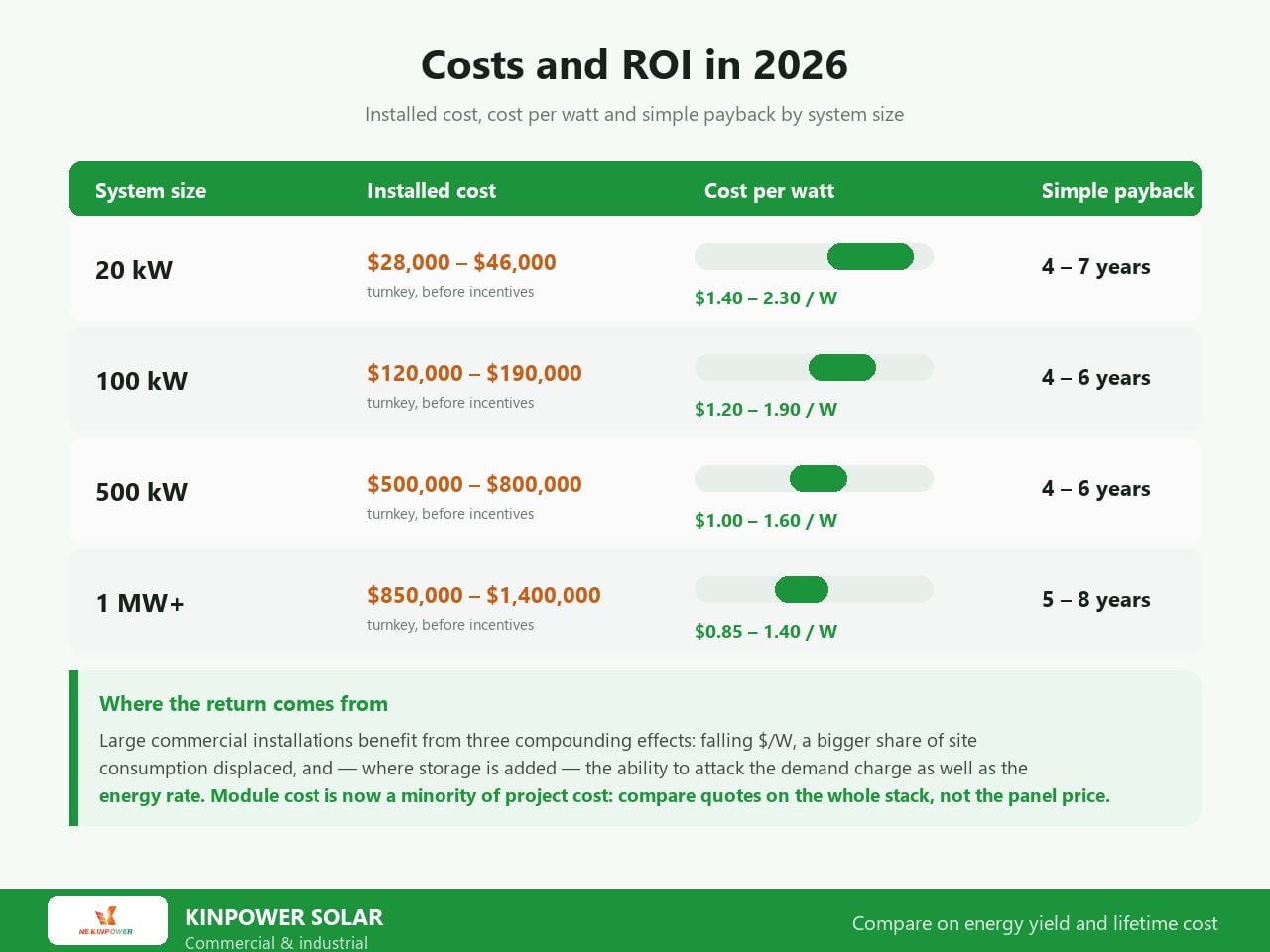
Large commercial solar installations benefit from three compounding effects: falling $/W, a bigger share of the site's consumption displaced, and — where storage is added — the ability to attack the demand charge as well as the energy rate. Enabling a commercial solar energy systems project to deliver 15–25% returns is not unusual in high-tariff markets.
Note also that commercial solar panels for sale prices reflect a market that has shifted: module cost is now a minority of total project cost. Comparing quotes on module price alone misses the majority of the cost stack — structure, inverters, labour, protection and commissioning.
Q: What size commercial solar system do I need? Start from annual kWh consumption and the daytime share. A daytime-load site typically sizes the array to cover 60–90% of daytime consumption; sizing beyond that depends on export value.
Q: How long is the payback on a commercial solar system? Four to seven years is typical in high-tariff markets, falling to three to five where storage also reduces demand charges.
Q: Should I buy or sign a PPA? Buy if capital is available — ownership gives the highest lifetime return. Choose a PPA or lease if you want no upfront cost and no ownership risk, accepting a lower return.
Q: Do I need battery storage in a commercial system? Not always. It pays when demand charges are high, when the tariff spread is wide, or when the operation needs resilience. Price it separately and judge it on its own economics.
Q: Can I combine commercial and residential projects with one supplier? If you are working with a manufacturer that supplies both — commercial and residential solar panels from one platform — you may gain on warranty consistency and monitoring integration across a portfolio.
Planning a commercial installation? Kinpower supplies commercial and industrial PV and storage systems — modules, string and hybrid inverters, and LiFePO4 cabinet storage — with full certification documentation and factory-direct pricing for installers, EPCs and businesses. See commercial & industrial solutions or browse the product range.
 Hot News
2026-11-20
2026-11-17
2026-11-12
2026-11-10
2026-11-04
2026-11-02
 EN