 ×
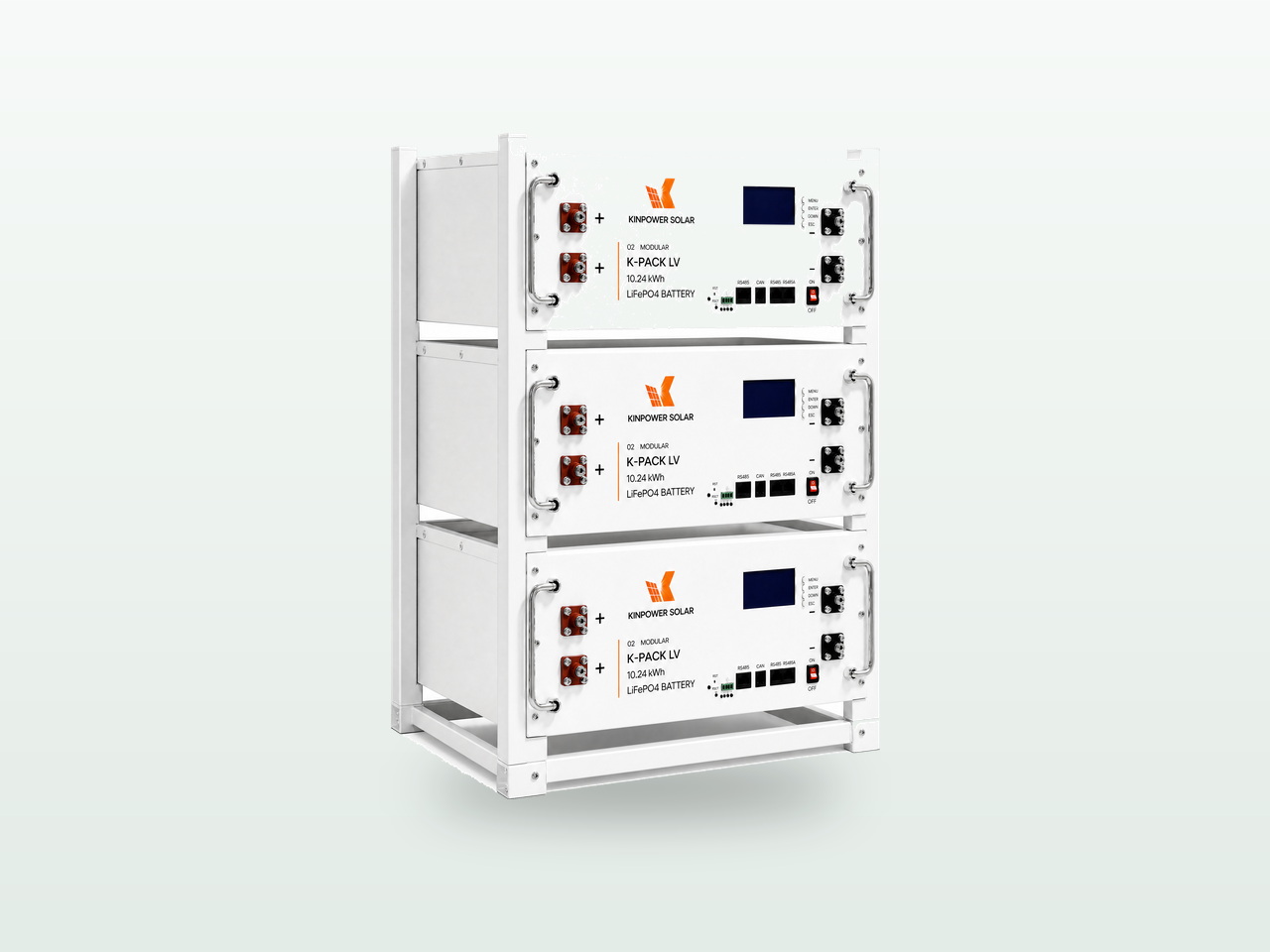
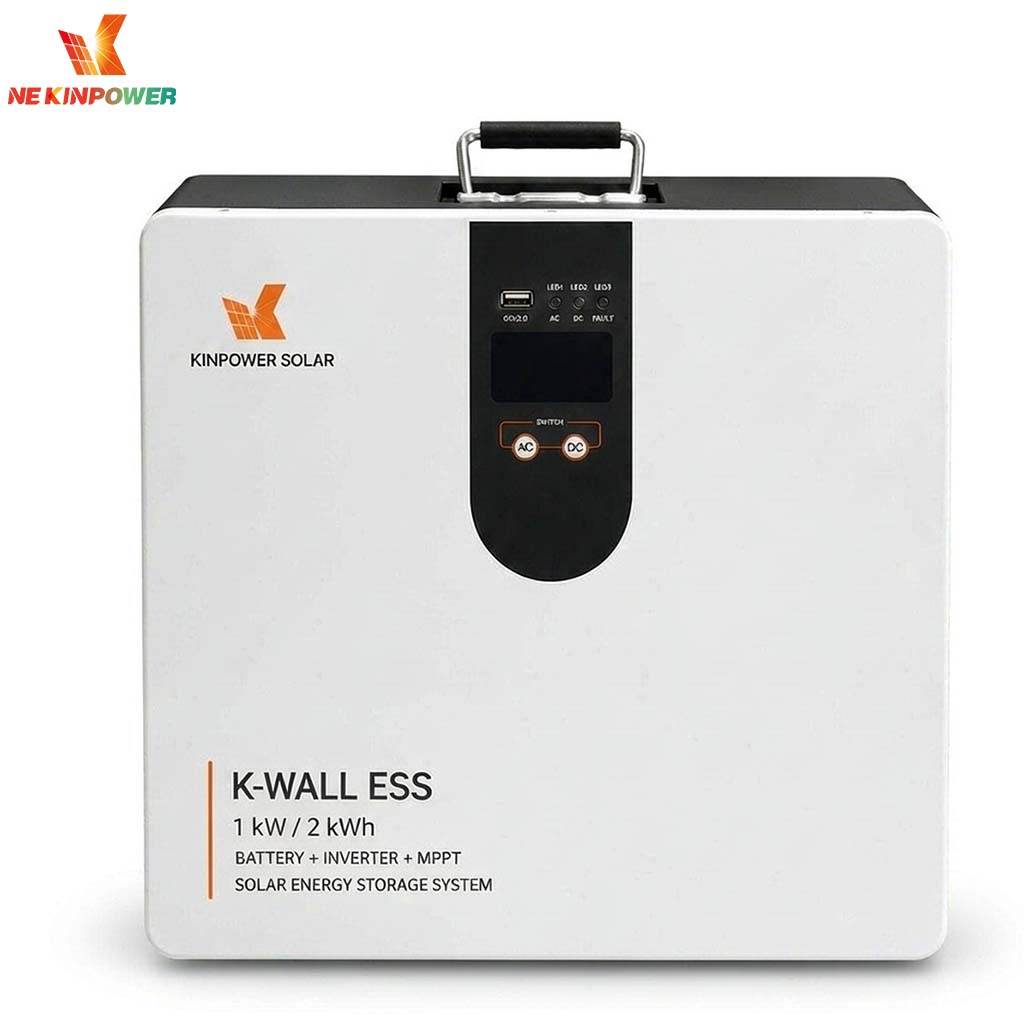
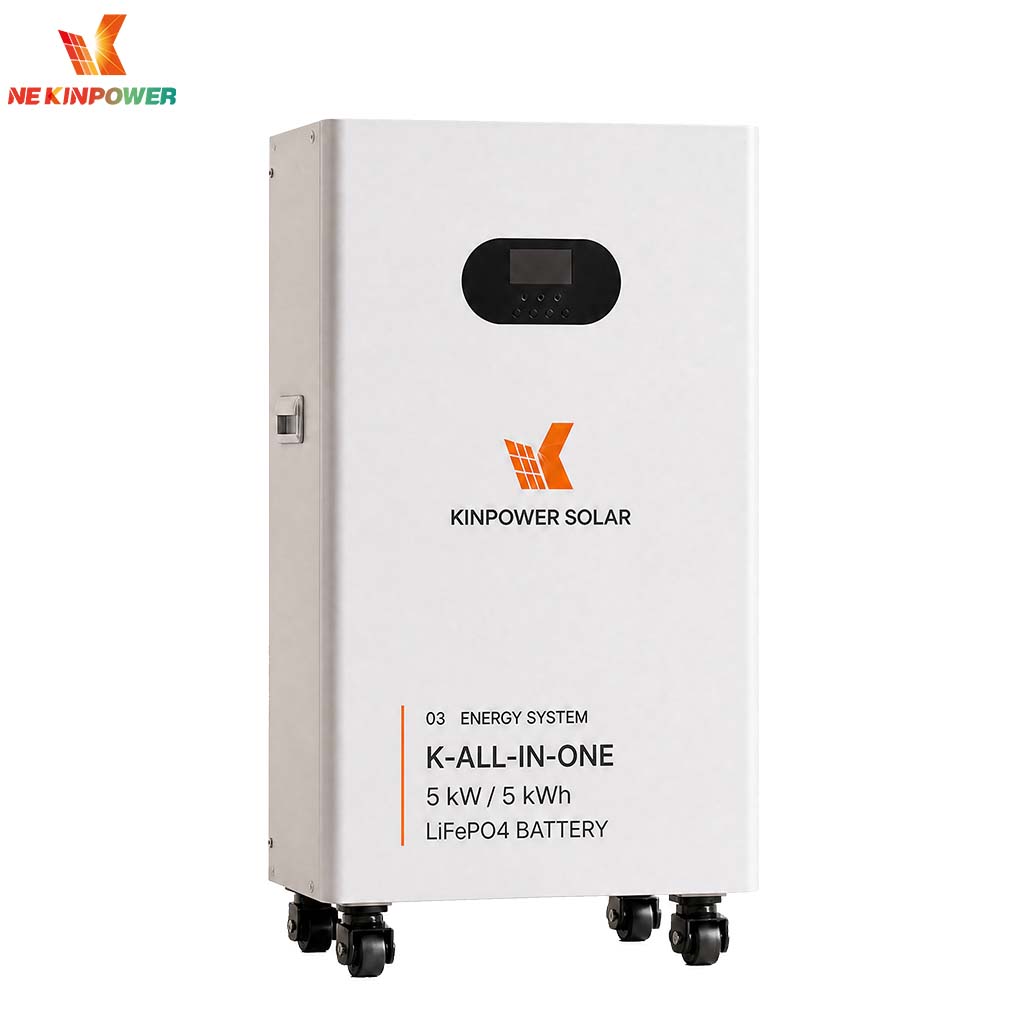
Choosing the right battery format is the single decision that shapes everything else in a residential storage project — wall space, cabling, future expansion and maintenance. As a LiFePO4 battery manufacturer, Kinpower (Hebei Jinbiao) supplies both formats: the K-WALL wall-mounted series and the K-PACK low-voltage rack-mounted series. This guide compares them the way an installer actually evaluates them.
|
Factor |
Wall-mounted (K-WALL) |
Rack-mounted (K-PACK) |
|
Installation position |
Hanging on a wall, off the floor |
Slides into a floor cabinet/rack |
|
Footprint |
Zero floor space, needs a load-bearing wall |
~0.3 m² floor area |
|
Module unit |
Typically 5.12 kWh per unit |
5.12 kWh per module |
|
Stacking/expansion |
Parallel units, wired side by side |
Stack modules vertically, 15 units in parallel supported |
|
Protection class |
IP65 — suitable for garage/outdoor-adjacent walls |
IP20 — indoor, dust-controlled rooms |
|
Typical user |
Homes with limited floor space |
Installers building phased, expandable systems |
A wall mounted lifepo4 battery wins where floor space is scarce: narrow utility rooms, garages with limited clearance, or verandas where the unit sits high and dry. Mounting requires a solid masonry or reinforced wall; a 5.12 kWh unit weighs roughly 45–50 kg, so the bracket and anchor spec matter.
A rack mounted solar battery wins where you want a tidy equipment corner: battery modules, hybrid inverter, and distribution all in one cabinet line. For new-build homes where the installer plans the electrical room from day one, rack format keeps wiring runs short and inspection-friendly.
Before choosing a format, size the system:
A practical rule for European and Southeast Asian homes: 5–10 kWh covers essential-load backup; 10–20 kWh approaches whole-evening autonomy for a 3–4 bedroom house.
|
Configuration |
Best for |
Backup example |
|
1 × 5.12 kWh |
Apartments, essential loads, tight budgets |
Fridge + lights + router + TV ≈ 10–14 h |
|
2 × 5.12 kWh (10.24 kWh) |
Family homes with evening peaks |
Above + air conditioning for 4–6 h |
|
4 × 5.12 kWh (20.48 kWh) |
Whole-home autonomy with PV |
Full evening + morning, cloudy-day buffer |
Because both formats use the same 5.12 kWh module block, the 5.12kwh vs 10.24kwh battery question is really a phasing question: start small, expand later. Both K-WALL and K-PACK support parallel expansion — K-PACK supports up to 15 modules in parallel, enough to grow from 5 kWh to 75 kWh without replacing the original units.
Expansion is where formats differ most in practice:
Checklist before committing: inverter brand and protocol list, maximum supported parallel battery count, shared-shunt or per-module BMS, and firmware matching procedure.
Both series use LiFePO4 cells with BMS-managed thermal balancing; in hot climates (above 35 °C average), prefer shaded locations for either format and derate charge current per the datasheet.
Per kWh, the two formats are close at the factory level; installed cost diverges by scenario:
Maintenance on both is minimal: annual terminal torque check, ventilation check, and BMS log review via the inverter or monitoring app.
Both families connect to the hybrid inverter's battery port with a DC breaker sized per continuous discharge current, and to the inverter's CAN/RS485 battery port with the protocol-specific cable. Three practical notes from our field engineers:
Q: Can I mix wall-mounted and rack-mounted batteries in one system? A: Technically possible when voltages and BMS protocols align, but we recommend keeping one product family per system so the BMS state-of-charge calibration stays consistent.
Q: Is a wall-mounted battery safe indoors? A: Yes. LiFePO4 chemistry has high thermal stability, and K-WALL units carry IP65 sealing plus over-current, over-temperature and cell-level protection in the BMS.
Q: How many modules can I parallel? A: K-PACK supports up to 15 modules in parallel; K-WALL units parallel in groups per the manual. Confirm the inverter's parallel limit as well.
Q: Which format has better resale value? A: Rack systems expand more gracefully, so they keep system-level value better when the household load grows.
Kinpower supplies both series with OEM/ODM options for distributors and installers. Get the K-WALL and K-PACK engineering selection sheets — including inverter compatibility lists and parallel wiring diagrams — from our household energy storage line and rack-mounted battery series, or send us your load profile for a sizing proposal.
 Hot News
2026-11-20
2026-11-17
2026-11-12
2026-11-10
2026-11-04
2026-11-02
 EN