 ×
×
Many homeowners investing in residential solar battery storage face a common question: Is a low-power, high-capacity home energy storage system really a cost-effective choice?
At first glance, this configuration may seem attractive. A large battery capacity promises longer backup duration and more stored energy for household use. However, in many residential applications, pairing an oversized battery with an undersized inverter can create a significant mismatch between stored energy and available power.
The key is to understand that battery capacity and inverter power solve two different problems. Capacity determines how much energy can be stored, while power determines how much electricity the system can deliver or absorb at any given moment. A well-designed residential energy storage system needs to balance both.
In this guide, we explain the essential difference between battery capacity and inverter power, examine the limitations of low-power, high-capacity configurations, and provide a practical power-to-capacity guideline for residential solar storage systems.
Many homeowners new to solar-plus-storage systems confuse power and capacity. These two parameters are fundamental to system design.
Battery capacity refers to the amount of electrical energy that a battery can store. It primarily determines how long the battery can supply power to household loads.
For example, a 10 kWh battery can theoretically provide 5 kW of power for approximately two hours under ideal conditions. Actual runtime depends on usable depth of discharge, inverter efficiency, battery operating limits, and the actual household load.
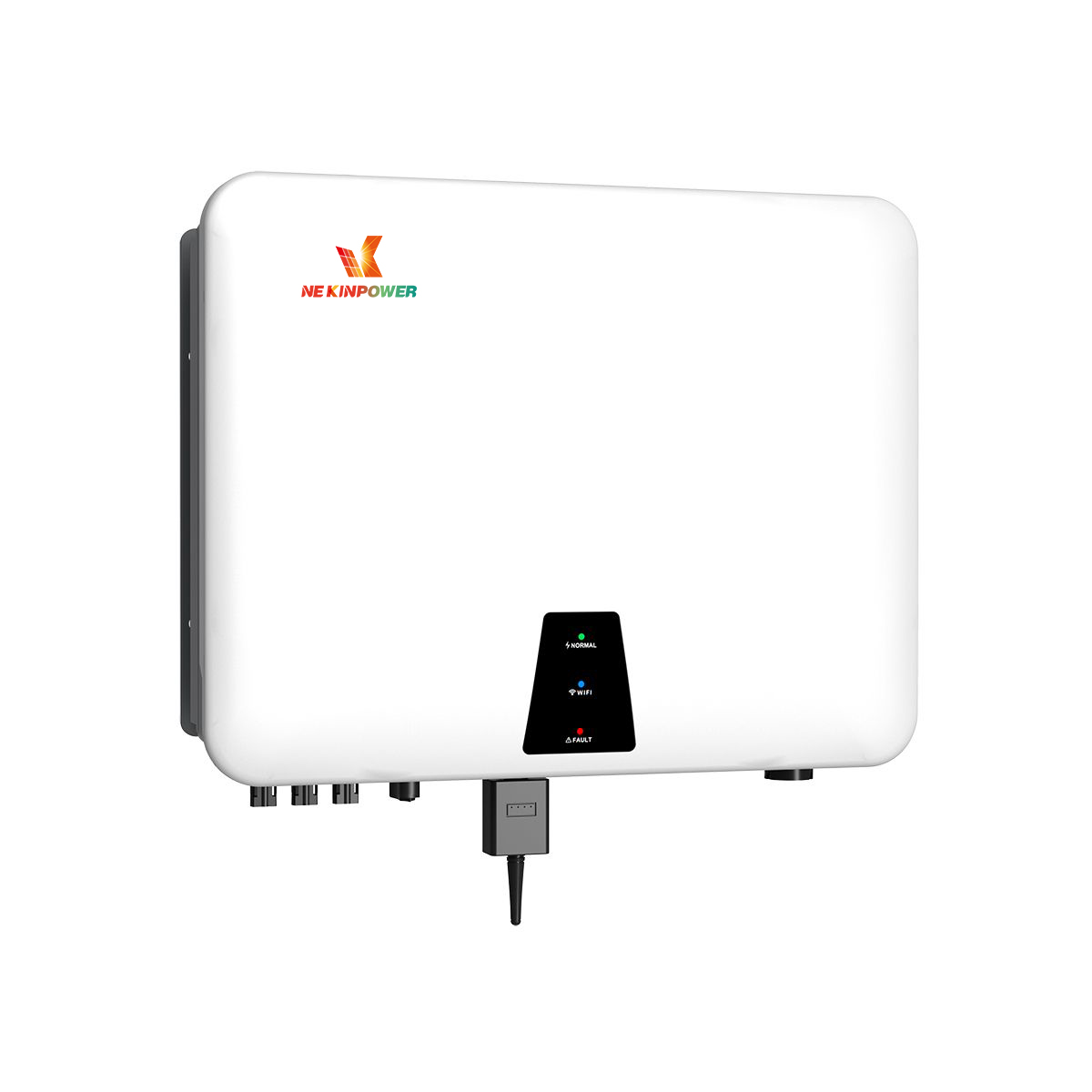
Inverter power represents the maximum AC power that the inverter can deliver to household loads at a given time. It determines how many appliances can operate simultaneously and whether the system can handle the home's peak electrical demand.
In other words:
Battery capacity determines how long the system can run.
Inverter power determines how much load the system can support at once.
This distinction is fundamental when designing a reliable home energy storage system. Industry sizing guidance likewise treats power and energy capacity as separate parameters rather than as a single measure of battery size.
To put it simply, a low-power, high-capacity energy storage system is like a huge water tank connected to a narrow pipe.
No matter how large the tank is, the amount of water that can flow in or out at any given time is limited by the pipe.
The same principle applies to battery storage:
Battery capacity (kWh) = size of the tank
Inverter power (kW) = size of the pipe
Household load = amount of water being used
A very large battery does not automatically mean that the system can handle high-power household appliances.
One of the biggest disadvantages of an undersized inverter is limited backup capability during periods of high household demand.
Residential electricity consumption can fluctuate significantly throughout the day. High-power appliances such as air conditioners, electric heaters, induction cooktops, microwaves, water pumps, and EV chargers may operate simultaneously.
If the combined load exceeds the inverter's rated output, the system may need to limit the load, trigger protection, or disconnect certain circuits depending on the system architecture and protection settings.
Consider a typical mismatched configuration:
10 kWh battery + 3 kW inverter
Suppose a 2 kW air conditioner and a 2 kW induction cooktop operate simultaneously.
The combined load is:
2 kW + 2 kW = 4 kW
However, the inverter can deliver only 3 kW continuously.
In this situation, the 4 kW load exceeds the inverter's rated output. The inverter may limit its output or activate an overload protection function, depending on its design.
The result is frustrating: even with a fully charged battery, the system cannot support the combined household load when demand exceeds the inverter's available power.
The battery has sufficient energy capacity, but the system does not have sufficient power capacity.
By comparison, a properly sized inverter can support the required peak loads more reliably, while the battery capacity can then be selected according to the desired backup duration.
For homes equipped with solar panels, inverter and battery charging power also need to be considered carefully.
Solar PV generation can reach its highest output around midday. If the battery's permitted charging power is significantly lower than the available solar generation, the battery cannot absorb all of the available surplus at that moment.
For example, suppose a home has:
5 kW solar PV array
3 kW maximum battery charging power
At a particular moment when sufficient solar power is available, the battery can accept up to approximately 3 kW for charging.
The remaining solar generation does not necessarily have to be wasted. Depending on the system configuration, it may:
Supply household loads directly
Be exported to the utility grid
Be curtailed when export or system limits are reached
Therefore, the key issue is not simply that "2 kW of solar power is wasted." The real issue is that the battery itself cannot absorb more than its permitted charging power at that moment.
If the battery is oversized relative to the available solar generation and charging power, a significant portion of its storage capacity may remain unused for extended periods.
This is why battery capacity should be considered together with PV capacity, inverter power, household consumption patterns, and battery charging limits.
Battery cells typically represent a major portion of the cost of a residential energy storage system. Installing substantially more battery capacity than the household can regularly use may therefore reduce the economic efficiency of the overall system.
An oversized battery can result in:
Lower utilization of the installed storage capacity
Longer periods at partial state of charge
Higher upfront investment
Lower energy throughput relative to the installed battery capacity
Longer payback periods when the additional capacity is rarely used
For example, if a household normally needs only 8–10 kWh of usable storage but installs a much larger battery system, the additional capacity may not generate proportional financial benefits.
The economic value of a battery depends not only on how many kWh it can store, but also on how frequently those kWh are actually used.
Oversizing the battery does not necessarily provide the best solution for future expansion.
If a homeowner later adds:
An EV charger
A heat pump
Additional air-conditioning units
Electric water heating
Other high-power appliances
the system may require a higher inverter output to handle the increased peak load.
In some system architectures, upgrading the inverter may be necessary even if the battery capacity is already sufficient.
Therefore, residential energy storage should be designed around both present load requirements and realistic future expansion plans.
C-rate is another important parameter when matching a battery with an inverter.
C-rate describes how quickly a battery is charged or discharged relative to its rated capacity.
For example:
A 10 kWh battery operating at 0.5C corresponds to approximately 5 kW of power.
A 10 kWh battery operating at 1C corresponds to approximately 10 kW of power.
The actual allowable charge and discharge rate depends on the battery cells, BMS, thermal conditions, manufacturer specifications, and warranty requirements. Therefore, C-rate should not be evaluated independently from the battery's technical datasheet.
It is also important not to assume that a very low C-rate will automatically damage a lithium battery. In many cases, lower operating rates can reduce electrical and thermal stress. The bigger concern for system design is that an unnecessarily large battery paired with a low-power inverter may result in poor utilization of the installed battery capacity and an economically inefficient system.
Battery lifetime is influenced by multiple factors, including:
Charge and discharge rate
Depth of discharge
Operating temperature
State-of-charge range
Cell balancing
Charging conditions
BMS protection strategy
Overall system thermal management
Therefore, the objective should not simply be to maximize battery capacity. The goal is to achieve a balanced configuration that matches the battery's power capability with the household's actual load profile.
A low-power, high-capacity configuration is not necessarily useless. It can make sense in certain applications where the household's continuous power demand is relatively low but long-duration energy storage is important.
Potential applications include:
Remote cabins or small off-grid homes that mainly use:
LED lighting
Routers
Monitoring equipment
Small refrigerators
Other low-power appliances
may not require a high-power inverter.
Homes that only need backup for essential circuits may also prioritize battery capacity over high inverter power.
For example, a system designed to maintain:
Lighting
Internet equipment
Refrigeration
Security systems
Communications equipment
does not necessarily require the same inverter capacity as a whole-home backup system.
Large battery capacity can also be useful for applications focused on peak shaving and load shifting, particularly when the system operates at relatively stable and moderate power levels.
However, for conventional residential homes with multiple air conditioners, heat pumps, induction cooktops, EV chargers, or other high-power appliances, inverter power must be carefully matched to the expected peak load.
There is no single universal ratio that applies to every residential energy storage system.
The appropriate configuration depends on:
Household peak load
Average daily energy consumption
Required backup duration
Solar PV capacity
Battery chemistry
Maximum battery charge/discharge rate
Inverter specifications
Future EV or appliance loads
Local electricity tariffs and grid conditions
However, a commonly used starting guideline for residential systems is:
Inverter Power (kW) : Battery Capacity (kWh) ≈ 1 : 1 to 1 : 2
This corresponds approximately to a 0.5C–1C power-to-energy relationship, assuming the battery is rated for the required operating range.
For example:
| Inverter Power | Typical Battery Capacity |
|---|---|
| 3 kW | 3–6 kWh |
| 5 kW | 5–10 kWh |
| 8 kW | 8–16 kWh |
| 10 kW | 10–20 kWh |
| 15 kW | 15–30 kWh |
These figures should be treated as initial sizing guidelines rather than fixed industry standards. The final design must always be checked against the battery's continuous discharge rating, BMS limits, inverter specifications, household peak load, and desired backup duration.
For example, a 5 kW residential hybrid inverter can typically be paired with a 5–10 kWh battery system, but the optimal configuration depends on the homeowner's specific load profile and backup requirements. Similar sizing guidance is also reflected in current residential battery and inverter pairing recommendations.
A properly designed residential energy storage system needs to balance three key factors:
The inverter must provide enough power to handle the household's expected peak loads.
The battery must provide sufficient usable energy for the required backup duration or daily solar self-consumption.
The battery should be large enough to meet the application requirements without creating excessive unused capacity.
A simple example illustrates this principle:
5 kW inverter + 10 kWh battery
This configuration provides:
Sufficient inverter power for moderate household peak loads
Approximately two hours of theoretical operation at a continuous 5 kW load before accounting for efficiency and usable DoD
A 0.5C power-to-capacity relationship
A practical balance between power capability and storage duration
However, if the household's peak demand is 8 kW, increasing the battery from 10 kWh to 20 kWh does not solve the problem by itself.
The inverter still needs to be capable of delivering the required power.
This is the fundamental reason why more battery capacity does not automatically mean better system performance.
A low-power, high-capacity home energy storage system may look attractive because it provides a large amount of stored energy. However, battery capacity alone cannot determine whether a residential storage system is properly designed.
If the inverter is undersized relative to household peak loads, the system may not be able to support multiple high-power appliances during a power outage. If battery charging power is too limited relative to available solar generation, the battery may also fail to capture as much surplus solar energy as its capacity would otherwise allow.
An oversized battery can further increase upfront investment without delivering proportional benefits if the additional capacity is rarely used.
For most residential applications, the best approach is to balance:
Household Peak Load + Inverter Power + Battery Capacity + PV Generation + Battery C-Rate + Backup Duration
Rather than simply choosing the largest battery available, homeowners should select a system that matches their actual electricity consumption and future energy needs.
A well-designed residential solar storage system should provide enough inverter power to handle essential peak loads, sufficient battery capacity for the desired backup duration, and appropriate charging and discharging capability to maximize solar energy utilization.
Looking for the right power and capacity configuration for your home solar energy storage system? Contact our technical team for customized system sizing, battery configuration, inverter matching, and cost-effective residential energy storage solutions.
 Hot News
2026-10-08
2026-10-06
2026-09-30
2026-09-28
2026-09-23
2026-09-22
 EN
EN