
 EN



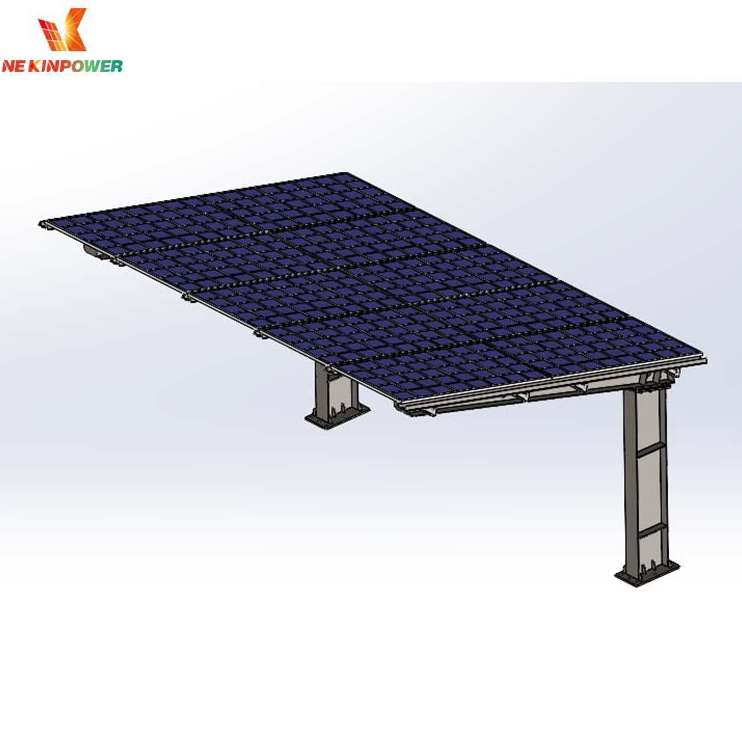
The Basic Idea Behind a Solar EV Charging Carport
A solar EV charging carport combines three functions in one structure. It shades parked vehicles, generates electricity from sunlight, and delivers that power to electric vehicle chargers. The concept sounds straightforward, but the way energy moves from panel to car battery involves several important steps.
The carport itself is a steel or aluminum canopy with solar modules mounted on top. Those modules produce DC electricity whenever sunlight hits them. The DC output travels through wiring to an inverter, which converts it into AC power that buildings and most EV chargers can use. From there, the electricity either feeds the building, charges a battery, or goes directly to a vehicle.
What makes the system valuable is timing. Solar production peaks in the middle of the day. Many workplace vehicles are parked during those same hours. A solar EV charging carport captures that overlap and turns idle parking time into charging time.
How Power Actually Flows From Panel to Vehicle
The power path depends on the system design. In a basic setup, solar modules feed a string inverter or microinverters. The AC output connects to a distribution panel. EV chargers draw from that panel like any other electrical load. When the sun is strong, most of the charging power comes from the carport itself.
Adding battery storage changes the flow. Excess solar energy that is not immediately used gets stored. Later, when a vehicle plugs in during late afternoon or evening, the battery discharges to support the charging session. This reduces the amount of power pulled from the grid during expensive peak hours.
A charge controller or energy management system sits in the middle of all this. It monitors solar output, building load, battery state of charge, and charger demand. It then decides in real time where power should come from. On a sunny morning with low building load, the controller sends surplus power to the battery. On a cloudy afternoon with several vehicles charging, it blends stored energy with grid power to avoid a demand spike.
Where the Real Efficiency Gains Come From
Every conversion step loses a little energy. DC from panels becomes AC at the inverter. AC may then be converted back to DC inside the vehicle charger. Each step is efficient on its own, but the losses add up. That is why system architecture matters.
DC-coupled systems reduce conversion losses by keeping solar and battery storage on the same DC bus before inversion. This works well when a large share of solar energy will be stored first and used later. AC-coupled systems are easier to add to existing solar installations, but they include extra conversion steps.
The table below compares typical configurations for solar EV charging carports.
| Configuration | Conversion Steps | Best Use Case | Energy Shifting Ability |
|---|---|---|---|
| Solar directly to EV charger | Fewer | Daytime workplace charging | None |
| Solar plus AC coupled battery | More | Retrofits and mixed loads | Good |
| Solar plus DC coupled battery | Fewer | New builds with storage focus | Better |
| Grid only EV charger | Minimal | Sites without solar access | None |
A Real World Example From a Fleet Parking Lot
A logistics company in Arizona installed a solar carport over thirty parking spaces used by electric delivery vans. The original plan was a simple grid tied solar array with no storage. Within the first few months, the operations team noticed that most vans plugged in after the afternoon route ended, just as solar production was dropping.
That mismatch meant the company was still buying expensive evening power despite having a large solar array. The solution was a battery pack sized to cover roughly four hours of fleet charging. After the upgrade, the carport charged the battery during midday, and the battery supported the evening plug-in window.
The project did not eliminate grid consumption. The site still pulled power during cloudy weeks and heavy charging days. But the battery shifted enough load that the monthly demand charge dropped noticeably. The operations manager later said the battery was not an accessory. It was the piece that made the solar carport actually match the fleet schedule.
What the Data Says About Solar EV Charging Growth
Solar carports remain a small share of total solar installations, but they are growing. According to the National Renewable Energy Laboratory, parking canopies offer a practical option for sites with limited rooftop space and high land costs. They also reduce heat island effects and provide shaded parking, which improves the experience for employees and visitors.
Electric vehicle adoption continues to rise across North America and Europe. The International Energy Agency has reported strong growth in EV sales and charging infrastructure investment. Commercial properties that install charging today are preparing for a future where employees and tenants expect plug-in access as a standard amenity.
That combination of solar production and EV charging makes particular sense for workplaces. Vehicles sit for six to eight hours during daylight. That is exactly when solar output peaks. A solar EV charging carport aligns infrastructure with behavior instead of forcing behavior to change.
Honest Limitations That Affect Real Projects
Not every parking lot works for a solar carport. Shading from nearby buildings or trees can reduce output enough to change the financial case. Local zoning may limit canopy height or coverage. Existing pavement may need reinforcement to support the structural columns and construction equipment.
Battery sizing is another common issue. A battery that is too small will not cover the evening charging window. A battery that is too large adds cost without proportional savings. The right size comes from actual charging data and utility interval records, not from a simple formula.
Maintenance also matters. Panels need cleaning, inverters need monitoring, and batteries need periodic service. A system without a service plan will lose performance slowly but steadily. That decline is easy to miss until a utility bill comparison reveals it.
How Structural Quality Affects the Whole System
The electrical components get most of the attention, but the carport structure itself determines whether the system lasts. Wind uplift, snow load, and thermal expansion all act on the steel frame. If the structure moves or corrodes, panel alignment suffers and production drops.
Kinpower supplies steel structures and support systems for solar carports and related infrastructure. The company operates a manufacturing base in Hebei and works with energy and construction clients on field installation requirements. For developers building solar EV charging carports, having a structural supplier that understands site conditions and load paths keeps the project safer and easier to coordinate.
Table of Contents
- The Basic Idea Behind a Solar EV Charging Carport
- How Power Actually Flows From Panel to Vehicle
- Where the Real Efficiency Gains Come From
- A Real World Example From a Fleet Parking Lot
- What the Data Says About Solar EV Charging Growth
- Honest Limitations That Affect Real Projects
- How Structural Quality Affects the Whole System