
 EN



Why Combining Solar, Storage, and EV Charging Changes the Math
Most commercial sites treat solar, battery storage, and EV charging as three separate projects. That approach leaves money on the table. When a solar array generates more power than a building uses, the surplus often gets exported to the grid at a low feed-in rate. Later, when vehicles need charging in the evening, the site buys power back at a much higher retail rate.
Combining the three pieces solves that mismatch. Excess solar energy flows into battery storage instead of leaving the site. The stored energy then charges vehicles after sunset or during peak demand windows. The system becomes a small utility, shifting cheap daytime electrons into valuable evening charging sessions.
A solar plus storage plus EV charging solution also reduces demand charges. Commercial electric bills often include a peak demand component based on the highest fifteen-minute draw in a billing cycle. A few EVs charging simultaneously can spike that number. Batteries absorb the spike, flatten the load curve, and lower the monthly bill without changing how many vehicles get charged.
The Technical Architecture Behind a Reliable System
A well-designed system needs more than panels, batteries, and chargers bolted together. Power conversion is the first technical challenge. Solar panels produce DC power. Batteries store DC power. EV chargers deliver either AC or DC depending on the charging level. Each conversion step loses a small percentage of energy.
DC-coupled systems reduce those losses by connecting solar and batteries on the same DC bus before inversion. That architecture makes sense when most solar energy will be stored first and used later. AC-coupled systems are easier to retrofit onto existing solar installations but add conversion steps.
The energy management system sits at the center. It monitors solar production, building load, battery state of charge, and charging session requests in real time. A good controller prioritizes loads automatically. During a sunny afternoon, it routes excess solar to batteries. During a cloudy morning rush, it blends grid power with stored energy to avoid a demand spike. The table below compares typical system configurations.
| System Type | Conversion Steps | Best Application | Relative Complexity |
|---|---|---|---|
| AC coupled with existing solar | More | Retrofits, small sites | Moderate |
| DC coupled solar plus storage | Fewer | New builds, high solar share | Higher |
| Grid only EV charging | Minimal | No solar available | Low |
| Solar direct to EV without storage | Few | Daytime fleet charging | Low to moderate |
What Actually Happens on a Commercial Site
A distribution warehouse in central California installed a 200 kW solar array with 400 kWh of battery storage and six Level 2 EV charging stations. Before the upgrade, the site paid a monthly demand charge that spiked every time three or more employees plugged in during the afternoon. The battery was programmed to discharge during those charging windows.
After twelve months, the facility reported lower peak demand in every billing cycle. The batteries also kept the chargers running during two grid outages, which was not part of the original business case but quickly became the most talked-about benefit. The experience showed that resilience and bill savings are not competing goals. They come from the same design decision.
The key lesson was not the hardware. It was the control strategy. The site owner spent more time tuning the charge and discharge schedule than selecting panels or batteries. The software settings determined whether the system saved money or just shifted when the money was spent.
Regulatory and Incentive Factors That Shape the Business Case
Local utility rules often decide whether a project makes financial sense. Some regions offer net metering that credits solar exports at the retail rate. Others use time-of-use rates that make evening power expensive. Battery storage value depends heavily on those rate structures.
Federal and state incentives also move the numbers. Investment tax credits can reduce upfront costs for solar and storage when storage is charged primarily from solar. Utility programs in several states offer additional rebates for EV charging infrastructure. Those programs change frequently, so project planning must include a current regulatory review.
The North American EV charging market continues to expand. According to the International Energy Agency, public charging installations grew significantly in recent years, driven by fleet electrification and workplace charging demand. Commercial properties that install integrated systems now are positioning for a load profile that will only grow.
Honest Limitations That Should Not Be Ignored
A solar plus storage plus EV charging system is not right for every site. Shaded rooftops, weak grid interconnection points, or low vehicle counts can destroy the payback math. Battery cycle life also depends on how aggressively the system cycles the cells. A controller that chases every small demand spike will wear out the battery faster than one that only discharges during meaningful peaks.
Sizing matters more than component selection. Oversized storage adds cost without adding savings. Undersized storage fails to control the demand charge. The design should start with interval data from the utility meter, not with a catalog of hardware.
Maintenance should also be planned early. Batteries need thermal management, firmware updates, and occasional cell balancing. EV chargers need cable and connector inspection. Solar panels need cleaning and inverter checks. A system with no service plan will drift from its original performance within a few years.
Why Structural Support and Site Infrastructure Still Matter
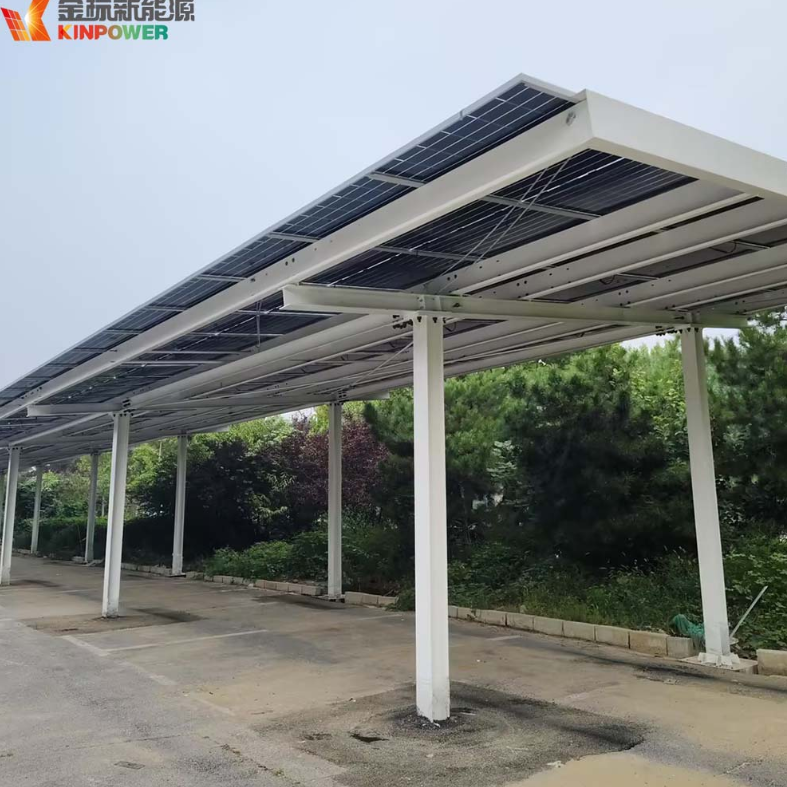
Integrated energy infrastructure only works when the physical mounting, structural supports, and enclosures are built to last. Solar arrays sit on steel frameworks exposed to wind, snow, and thermal cycling. Battery enclosures need secure foundations and protective barriers. EV charging stations require stable mounting pads and cable management that survives daily use.
Many project delays trace back to structural components that were specified too late. A charger layout changes, and suddenly the conduit routing no longer matches the mounting plan. A battery pad needs reinforcement after soil testing reveals poor bearing capacity. These issues are not glamorous, but they determine whether a project stays on schedule.
Kinpower supplies steel structures and support systems used in solar mounting, perimeter protection, and related infrastructure projects. The Hebei-based manufacturing operation serves energy and construction clients with an understanding of field installation requirements. For developers assembling solar plus storage plus EV charging solutions, having a structural supplier that knows how components fit together on site reduces coordination risk and keeps project timelines realistic.
Table of Contents
- Why Combining Solar, Storage, and EV Charging Changes the Math
- The Technical Architecture Behind a Reliable System
- What Actually Happens on a Commercial Site
- Regulatory and Incentive Factors That Shape the Business Case
- Honest Limitations That Should Not Be Ignored
- Why Structural Support and Site Infrastructure Still Matter